Understanding the Massive Compute Investment Behind the Anthropic IPO
When we talk about big companies going public, often called an Initial Public Offering or IPO, we usually focus on their sales, profits, and how much money they expect to make. But for companies like Anthropic, a leader in artificial intelligence (AI), a huge part of their story is about something less visible: the sheer amount of computing power they need. Anthropic is reportedly planning a massive investment of around $567 billion in computing resources, a staggering figure that highlights the escalating demands of AI development. This investment is crucial for understanding Anthropic’s potential and the broader AI infrastructure landscape.
The Engine of AI: Why Compute Power is King
Imagine you’re trying to build an incredibly complex model airplane. You need tools, raw materials, and a workshop. For AI, the “tools” and “materials” are computing power, particularly specialized computer chips called Graphics Processing Units (GPUs). These GPUs are essential for training and running sophisticated AI models, which are like incredibly complex computer programs that can learn and perform tasks.
Compute, in this context, refers to the processing power of computers. For AI, it’s not just about having any computer; it’s about having massive amounts of processing power that can handle the enormous calculations needed to train AI models. These models learn from vast amounts of data, and the more data and the more complex the model, the more compute power is required. Think of it like teaching a child. The more books they read, the more examples they see, and the more practice they get, the smarter they become. AI is similar, but on a scale that requires supercomputers.
Anthropic’s Compute Strategy: Owning the Infrastructure
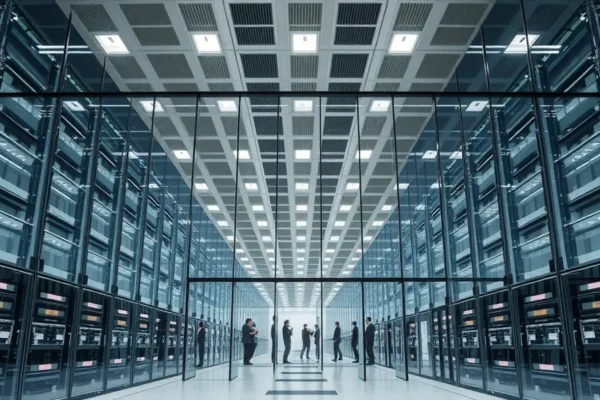
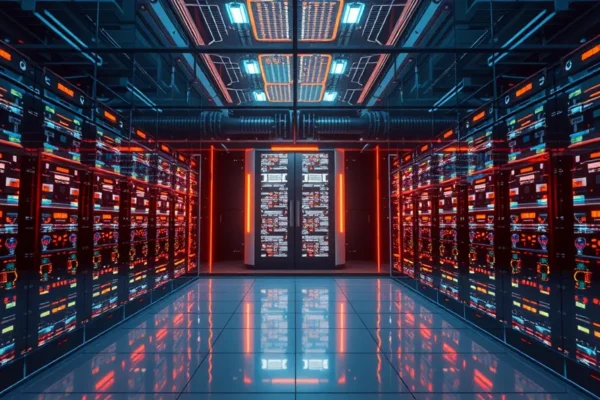
Anthropic’s significant investment in compute is primarily directed towards building its own data centers. A data center is essentially a large, secure facility that houses many powerful computers and their supporting infrastructure, like cooling and power systems. Instead of renting computing power from other companies (which is common for many AI startups), Anthropic is moving towards owning and operating its own data centers.
This move is driven by several factors, most notably the need for massive scale in AI. As AI models become more powerful and capable, they require exponentially more computing resources. By owning its data centers, Anthropic aims to have more control over the availability, performance, and cost of its compute resources. This strategy is often referred to as vertical integration – controlling more parts of your supply chain yourself. For Anthropic’s compute strategy, this means they are not just designing AI models; they are also building the physical infrastructure to power them.
The AI Scaling Imperative and Supply Chain Risks
The demand for AI is soaring, and companies like Anthropic are racing to keep up. This race to scale means needing more and more advanced machine learning hardware. However, the supply chain for these specialized components, especially GPUs, is incredibly tight. This is often referred to as the GPU shortage.
Anthropic’s S-1 filing, a document companies submit to the U.S. Securities and Exchange Commission before going public, has highlighted these supply chain risks. It details the dependence on a limited number of suppliers for crucial hardware. Imagine needing to build a hundred of those complex model airplanes but only having access to a few specialized tools that are in high demand globally. Any disruption in the supply of these tools can severely impact your ability to build. This reliance creates vulnerabilities, as geopolitical events, manufacturing issues, or simply overwhelming demand can lead to delays and increased costs.
Why This Compute Investment Matters to You
While Anthropic’s $567 billion compute investment might seem distant, it has ripple effects that can touch your financial life. Firstly, the massive capital expenditure involved in building these data centers influences the overall economy. It creates jobs in construction, manufacturing, and technology. Secondly, the cost of AI development, heavily influenced by compute costs, can impact the pricing of AI-powered products and services you might use in the future, from better search engines to personalized healthcare.
For those considering investments in the tech sector, understanding a company’s compute strategy is vital. It’s a key indicator of their ability to execute their AI ambitions. Companies that can secure and manage their compute resources effectively are likely to be more successful. However, the significant capital required also means higher financial risk. The race for AI dominance is also a race for essential resources, and companies that can’t secure them might fall behind.
A Brief History of Compute Power in AI
The concept of using computers to perform complex calculations has been around for decades. However, the recent surge in AI capabilities is largely due to advancements in computing power and algorithms. In the early days of AI, researchers were limited by the processing capabilities of the computers available. Think of early computers that filled entire rooms but had less power than your smartphone.
The development of GPUs, originally designed for video games, proved to be a game-changer for AI. Their parallel processing capabilities allowed them to handle the massive datasets and complex calculations needed for deep learning models. This shift, coupled with the availability of cloud computing services that offer access to vast amounts of compute power, has fueled the current AI boom. Companies are now investing billions to secure this essential resource, transforming their approach from simply buying compute to strategically building and owning their AI infrastructure.
Practical Ways to Think About Anthropic’s Compute Strategy
When you hear about companies making huge investments in compute, especially for AI, it’s helpful to see it as a bet on future growth and capability. For Anthropic, this $567 billion investment signifies their commitment to being at the forefront of AI development. It means they believe owning their data centers will give them a competitive edge, allowing them to innovate faster and more efficiently.
A common misconception is that AI development is purely about software. However, the hardware and infrastructure that power AI are just as critical. Understanding a company’s compute strategy helps you assess their long-term viability and their potential to deliver on their promises. When reading about tech companies, pay attention to their capital expenditures and their approach to securing computing resources. This can provide valuable insights into their operational strength and their ability to navigate market challenges like the ongoing GPU shortage.
Connecting Compute to Broader Financial Concepts
Anthropic’s massive compute investment is deeply intertwined with several other financial concepts. Capital expenditure (often shortened to CapEx) refers to the money a company spends to acquire, upgrade, and maintain physical assets like buildings and equipment. This $567 billion is a prime example of massive CapEx.
The tech supply chain is another critical area. Companies rely on a global network of suppliers for components, and disruptions in this chain can have significant economic consequences. The GPU shortage is a specific example of a bottleneck in the tech supply chain that impacts AI development. Furthermore, this investment plays into discussions about economic growth and inflation, as large-scale infrastructure projects can boost economic activity but also contribute to demand-driven price increases. Understanding how companies manage these resources and navigate supply chain complexities is key to assessing their financial health and their potential impact on the broader economy.
Frequently Asked Questions About Anthropic’s Compute Investment
What is the main goal of Anthropic’s $567 billion compute investment?
The primary goal is to secure vast amounts of computing power, particularly through building self-owned data centers, to support the extensive AI scaling needed for developing and operating advanced AI models.
How does Anthropic’s compute strategy differ from other AI companies?
Many AI companies rent compute resources from cloud providers. Anthropic’s move towards owning its data centers signifies a significant commitment to controlling its AI infrastructure, offering potential long-term cost and performance advantages.
What are the supply-chain risks mentioned in Anthropic’s S-1 filing?
The risks involve a heavy reliance on a limited number of specialized hardware suppliers, particularly for GPUs, making Anthropic vulnerable to shortages, price fluctuations, and geopolitical disruptions.
How does AI scaling necessitate such large compute investments?
AI scaling refers to increasing the size and complexity of AI models and the amount of data they process. This exponential growth in computational demand directly translates into a need for more powerful and abundant compute resources.
Can individuals invest directly in Anthropic’s compute infrastructure?
Direct investment by individuals is typically not possible. However, individuals can invest in companies that provide compute hardware (like NVIDIA), cloud services, or potentially through an Anthropic IPO if it becomes available to public investors.
What is the impact of the GPU shortage on Anthropic’s IPO and compute strategy?
The GPU shortage creates a significant challenge for Anthropic’s compute strategy, potentially increasing costs and delaying deployment. It also makes securing sufficient machine learning hardware a critical factor in their ability to scale and compete.
This educational content is intended to provide general information about financial concepts and recent market developments. It is not financial advice. Your financial situation is unique, and decisions about investments, spending, and financial planning should be made in consultation with a qualified financial professional. Investing involves risk, including the potential loss of principal. Past performance is not indicative of future results.