A New Era for Recycling: Danu Robotics’ Six-Year Quest for a Smarter Recycling Robot
The sheer volume of waste generated globally presents a monumental challenge, and the traditional methods of sorting recyclables are often inefficient, labor-intensive, and prone to error. Imagine a world where robots could expertly identify and separate materials with incredible speed and accuracy, significantly boosting recycling rates and moving us closer to a truly circular economy. This vision is precisely what Danu Robotics has been pursuing for the past six years, culminating in the development of an advanced recycling robot aimed at revolutionizing waste sorting. Their journey highlights the persistent hurdles and groundbreaking innovations in the field of robotics and automation within the environmental technology sector. This development, announced recently by Danu Robotics, marks a significant step forward in the ongoing effort to enhance our recycling capabilities.
Unpacking the Mechanics of Smarter Waste Sorting
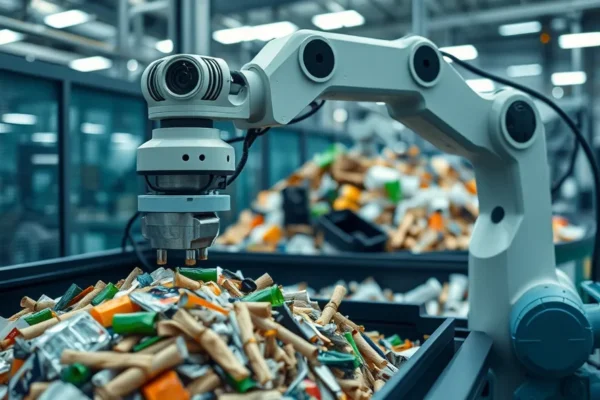
At its core, Danu Robotics’ recycling robot is designed to perform a critical task: identifying and separating different types of waste materials on a conveyor belt. Think of it like a highly sophisticated automated cashier, but instead of scanning barcodes, it recognizes the physical properties of materials like plastic bottles, paper, aluminum cans, and glass. The robot achieves this through a combination of advanced sensors and artificial intelligence (AI).
Key to its operation are several integrated technologies. High-resolution cameras capture detailed images of each item. Alongside these, other sensors might measure factors like material composition, weight, or even its thermal properties. This data is then fed into an AI model, which has been trained on vast datasets of different waste materials. The AI’s role is akin to a seasoned waste sorter who has seen millions of items; it learns to distinguish a PET plastic bottle from a piece of cardboard, or an aluminum can from a glass jar, with remarkable precision. Once identified, the robot uses a robotic arm, often equipped with a gripper or suction mechanism, to physically pick up the identified item and place it into its designated bin. This automation is crucial for increasing the speed and consistency of the sorting process.
Putting the Recycling Robot to Work Today
While still in its advanced development and early deployment phases, Danu Robotics’ recycling robot is beginning to find its footing in real-world applications. The primary environments where such technology is being piloted and implemented are material recovery facilities (MRFs), which are the central hubs for processing recyclable waste. Companies looking to improve the purity of their sorted recyclables and increase throughput are prime candidates for adopting this automation.
For instance, early trials and partnerships, as detailed in industry publications covering environmental technology, are exploring the integration of these robots into existing sorting lines. The goal is to complement, rather than entirely replace, human sorters, focusing on the most repetitive and challenging tasks. This means the robot can handle the bulk of easily identifiable items, allowing human workers to focus on more complex or hazardous materials. The maturity level of this technology is best described as early adoption, with units being deployed in controlled environments for testing and optimization before widespread commercial release. Availability is currently limited to these pilot programs and specific client installations.
Navigating a Growing Field of Robotic Sorters
The challenge of waste sorting is not unique to Danu Robotics; it’s a global concern driving innovation across the robotics industry. Several other companies and research institutions are developing their own automated solutions for waste management. Competitors like AMP Robotics, ZenRobotics (now part of Terex), and Zen Environmental are also deploying AI-powered robots in MRFs. These systems often employ similar principles, utilizing vision systems and robotic arms to sort waste.
What might differentiate Danu Robotics’ approach could lie in the specific algorithms used for AI-powered identification, the dexterity and speed of their robotic arms, or the modularity and ease of integration of their system into existing infrastructure. For example, some systems might excel at identifying specific types of plastics, while others might be faster at handling mixed recyclables. The advantage often lies in the robustness of the AI’s recognition capabilities across a wide variety of waste streams and its ability to adapt to changing material compositions, a common challenge in recycling. The ongoing competition spurs further innovation, driving down costs and improving the effectiveness of all players in this crucial sector.
Reshaping Our Relationship with Waste and Resources
The widespread adoption of advanced recycling robots like those from Danu Robotics has the potential to profoundly reshape our approach to waste management and resource utilization. Economically, increased recycling efficiency can lead to higher quality recycled materials, reducing the need for virgin resources and creating new economic opportunities in the circular economy. This could translate into job shifts within the waste management sector, moving away from manual sorting towards roles in robot operation, maintenance, and AI training.
Socially, the benefits are significant. Improved recycling rates mean less waste going to landfills, reducing environmental pollution and conserving natural resources. This contributes directly to sustainability goals and can foster a stronger sense of environmental responsibility. However, potential concerns around job displacement due to automation need to be carefully managed through retraining and support programs. In the short term, we can expect to see pilot programs and early implementations increasing. In the long term, advanced recycling robots could become a standard feature in waste processing, making recycling more efficient and economically viable on a global scale.
Acknowledging the Hurdles: Challenges on the Path to Perfection
Despite the impressive advancements, the journey to perfect waste sorting automation is fraught with challenges. One significant technical hurdle is the sheer complexity and variability of waste streams. Items can be crushed, torn, contaminated, or mixed in ways that challenge even the most advanced AI models. Accurately identifying all types of plastics, especially multi-layered or colored ones, remains a significant difficulty. Furthermore, the speed at which waste travels on a conveyor belt requires extremely fast processing and robotic arm movement, a balance that is difficult to achieve perfectly.
Beyond technical limitations, cost is a major barrier to adoption. The initial investment in sophisticated robotic systems can be substantial, making it a challenge for smaller recycling facilities to implement. Regulatory frameworks also play a role, as standards for recycled material purity and the handling of waste can influence the types of technology that are viable. User adoption itself, convincing MRF operators and workers to integrate new automated systems into their established processes, also presents a hurdle that requires demonstration of clear benefits and reliable performance.
Looking Ahead: The Evolving Landscape of Recycling Automation
The trajectory for recycling robots points towards increasing sophistication and integration. We can anticipate future developments focusing on enhanced AI capabilities, allowing robots to identify an even wider array of materials, including complex composites and hazardous waste components. Developments in sensor technology, perhaps incorporating hyperspectral imaging or advanced chemical analysis, could lead to more precise material identification.
Furthermore, there’s a strong push towards more flexible and adaptable robotic systems that can be easily reprogrammed to handle evolving waste compositions or new types of recyclables. The industry is also likely to see greater collaboration between AI developers, robotics manufacturers, and waste management companies to create more integrated and efficient solutions. Milestones to watch include improvements in the robots’ ability to handle organic waste or batteries, and the development of systems that can achieve higher purity rates for recycled materials, making them more valuable commodities. This progress is expected to be incremental, building on current research and technological advancements rather than sudden leaps.
Frequently Asked Questions About Recycling Robots
Is this recycling robot technology mature enough for widespread use?
The technology is in an advanced stage of development and early adoption, with pilot programs and commercial deployments underway in specific facilities. While capable of significant improvements, widespread mainstream adoption will depend on further cost reduction and proven long-term performance across diverse waste streams.
What makes Danu Robotics’ approach to waste sorting innovative?
Danu Robotics is focusing on advanced AI algorithms for material recognition and developing robotic systems designed for speed and accuracy. Their innovation lies in the specific combination of sensor technology, AI training, and robotic arm design to tackle the complexities of waste sorting for greater sustainability.
Who are the main competitors in the recycling robot market?
Key players in the field of AI-powered waste sorting robotics include AMP Robotics, ZenRobotics, and Zen Environmental, all of whom are developing sophisticated automation solutions for MRFs.
What are the potential economic impacts of this technology?
The technology has the potential to create a more efficient circular economy by increasing recycling rates and the quality of recycled materials. This could lead to new market opportunities, a shift in employment within the waste management sector, and reduced reliance on virgin resources.
What are the limitations and challenges for these advanced recycling robots?
Current limitations include accurately identifying highly contaminated or complex mixed materials, the high initial cost of the systems, and the need for robust AI models to adapt to diverse and evolving waste streams.
How long until we see these recycling robots widely deployed?
While early deployments are happening now, the timeline for widespread adoption will likely span several years, influenced by technological maturation, cost-effectiveness, and industry-wide acceptance.
This article discusses emerging technologies. Capabilities and timelines are based on company announcements, industry reports, and expert analysis as of the publication date. Further research and development are ongoing.