Understanding Political Transitions and Financial Markets
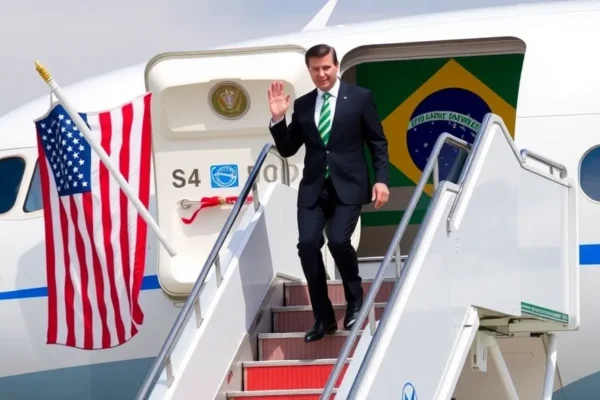
When prominent political figures move internationally, especially after a significant election, it can spark questions about the broader economic and financial implications. Let’s explore what happens when a political leader relocates after a contested election and how this might connect to financial concepts. This article looks at the situation surrounding Jair Bolsonaro’s arrival in Florida following the Brazil election defeat, using it as a case study to understand broader themes in economics and finance.
What is a Political Transition in Economics?
In the realm of finance and economics, a political transition refers to a shift in leadership or government in a country. Think of it like changing the captain of a ship. The captain’s decisions – about where to steer, how fast to go, and what cargo to carry – directly impact the ship’s journey and the well-being of everyone on board. Similarly, changes in political leadership can influence a country’s economic policies, which in turn affect its markets, businesses, and individual citizens’ financial lives.
Understanding these transitions is important because they can signal potential shifts in economic direction. A new government might implement different tax policies, change trade agreements, or alter spending priorities. These actions can influence everything from interest rates to the value of a country’s currency, ultimately impacting investment opportunities and personal savings.
How Political Moves Affect Economic Stability
When a former leader, like Jair Bolsonaro, leaves a country after an election, the process often involves several steps that can have economic ripples. Imagine a company is undergoing a leadership change. The market watches to see who the new CEO is, what their plan is, and how they’ll manage the company’s finances. Similarly, in a country, the transition period after an election is closely monitored by investors and economists.
Following his defeat in the Brazil election, Jair Bolsonaro’s departure to Florida is part of a broader pattern where political figures may seek new environments. The mechanism involves the outgoing leader’s actions and the incoming administration’s approach to governance. For instance, the stability of institutions, the clarity of succession, and the continuity of economic policies are key factors. If there’s uncertainty or potential for political instability, it can make investors hesitant. Think of it like a homeowner deciding whether to invest in renovating their house when there’s ongoing debate about who owns it; uncertainty can freeze decisions.
A real-world scenario might involve a country experiencing a peaceful transfer of power after a close election. If the new government signals a commitment to fiscal responsibility and pro-growth policies, foreign investors might feel more confident, leading to increased investment and a stronger currency. Conversely, if a political figure contests an election result extensively or there are concerns about the rule of law, it could lead to capital flight, where investors move their money out of the country, potentially weakening its economy.
Why Political Transitions Matter to Your Finances
The impact of political transitions on individuals’ finances can be significant, even if indirectly. On a personal level, changes in government can affect the cost of living. For example, new trade policies might influence the price of imported goods, or shifts in economic strategy could lead to changes in employment opportunities within certain sectors.
Economically, political stability or instability is a major driver of market sentiment. If a country is perceived as stable, businesses are more likely to invest, create jobs, and expand. This can lead to economic growth, which benefits many people through higher wages and better career prospects. Conversely, political uncertainty can lead to market volatility, affecting stock prices, bond yields, and currency exchange rates. If Brazil’s Brazil presidential election outcome leads to prolonged uncertainty, it could impact international trade and investment flows, potentially affecting commodity prices or the value of investments tied to the Brazilian economy.
Those who benefit from political stability often include long-term investors, businesses reliant on consistent policies, and citizens who value predictable economic conditions. Conversely, those who might be negatively affected include investors who prefer high-risk, high-reward scenarios that can emerge during periods of flux, or individuals whose livelihoods are tied to specific, policy-dependent industries that might be disrupted by a change in leadership.
Historical Context of Political Relocations After Elections
The phenomenon of political figures relocating after electoral defeats is not new. Historically, leaders or prominent political figures have sought refuge or new beginnings in other countries for various reasons, sometimes referred to as seeking political exile. This often happens in situations where a leader’s party loses power, and they may face political or even legal challenges in their home country.
For example, following significant political upheavals or contested elections in various nations throughout history, individuals associated with the outgoing regime have often found themselves seeking asylum or establishing residency abroad. The case of Jair Bolsonaro‘s arrival in Florida after the Brazil election defeat fits within this broader historical context of political figures navigating post-election realities. While not all such moves are identical, the underlying theme of seeking a new environment post-power is a recurring element in global politics.
Recent data points often focus on foreign direct investment (FDI) trends and currency stability following elections. For instance, according to the United Nations Conference on Trade and Development (UNCTAD), FDI flows can be sensitive to perceived political stability and policy continuity in emerging markets. Periods of uncertainty following closely watched elections, like the Brazil presidential election, can lead to a temporary slowdown in FDI as investors assess the new landscape. The return of Luiz Inácio Lula da Silva to the presidency marked a significant shift in Brazilian politics, and the subsequent actions of the former president are part of the unfolding narrative.
Practical Implications of Political Events on Financial Planning
When considering political events like elections and the subsequent movements of key political figures, it’s crucial to understand how they might influence your financial planning. A common misconception is that such events have no direct impact on the average person’s finances. However, global interconnectedness means that political stability in one major economy can affect others.
For individuals, staying informed about major political transitions in countries where you have investments or business interests is important. For example, if you invest in companies that operate in Brazil or hold Brazilian bonds, understanding the political climate and potential policy changes under the new administration is a prudent step. Think of it like a gardener knowing the weather forecast; it helps you prepare your plants for what’s coming.
When you see news about Jair Bolsonaro in the US, or any prominent politician relocating after an election, consider what it might signal about political stability and economic policy in their home country. Are there concerns about the transition of power? Are new economic policies being discussed? These are questions that can inform your understanding of global economic trends. One actionable insight is to diversify your investments geographically to mitigate risks associated with political instability in any single region. Another is to regularly review your investment strategy in light of evolving global political and economic landscapes.
Related Concepts in Economics and Finance
Understanding the implications of political transitions, such as those following the Brazil election, connects to several other key financial and economic concepts. One is the concept of risk premium. This is the extra return an investor expects to receive for taking on a higher level of risk. Political instability can increase this risk premium, meaning investors will demand higher returns to invest in a country perceived as less stable.
Another related concept is currency exchange rates. Fluctuations in a country’s political and economic stability can significantly impact its currency’s value relative to others. For instance, if investors lose confidence in a country’s future, its currency may weaken, making imports more expensive and exports cheaper. Understanding how political events influence these rates is crucial for international investors and businesses engaged in global trade. Similarly, foreign direct investment (FDI) is directly influenced by perceived political and economic stability.
Learning about political transitions also deepens one’s understanding of geopolitical risk, which refers to the risks to business and financial markets arising from political events and social unrest in countries. For a deeper dive, exploring how central banks manage monetary policy in response to political uncertainty can provide further context.
Frequently Asked Questions About Political Transitions and Money
How does Jair Bolsonaro’s move to Florida affect Brazil’s economy?
Jair Bolsonaro‘s personal relocation to Florida has a limited direct impact on Brazil’s day-to-day economy. However, it can indirectly influence market sentiment by reflecting perceptions of political stability and the future direction of Brazilian politics following the Brazil election. International investors watch these signals closely.
What is the significance of Lula da Silva winning the Brazil election for investors?
Lula da Silva’s victory in the Brazil presidential election signaled a potential shift in economic and social policies compared to the previous administration. Investors analyze these shifts to gauge future economic growth, regulatory environments, and market opportunities. The transition of power is a key indicator for investment decisions.
Can political exile impact a country’s financial standing?
While not a direct cause, the circumstances leading to political exile can indicate underlying political instability or conflict within a country. Such instability can deter foreign investment and lead to capital flight, negatively impacting a country’s financial standing and economic growth.
How do far-right politicians like Jair Bolsonaro navigate international relations after an election loss?
Following an election defeat, a far-right politician may engage in various activities, including relocating to another country, as seen with Jair Bolsonaro in Florida. These actions can be part of asserting influence, seeking strategic alliances, or preparing for future political endeavors, all of which can have subtle international political and economic implications.
Does seeking US asylum after a Brazil election defeat have financial implications?
The act of seeking US asylum by a political figure does not directly impact the economic policies of their home country. However, it can be interpreted by global markets as a sign of political challenges or instability in the home country, potentially influencing investor confidence and capital flows.
What are the risks associated with political uncertainty following an election?
Political uncertainty following an election can lead to economic slowdowns, currency devaluation, increased borrowing costs for governments and businesses, and reduced foreign investment. For individuals, it can mean job insecurity, higher inflation, and a more volatile investment environment.
Disclaimer: This educational content is for informational purposes only and does not constitute financial advice. Financial situations are unique, and decisions should be made in consultation with a qualified financial professional. Past performance is not indicative of future results, and all investments carry risk.