Understanding the Business of Building the AI Future
When we talk about the Nscale IPO and its massive AI mega-project, we are essentially looking at the intersection of extreme innovation and massive capital expenditure. At its simplest, an Initial Public Offering (IPO) is the moment a private company decides to sell shares of its business to the public for the first time. Think of it like a local bakery that has been successful selling bread to neighbors, but now wants to open 1,000 locations across the country. To get the money to build those ovens and buy the flour, the owners decide to sell a piece of the company to the public in exchange for cash.
For an AI infrastructure project, the scale is vastly larger. Building a data center is not just about renting a warehouse; it involves securing billions of dollars in hardware, electricity, and real estate. Understanding these large-scale ventures matters to you because they often drive the stock market, influence regional economies, and signal where the world’s biggest investors believe the future of technology is heading.
The Mechanics of Financing Massive Infrastructure
How does a company like Nscale fund a project that costs billions? It starts with the concept of capital intensity. Capital intensity refers to the amount of money a company must spend on physical assets, like servers and cooling systems, to generate revenue. In the case of the West Virginia data center, the financial path is complex.
Imagine if you wanted to build the world’s most powerful library. You cannot just buy the books; you need to build the foundation, ensure the building never loses power, and hire a massive security team. In the tech world, Nvidia backing provides a “stamp of approval.” When a giant like Nvidia invests in an AI mega-project, it signals to other investors that the technology is reliable. Nscale uses this credibility to raise debt and equity—money borrowed from banks or raised from investors—to fund the massive upfront costs of data center construction.
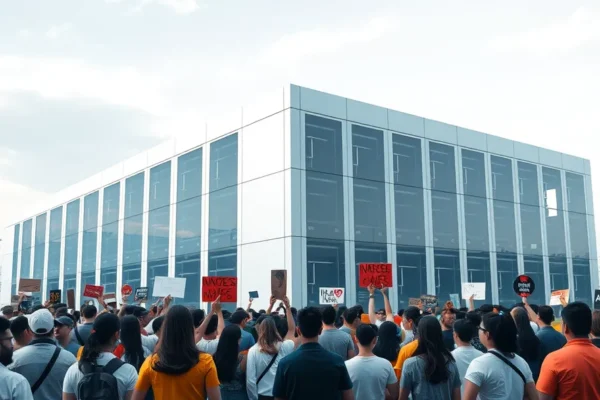
However, this creates a “burn rate.” This is the pace at which a company spends its cash before it starts turning a profit. If the construction of the site in West Virginia faces delays—such as local opposition regarding environmental concerns or logistical hurdles—the burn rate continues while no money is coming in. This is why financial risks are so prevalent in the AI sector; you are essentially betting that the demand for artificial intelligence will be high enough in the future to pay back the mountain of debt taken on today.
Why Large Scale Tech Projects Shape Your Wallet
You might wonder why a data center in a specific part of West Virginia matters to your personal finances. First, these projects represent a massive shift in how the global economy functions. As more companies move their services to neocloud environments, the demand for stable, high-speed AI infrastructure increases. If you own index funds or retirement accounts, you likely hold shares in the very tech giants that rely on these projects to function.
Economic impact is also significant. These mega-projects can provide a boom for local regions, creating jobs in construction and technology maintenance. Conversely, they can create inflation in local housing and utility prices, affecting the cost of living for residents. On a broader scale, if an AI mega-project fails to deliver on its promises, it can lead to a cooling of investor confidence in the tech sector, which may lead to market volatility. When the market is volatile, the value of your 401(k) or brokerage account can swing significantly, reminding us that no investment is without risk.
The Evolution of the Data Center Industry
Data centers have evolved from simple server rooms in office basements to massive industrial complexes that consume as much electricity as small cities. In the past, companies maintained their own small servers. Today, we have entered the age of “cloud computing,” where the physical hardware is managed by companies like Nscale and offered as a service to other businesses.
According to the International Energy Agency, global electricity consumption from data centers could reach over 1,000 terawatt-hours by 2026. This exponential growth is what triggered the current interest in massive, specialized infrastructure. We have moved from wanting more storage to wanting more “compute,” which is the raw power needed to train AI models. This is why Nvidia’s investment is so critical; they provide the high-end chips that make this computation possible, and their backing has essentially become the gold standard for any serious AI project.
Managing Risk in a Tech-Driven Portfolio
How should you think about these high-stakes investments in your own financial life? First, recognize the difference between “hype” and “value.” Tech news is often filled with excitement about the next big project, but as an investor, you must focus on the fundamentals. Look for whether the company has a clear plan to turn its infrastructure into actual revenue.
Common misconceptions include believing that all tech projects are “safe” because they are backed by big names. Even with strong backing, construction delays, regulatory issues, and competition can sink a company before it goes public. When you hear about a pending Nscale IPO, treat it as a high-risk venture. Watch for transparency in their financial filings. Look for data on how they manage their energy costs and how they navigate local community concerns, as these are the factors that can derail a multi-billion dollar plan.
Actionable insight: Always diversify. If you are interested in the AI boom, avoid putting all your resources into one company. Broad-market index funds allow you to gain exposure to the growth of the AI sector without being ruined if a single project in West Virginia or elsewhere encounters trouble.
Connecting the Dots in Financial Markets
The story of Nscale and its AI infrastructure is deeply connected to several other financial concepts. It touches on corporate governance, which dictates how companies are managed, and environmental, social, and governance (ESG) criteria, which investors increasingly use to judge if a company is sustainable. Understanding how debt-to-equity ratios work is also vital here; a company that builds its future entirely on borrowed money is much more vulnerable to interest rate changes than one that uses a mix of its own cash.
By studying this, you also learn about “market sentiment.” Sometimes, a company’s stock price rises not because of its current earnings, but because investors are excited about the potential for future profit. Learning how to identify this sentiment versus actual financial growth is a key skill for any long-term investor.
Frequently Asked Questions About AI Mega-Projects
How does the Nscale IPO process work?
An IPO involves a company working with investment banks to set a price for its shares and then selling those shares to the public on a stock exchange. For a company like Nscale, this process requires disclosing deep financial details, including the costs of its West Virginia data center and the risks associated with its Nvidia investment.
What are the primary financing risks for an AI infrastructure project?
The main risks include high upfront capital costs, potential delays in data center construction, and the uncertainty of future AI demand. If the company spends too much money building infrastructure that ends up being underutilized, it could lead to significant financial losses.
How does local opposition affect an AI mega-project?
Local opposition, often related to environmental, water, or energy concerns, can lead to legal battles and construction halts. These delays increase costs and push back the date when the company can finally start generating revenue, which can threaten the success of an IPO.
What does Nvidia backing actually mean for investors?
Nvidia backing usually means that a company is using Nvidia’s high-end hardware, which is the industry standard for AI. It acts as a vote of confidence, but investors should be aware that even a company with elite partners can fail if the management team is poor or the business model is not sustainable.
How does this impact the broader market?
When massive projects involving billions of dollars succeed, they can drive the entire tech sector higher. Conversely, if a major project fails or if the AI bubble bursts, it can lead to market volatility, causing the value of stocks in your retirement accounts or mutual funds to drop.
This article is for educational purposes only and does not constitute financial, investment, or legal advice. Financial situations vary greatly from person to person, and the risks associated with IPOs and infrastructure investments are significant. You should consult with a qualified financial advisor to discuss your individual financial goals, risk tolerance, and personal circumstances before making any investment decisions. Always perform your own research and consider the potential for loss when investing in high-growth technology sectors.