

AI Automation is Coming for Your Desk Job, Says AI Guru
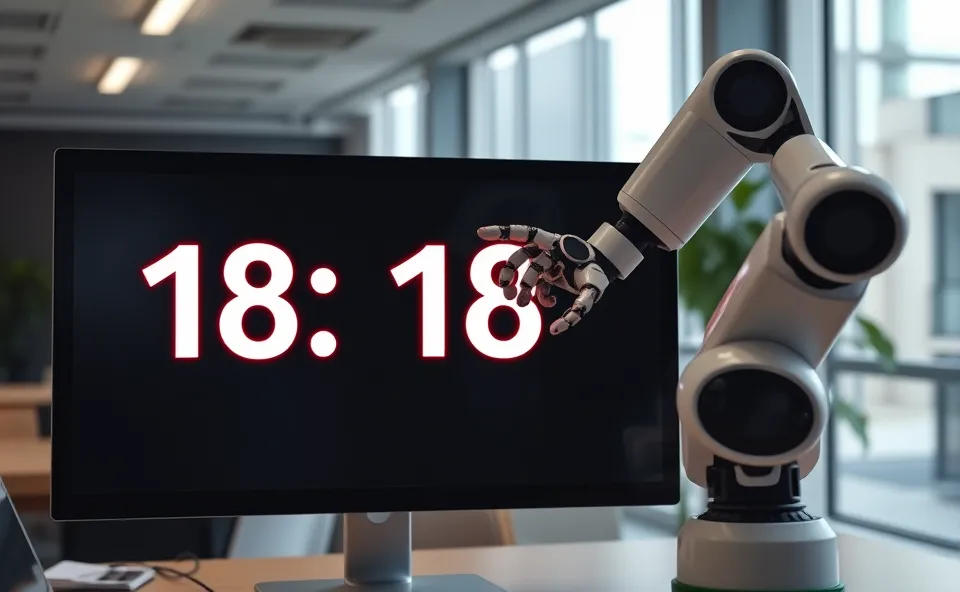
You know how we’ve all been talking about artificial intelligence and its potential to change things? Well, Mustafa Suleyman, a big name in the AI world, recently dropped a prediction that’s got a lot of people thinking, especially those of us in white-collar jobs. He’s saying that AI automation will dramatically change how we work, and it’s not some far-off sci-fi scenario. We’re talking about a significant shift happening in the next 18 months. This isn’t about robots taking over factories; it’s about AI getting really good at tasks that were once thought to be exclusively human, like writing reports, analyzing data, and even coding. Suleyman’s view suggests a rapid acceleration in AI’s ability to handle complex professional tasks, potentially reshaping the labor market faster than many anticipated.
Why the Buzz About AI Automation Now?
So, why is everyone suddenly paying so much attention to this 18-month timeline for AI automation hitting white-collar jobs? It’s a mix of things. Firstly, AI has been making incredible leaps and bounds lately. We’re seeing artificial intelligence systems that can generate text, images, and even code that are surprisingly sophisticated. This rapid progress makes Suleyman’s prediction feel less like a guess and more like an educated forecast based on current trends. Companies, including tech giants like Microsoft, are investing heavily in AI, pouring resources into research and development that fuels this acceleration. The computational power available today is astounding, allowing AI models to learn and perform at levels we haven’t seen before. This convergence of advanced AI capabilities, massive investment, and real-world demonstrations of AI’s growing competence is what’s making this particular forecast so attention-grabbing. It taps into a growing awareness that the future of work is here, and it’s being shaped by AI impact.
A Quick Look Back: The Rise of the Thinking Machine
To really get what Mustafa Suleyman is talking about, it helps to remember how we got here. For years, AI was mostly about specific tasks – playing chess, recognizing faces, or basic automation. The idea of AI doing creative or analytical work seemed a long way off. But then came the breakthroughs in machine learning, particularly with deep learning and large language models. These advancements allowed AI to learn from vast amounts of data and start understanding patterns, context, and even nuances in human language. Think about how much more powerful these systems have become in just the last few years. This background is crucial because it shows that the journey to advanced AI capabilities, including those relevant to white-collar jobs, has been a steady climb, but the pace has recently picked up dramatically. This evolution in artificial intelligence is directly leading to the current discussions about professional automation.
What This Means for Your Day-to-Day and Beyond
Now, let’s get to the big question: what does this mean for us, especially for white-collar jobs? Suleyman’s prediction points to a significant increase in AI automation for tasks that involve information processing, communication, and analysis. For individuals, this could mean that routine tasks within your job might be handled by AI, freeing you up to focus on more strategic or creative aspects. However, it also means that skills that are easily replicable by AI could become less valuable, potentially leading to job displacement for some.
For businesses, this offers huge potential for increased efficiency and productivity. Imagine customer service inquiries being handled instantly by AI, or market analysis reports being generated in minutes instead of days. This could lead to cost savings and a more agile operation. But it also presents challenges in terms of retraining workforces and managing the transition.
From a technology perspective, this trend is driving even more innovation. We’ll likely see AI tools become more integrated into everyday software and platforms, making them more accessible and user-friendly. The demand for AI development and maintenance will grow, creating new types of jobs. The overall labor market is set to experience a profound shift, pushing us to adapt to a new working reality shaped by AI. This is the core of the AI impact we are starting to feel.
What Comes Next in the World of AI and Work?
Looking ahead, Mustafa Suleyman’s prediction suggests a future where AI becomes an even more integral partner in our professional lives. The next 18 months are likely to be a period of rapid experimentation and adoption of AI automation tools across various industries. We can expect to see more sophisticated AI assistants that can collaborate with humans on complex projects.
The focus for many will shift towards developing skills that complement AI, such as critical thinking, emotional intelligence, creativity, and strategic decision-making. Upskilling and reskilling will become more important than ever for workers. Businesses will need to develop strategies not just for implementing AI but also for supporting their employees through this transition.
The development of ethical guidelines and regulations around AI will also likely accelerate, as societies grapple with the implications of widespread AI automation. The conversation will move beyond just the technical capabilities of artificial intelligence to how we ensure a fair and equitable future of work for everyone. This evolution is a continuous journey, and the next chapter promises to be particularly dynamic.
Your AI Automation Questions Answered
What exactly does AI automation mean for white-collar jobs?
It means that artificial intelligence systems will increasingly handle tasks that were traditionally done by humans in office environments, such as writing, data analysis, scheduling, and customer support. This AI automation aims to increase efficiency and productivity.
Is Mustafa Suleyman’s prediction about AI automation a cause for alarm for job security?
While it highlights a significant upcoming change in the labor market, it’s more of a signal for adaptation. While some jobs might be displaced by AI impact, new roles are expected to emerge, and many existing roles will evolve to work alongside AI.
How can professionals prepare for this wave of AI automation in white-collar jobs?
Focus on developing uniquely human skills like creativity, critical thinking, emotional intelligence, and complex problem-solving. Also, familiarize yourself with AI tools and how they can be used to enhance your work rather than replace it. Continuous learning and adaptability are key to navigating the future of work.
What role does Microsoft AI play in this trend of AI automation?
Companies like Microsoft are at the forefront of developing and integrating AI technologies, including large language models, into their products and services. Their advancements in artificial intelligence are significant drivers of the AI automation capabilities that Suleyman is referencing, making AI more accessible to businesses and individuals.
Will computational power continue to be a bottleneck for advanced AI automation?
While computational power is essential for training and running advanced AI models, advancements in hardware and AI algorithms are constantly improving efficiency. The ongoing innovation in computational power is a key factor enabling the rapid progress in AI automation we are witnessing, making more complex tasks achievable.











