

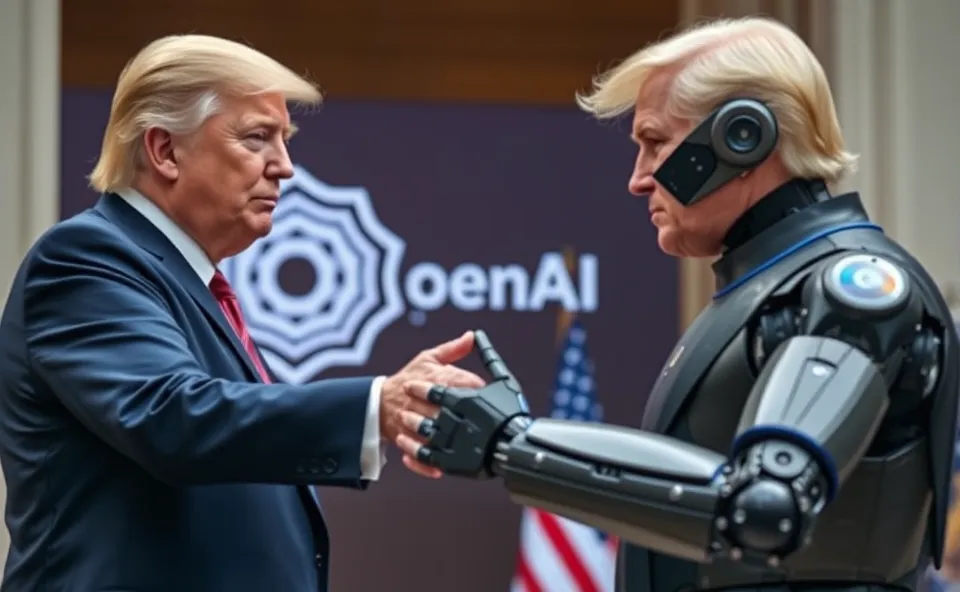
Could the Government Own a Piece of the AI Revolution
Imagine a scenario where the U.S. government, specifically a Trump administration, considers taking an equity stake in OpenAI, the company behind groundbreaking AI like ChatGPT. This isn’t about buying a whole company, but rather owning a portion of it, like buying shares in a big business. The idea is to have a direct stake in one of the most rapidly advancing areas of technology that’s shaping our future. It’s a bold move that brings up a lot of questions about how we manage powerful new technologies and who benefits from their growth.
Why Are We Talking About This Now
This conversation is buzzing right now because artificial intelligence is no longer a futuristic concept; it’s here, and it’s changing things fast. OpenAI’s tools are becoming more widespread, impacting everything from how we write and learn to how businesses operate. With AI’s growing influence on our economy and daily lives, discussions about government involvement in this critical sector are naturally heating up. People are curious about how such an AI investment might play out, especially when it involves significant political figures and the future of US tech policy.
A Little History on AI and Government
For a long time, the U.S. has been a leader in technological innovation, often driven by private companies and venture capital. Think about the early days of the internet or the development of microchips. The government has played a role, funding research and setting some guidelines, but direct ownership in leading tech companies hasn’t been the norm. However, as AI’s strategic importance becomes clearer, both economically and for national interest, the idea of more direct government involvement, like a Trump OpenAI partnership, is being explored. This includes thinking about how government can foster innovation while also ensuring AI serves the public benefit and addresses concerns about tech regulation.
What This Could Mean for All of Us
So, what would it actually mean if the government had an equity stake in a company like OpenAI? For starters, it could signal a new era of government AI initiatives, aiming to ensure that the benefits of artificial intelligence are shared widely across the American public. This kind of AI investment could potentially lead to:
- Accelerated Public Benefit Projects: Imagine AI tools developed with a specific focus on public services, like improving healthcare access, enhancing education, or boosting disaster response capabilities. A government stake could steer development towards these areas.
- National Security and Competitiveness: In a world where AI is becoming a key factor in global power, having a hand in leading AI development could be seen as crucial for national interest. It might help the U.S. maintain its edge in the global AI race.
- Shaping the Future of AI: With an equity stake, the government could have a stronger voice in discussions around ethical AI development, data privacy, and responsible tech regulation. This could lead to AI that is safer and more aligned with societal values.
- Economic Growth and Job Creation: Investing in cutting edge AI companies could indirectly fuel economic growth. It might encourage further venture capital investment in the AI sector and create new opportunities and jobs related to artificial intelligence.
- A Different Approach to Tech Regulation: Instead of just regulating from the outside, direct involvement could allow for a more integrated approach to managing the rapid evolution of AI technology, potentially balancing innovation with oversight.
This isn’t just about a single company; it’s about how the nation strategically approaches a technology that’s set to define the coming decades. It’s a way to think about securing the future of AI and ensuring it contributes to broad economic growth.
Looking Ahead: What’s Next on the Horizon
The idea of the government taking an equity stake in a leading AI company like OpenAI is still in its early stages of discussion. It’s a complex proposition with many moving parts. If such a move were to proceed, we’d likely see a lot of debate about how it’s structured and what its specific goals would be. The focus would probably be on how to best leverage this AI investment to foster innovation while ensuring it serves the national interest and provides a public benefit. It could set a precedent for future government involvement in high tech sectors, influencing US tech policy for years to come. We might also see increased scrutiny on how AI is developed and deployed, with a greater emphasis on transparency and accountability in the realm of government AI initiatives.
Frequently Asked Questions
What is the core idea behind a Trump OpenAI equity stake?
The main concept is for a potential Trump administration to acquire an ownership share in OpenAI. This AI investment would give the government a direct stake in the company’s future, potentially influencing its direction and ensuring it aligns with national interests and serves the American public.
How could this AI investment benefit the U.S. economy and its citizens?
An equity stake could foster the development of AI technologies that directly benefit society, such as advancements in education, healthcare, or national security. It could also encourage innovation, potentially leading to economic growth and new job opportunities within the AI sector and related industries.
What are the potential motivations for government AI involvement like this?
Motivations could include securing a competitive edge in the global AI race, ensuring ethical AI development and deployment, promoting national interest, and guiding the future of AI towards public benefit rather than solely private profit. It’s about shaping the trajectory of a critical technology.
Will this lead to more government intervention in the tech industry?
This move could signal a shift in US tech policy, indicating a greater willingness for government to be directly involved in critical technology sectors. However, the extent of future intervention would depend on the specific outcomes and policies established by such an AI investment.
What does an equity stake mean in the context of Trump and OpenAI?
An equity stake means owning a portion of OpenAI. This differs from simply partnering or regulating. It implies a financial ownership interest, giving the government potential rights and benefits tied to the company’s performance and strategic decisions, impacting the broader landscape of government AI initiatives.











