

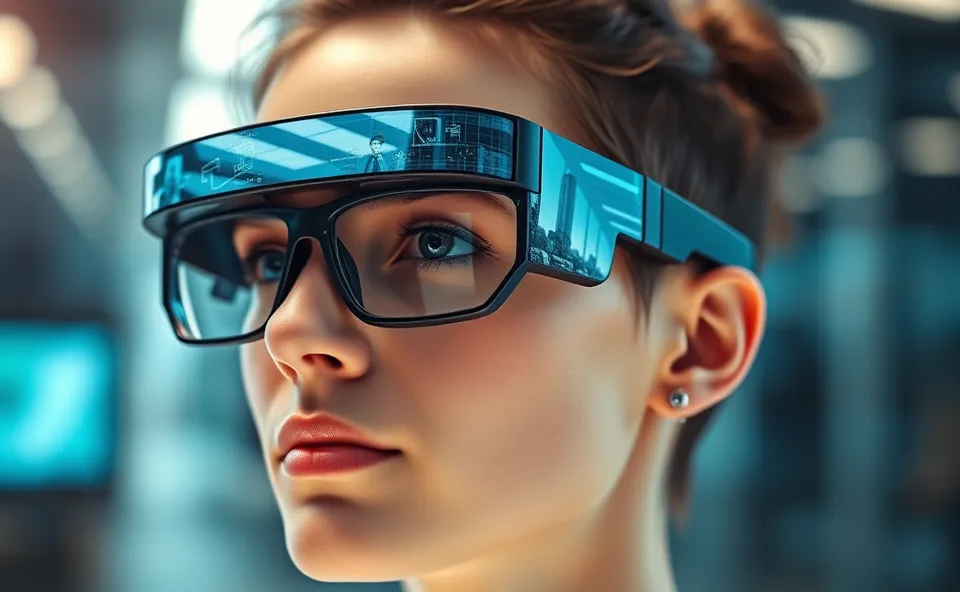
A big bet on the future of sight
Imagine waking up and putting on a pair of glasses that do more than just help you see clearly. Imagine a world where your digital life doesn’t live inside a glowing rectangle in your pocket, but floats right in front of your eyes. This is the world Evan Spiegel is building. The CEO of Snap Inc. is preparing to launch a new generation of Snap AR Glasses later this year, and they are designed to change how we interact with everything around us.
These are not just simple camera glasses. We are talking about a full leap into Augmented Reality. The goal is to blend the digital world with the physical one so seamlessly that you forget where one ends and the other begins. While the vision is exciting, it comes with a premium price tag. These glasses will cost 2,195 dollars. For most of us, that is a lot of money for a wearable device, but Spiegel believes the technology inside justifies the cost.
The core idea here is to move us away from screens. Instead of looking down at a phone to check a map or read a message, the information simply appears in your field of vision. It is an ambitious move that positions Snap as a leader in the wearable tech space, moving beyond just being a social media app and becoming a hardware company.
Why everyone is talking about this now
You might wonder why there is so much buzz around these glasses right now. The truth is that we have reached a breaking point with our smartphones. Most of us feel the strain of staring at a screen for ten hours a day. There is a growing desire for new tech that lets us stay connected without disconnecting from the people standing right in front of us.
People are searching for these glasses because they represent a shift in how we live. We have seen the rise of virtual reality, which puts you in a totally fake world. But Augmented Reality is different. It keeps you in the real world but adds a layer of helpful information on top of it. Whether it is a floating arrow guiding you to a restaurant or a digital name tag appearing over a colleague you forgot the name of, the practical uses are endless.
There is also a lot of curiosity about the price. At 2,195 dollars, these are clearly not for everyone. However, this price point tells us that the tech is high end. It signals that Snap is targeting early adopters and power users who want the absolute cutting edge of AR technology. The conversation is no longer about if this tech will happen, but who will make it a part of our daily wardrobe.
The road to the new Spectacles
To understand where these new glasses are going, we have to look at where they started. Snap Inc. did not just wake up one day and decide to build a high end AR computer for your face. They have been experimenting with Spectacles for years.
The first versions of Spectacles were simple. They were basically cameras attached to frames that let you record short videos from your own perspective. They were fun and social, but they didn’t really change how we lived. Over time, Snap pushed further. They moved from simple recording to adding digital overlays and filters that you could see in real time.
Evan Spiegel has always seen the phone as a temporary tool. He believes that the ultimate goal is a device that is always on and always helpful without being intrusive. The journey from a simple camera to a 2,195 dollar piece of smart glasses technology shows a clear evolution. Snap has spent years refining the optics and the software so that the digital images look solid and stable, rather than shaky or transparent.
How this changes the game for all of us
So, what does this actually mean for the average person or a business owner? The impact of Snap AR Glasses goes far beyond just sending a few cool messages. It changes the fundamental nature of human interaction.
For the user, it means a hands free existence. Think about the convenience of having your grocery list float in the air while you shop, or seeing a real time translation of a foreign street sign while traveling. It removes the friction of having to pull out a device, unlock it, and open an app. Everything happens in the moment.
For businesses, the opportunities are massive. Imagine a technician repairing a complex machine while a remote expert draws instructions directly onto the technician’s field of vision. Or think about retail stores where customers can see digital reviews and pricing for products just by looking at them. This AR technology turns the entire physical world into a clickable interface.
There are a few key ways this will impact our daily habits:
- Reduced Screen Time: By moving data to our eyes, we might finally stop slouching over our phones.
- Enhanced Learning: Students could see 3D models of molecules or historical events happening around them in the classroom.
- New Social Norms: We will have to figure out the etiquette of wearing smart glasses in public and how privacy will be handled.
- Efficiency: Multitasking becomes easier when your digital tools are layered over your physical environment.
What lies ahead for AR
Looking forward, the launch of these glasses is just the beginning. While the initial price is high, the history of tech tells us that costs eventually drop as the technology matures. We can expect that the future of AR involves these devices becoming smaller, lighter, and more affordable.
The next logical step is the integration of advanced AI. When you combine a camera that sees what you see with an AI that understands the world, the glasses become a personal assistant that actually knows your context. If you look at a plant, the glasses could tell you how to water it. If you look at a broken sink, they could walk you through the fix step by step.
We will likely see a battle for the ecosystem. Just as we have iOS and Android, we will see different platforms for wearable tech. Snap is trying to build a world where the software is social and creative. As more developers create apps for these glasses, the value of the hardware will increase. We are moving toward a future where the digital and physical worlds are no longer separate, but one single, unified experience.
Common questions about the new tech
What exactly are Snap AR Glasses?
They are advanced smart glasses created by Snap Inc. that use Augmented Reality to overlay digital images, information, and animations onto the real world in real time.
Why are the glasses priced at 2,195 dollars?
The high price reflects the cutting edge AR technology used in the frames. These devices require specialized optics and powerful processing to make digital objects look real and stable in your field of vision.
Who is the target audience for these Spectacles?
Initially, these are aimed at early adopters, developers, and tech enthusiasts who want to experience the future of AR before it becomes a mass market consumer product.
How do these differ from regular smart glasses?
Many smart glasses only provide audio or a simple notification screen. These Snap AR Glasses provide a full augmented experience, meaning they can place 3D objects into your environment that interact with the physical space.
When can I expect to buy the new wearable tech?
According to the vision shared by Evan Spiegel, these glasses are expected to launch later this year, bringing a new era of Augmented Reality to the consumer market.











