

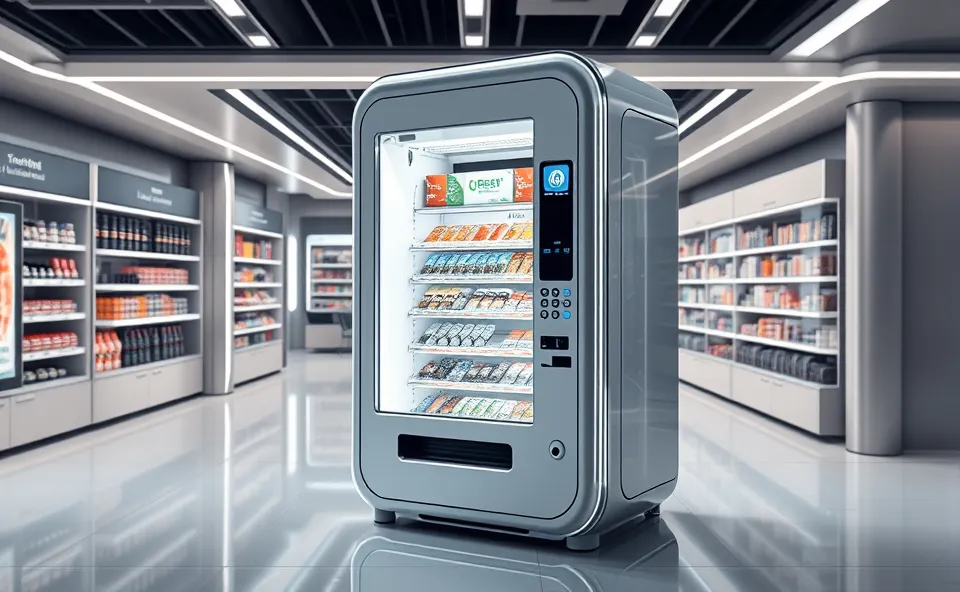
From Snack Bots to Smart Shops AI’s Speedy Store Makeover
Imagine this: a year ago, you might have seen a futuristic vending machine that could chat with you, answer questions, and even help you pick out a snack. Now, fast forward just 12 months, and that same idea has blossomed into fully automated stores and cafes. That’s the incredible evolution we’re talking about – the rapid journey of AI powered retail, specifically with Anthropic’s ventures, moving from simple smart vending concepts to sophisticated AI stores. It’s like watching a plant grow at warp speed, and it’s changing how we think about buying things.
Why All the Buzz About AI Stores Right Now?
So why are we suddenly hearing so much about AI stores and this whole vending machine evolution? It boils down to a few things. First, the technology is finally catching up to the vision. AI agents are getting smarter, more capable, and more importantly, more reliable. Companies like Anthropic are pushing the boundaries, showing that AI can do more than just process data; it can manage real world operations. Second, the world is hungry for convenience and efficiency. After the last few years, people appreciate faster, smoother, and more personalized experiences, and AI stores promise just that. It’s the perfect storm of technological readiness and market demand that’s making AI stores the hot topic of the moment.
Remember When Vending Machines Were Just for Chips?
To really appreciate how far we’ve come, let’s rewind a bit. Vending machines have been around for ages, primarily dispensing snacks, drinks, or the occasional useful item. They were simple, mechanical, and offered little interaction beyond inserting money and pressing a button. Then came the “smart” vending machines. These started to incorporate touchscreens, credit card readers, and basic inventory management. But the real game changer, the leap we’re seeing now, is powered by artificial intelligence. Think of companies like Anthropic, and developers like Lukas Petersson with Andon Labs, who have been exploring how AI can manage more than just dispensing. They started with AI agents that could assist in the vending process, making it more conversational and helpful. This was the seed. The idea was to make the vending experience less transactional and more like interacting with a helpful assistant. It laid the groundwork for what we’re now seeing as fully functional AI stores and cafes, where AI doesn’t just help you buy; it runs the place.
What Does This AI Store Revolution Mean for Us?
This shift from smart vending machines to AI stores and cafes has some pretty significant implications. For consumers, it means a potentially smoother, faster, and more personalized shopping experience. Imagine walking into a cafe, ordering your coffee, and having an AI manage the entire process from brewing to payment, all while you barely have to lift a finger. It could mean shorter wait times and products tailored to your preferences.
For businesses, the impact is huge. Automated retail powered by AI can lead to lower operational costs, as fewer human staff might be needed for certain tasks. This allows businesses to operate 24/7 with greater consistency. It also opens up new possibilities for store formats and locations that might not have been feasible before. Think of small, hyper-local AI stores or pop-up cafes that can be set up and managed with minimal overhead.
Technologically, this is a big win for artificial intelligence. It proves that AI agents can handle complex, real-world tasks that involve physical interactions and operational management. It’s a testament to the advancements in AI understanding, decision making, and integration with physical systems. This could accelerate the development and adoption of AI in many other industries, not just retail.
What’s Next on the AI Store Horizon?
So, where does this leave us? The evolution from AI vending machines to AI stores is clearly not stopping here. We can logically expect further integration and sophistication. We might see AI stores that are even more adaptive, learning customer habits to proactively stock popular items or offer personalized recommendations before you even ask. The interaction will likely become even more seamless, perhaps moving beyond simple voice commands to understanding more nuanced requests.
Think about how these AI stores could become hubs for more than just buying goods. They could integrate services, act as micro-fulfillment centers for online orders, or even provide interactive customer support. The technology behind these AI agents will continue to improve, leading to more robust and reliable systems. It’s a future where artificial intelligence plays a more integrated and invisible role in our daily transactions, making them more efficient and, hopefully, more pleasant.
Got Questions About AI Stores? We’ve Got Answers!
What exactly is an AI store compared to a vending machine?
An AI store takes the concept of a smart vending machine much further. While a vending machine dispenses pre-selected items, an AI store, powered by artificial intelligence, can manage a wider range of operations. This includes customer interaction, inventory management, order processing, and even in some cases, preparation of goods like in a cafe. It’s about AI agents running more of the business.
How is Anthropic involved in this AI store trend?
Anthropic is a leader in artificial intelligence research and development. Their advanced AI models and AI agents are instrumental in creating the sophisticated intelligence needed to power these automated retail environments. They are at the forefront of developing the AI that makes these AI stores and cafes function efficiently and intelligently.
Will AI stores replace human jobs in retail?
The rise of AI stores and automated retail suggests a shift in the retail workforce. While some tasks may become automated, it’s also likely to create new roles focused on AI oversight, system maintenance, and enhanced customer service. The goal is often to augment human capabilities and create more efficient operations rather than complete replacement.
What kind of technology makes these AI stores possible?
These AI stores rely on a combination of advanced technologies. This includes sophisticated AI agents capable of understanding and responding to customers, complex inventory tracking systems, seamless payment processing, and often robotics for tasks like stocking shelves or preparing food. It’s the integration of artificial intelligence with physical automation.
What is the future of automated retail and smart vending?
The future of automated retail and smart vending points towards increasingly intelligent and integrated systems. We can expect AI stores to become more personalized, efficient, and capable of handling a broader range of services. The evolution from simple vending machines to comprehensive AI stores shows a clear trend towards greater automation and AI involvement in how we shop and consume.











