

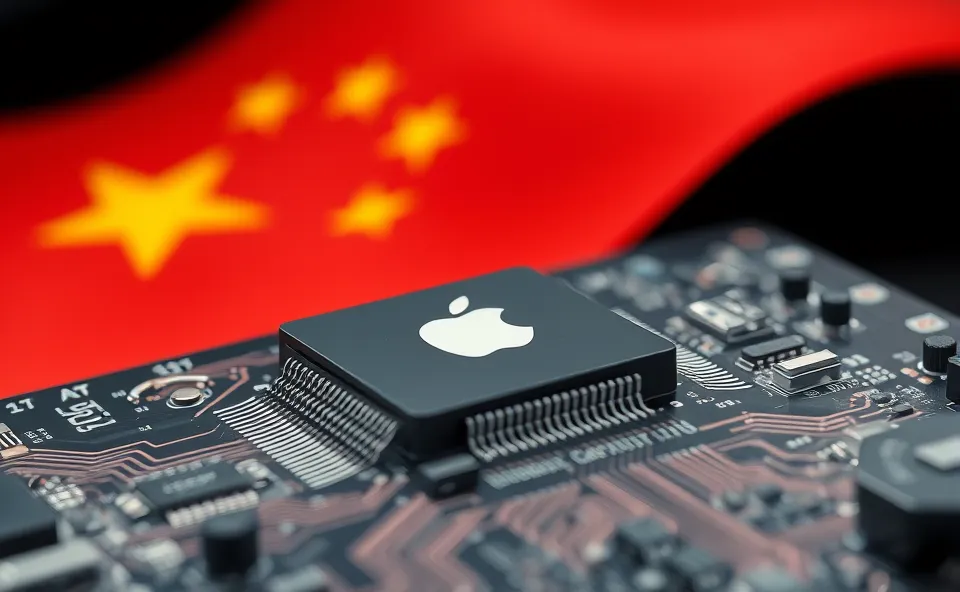
Apple is looking for new ways to power its devices
Apple is currently navigating a very tricky situation in the world of tech manufacturing. Recent reports suggest that the company is looking to source more memory storage from a Chinese firm called CXMT. This is a major move because RAM chips are a fundamental part of every iPhone, iPad, and Mac. Without reliable and affordable memory, the high performance we expect from Apple products would be much harder to maintain.
On the surface, this looks like a standard business decision. Any massive company wants to find the best deals to keep their production running smoothly. However, this specific move is much more complicated than just finding a cheaper supplier. It involves a massive web of global politics, national security concerns, and a very sensitive supply chain that is currently under immense pressure.
When we talk about Apple and CXMT, we are not just talking about a transaction between two companies. We are talking about a moment where the needs of a global tech giant clash with the shifting rules of international trade. Apple needs to keep its hardware costs manageable while also ensuring that its products remain available to millions of people around the world.
The reason everyone is watching this move
You might be wondering why this news is making waves in the tech world right now. The reason is simple: the semiconductor industry has become the center of a global power struggle. For years, the world relied on a very predictable set of suppliers for high end components. But that predictability is gone. Now, every major decision regarding where a chip is made or where it is sourced can trigger a massive reaction from governments.
People are searching for information on this because it touches on several big themes:
- The stability of the supply chain: After the shortages we saw in recent years, everyone is worried about whether companies can actually get the parts they need.
- The cost of technology: If Apple can find cheaper ways to get RAM chips, it might help keep device prices from skyrocketing.
- The tension between the US and China: This is no longer just about trade balances. It is about who controls the most important technology of the next century.
Because Apple is one of the most influential companies on the planet, its choices act as a signal. If Apple decides to move toward Chinese suppliers like CXMT, it tells the rest of the industry that the landscape is changing. It signals a shift in how even the biggest players plan to survive in a world of increasing trade restrictions.
A look at the complicated history of tech manufacturing
To truly understand why Apple sourcing from CXMT is a headline story, we have to look at the background. For a long time, the semiconductor industry operated with very little friction. Western companies designed the chips, and various global partners manufactured them. But over the last few years, the relationship between the United States and China has changed significantly.
The Pentagon and other US government agencies have become increasingly concerned about the role of technology in modern warfare. There is a growing fear regarding Chinese military ties within the domestic tech sector. This has led to the US government placing various entities on restricted lists. When a company is labeled as a blacklisted company, it becomes much harder for American firms to do business with them without facing legal or political consequences.
This environment has created a landscape of trade restrictions. The US has implemented rules to prevent certain high end technologies from reaching China, and China has responded with its own set of measures. In the middle of this are companies like Apple. They have massive manufacturing footprints in China, but they are also an American icon that must follow American laws and maintain the trust of their users. This history of tension is the reason why a simple purchase order for memory storage can turn into a geopolitical event.
What this means for the future of your devices
So, what is the actual impact of this situation? It affects three main areas: the cost of your gadgets, the way tech is made, and the reputation of the companies involved.
First, let us talk about hardware costs. Building a device like a MacBook or an iPhone involves thousands of tiny, expensive components. RAM chips are one of the most significant costs in that list. If Apple can successfully integrate CXMT into its supply chain, it could potentially lower the overall cost of production. For the consumer, this might mean more stable pricing or more advanced features at the same price point. However, if trade restrictions make this path too difficult, the costs could actually go up as Apple is forced to use more expensive, non Chinese alternatives.
Second, there is the matter of reputational risk. Apple has built its entire brand on the idea of security and privacy. They tell their customers that their data is safe and that their devices are built to the highest standards. If Apple is seen as being too close to a company that might have ties to foreign government interests, it could damage that trust. Even if there is no actual security flaw, the perception of risk can be just as damaging to a brand as a real one.
Finally, we see a shift in how the semiconductor industry operates. We are moving away from a single, globalized system toward a world where there are two different tech ecosystems. One is led by the US and its allies, and the other is led by China. Apple is essentially trying to figure out how to exist in both worlds at the same time, which is a incredibly difficult balancing act.
The road ahead for Apple and the chip industry
Looking forward, it is unlikely that we will see a simple resolution to this. Apple will likely continue to walk a very fine line. We should expect to see them diversifying their supply chain even further. This means they will probably keep working with established Western and Taiwanese suppliers while simultaneously testing and qualifying new partners like CXMT to ensure they are never caught without parts.
We will also likely see more government intervention. As the Pentagon and other regulatory bodies continue to monitor the semiconductor industry, the rules of the game will keep changing. Apple will have to remain extremely agile, ready to pivot their sourcing strategies at a moment’s notice to comply with new trade restrictions or to avoid being associated with a blacklisted company.
Ultimately, the goal for Apple is to maintain its dominance in the tech hardware market. Whether they do that by embracing new Chinese suppliers or by doubling down on domestic production remains to be seen. One thing is certain: the era of simple, easy global sourcing is over, and the era of strategic, high stakes technology management has truly arrived.
Frequently asked questions
Why is Apple interested in CXMT for RAM chips?
Apple is looking to diversify its supply chain and potentially manage hardware costs more effectively. By exploring different sources for memory storage, they can reduce their reliance on a single region and gain more leverage in the semiconductor industry.
How do trade restrictions affect the cost of tech hardware?
Trade restrictions can make components more expensive by limiting the number of available suppliers. If companies are blocked from using certain manufacturers, they have to turn to more expensive alternatives, which eventually leads to higher prices for consumers.
What are the risks of using a blacklisted company in a supply chain?
Using a blacklisted company can lead to severe legal penalties from the government and significant reputational damage. For a company like Apple, the main risk is losing the trust of customers who value security and privacy above all else.
Does the Pentagon influence the semiconductor industry?
Yes, the Pentagon plays a major role in shaping how the semiconductor industry operates. Through national security concerns and oversight regarding Chinese military ties, the US government can influence which companies are allowed to participate in the global market.
Will using CXMT change the performance of Apple devices?
The goal of sourcing from CXMT is to find reliable RAM chips that meet Apple’s strict performance standards. If the chips are high quality, the user experience should remain the same, but the main motivation is supply chain stability and cost management rather than a change in performance.











