

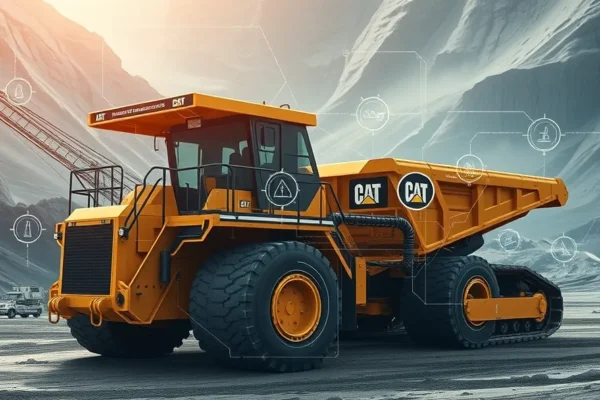
Caterpillar’s Autonomous Mining Paves the Way for Smarter AI Deployment
The massive yellow machines that dig, haul, and build our world are getting a digital upgrade. Caterpillar, a giant in heavy equipment, is not just building the machines of today but also shaping how Artificial Intelligence (AI) will be integrated into industrial operations. A key to their strategy lies in the hard-won lessons from years of developing autonomous mining technology. This experience is proving invaluable as they look to deploy AI more broadly, aiming to boost operational efficiency and transform industries.
Lessons Forged in the Mines
What exactly is this innovation? Caterpillar is applying insights gained from creating and operating fully autonomous mining trucks and shovels to its broader AI deployment strategies. Think of it this way: autonomous mining is a highly specialized form of AI where machines operate without human drivers in challenging environments. This requires sophisticated AI that can perceive its surroundings, make complex decisions, and execute tasks safely and efficiently. The problem it solves is enhancing productivity and safety in operations that are often remote, dangerous, and require continuous work.
Caterpillar’s significant advancements in this area, particularly with their Command for Autonomous Haulage System, represent a powerful case study. This isn’t just a theoretical concept; it’s technology already operating at scale in mines around the world. The significance now lies in Caterpillar’s ability to translate this specialized knowledge into more general AI applications across their diverse product lines and beyond.
How Autonomous Mining Fuels AI Smarts
At its core, autonomous mining relies on a suite of technologies that work together. Imagine a self-driving car, but on a much larger scale and in a much more rugged environment. The heavy equipment uses an array of sensors, including GPS, lidar (which uses lasers to measure distances), radar, and cameras, to “see” and understand its surroundings. This data is fed into powerful computers onboard the machines.
Here’s where the AI, specifically machine learning, comes in. Machine learning algorithms are like experienced operators that learn from data. In autonomous mining, these algorithms are trained on vast amounts of information about terrain, obstacle avoidance, and optimal path planning. They learn to recognize different objects—rocks, other vehicles, personnel—and make split-second decisions about how to navigate safely and efficiently. For instance, the system learns to predict the movement of other haul trucks to avoid collisions, or it determines the best way to load material into its own bed for optimal weight distribution.
Caterpillar’s approach has focused on developing robust, reliable AI systems that can operate continuously, even in the face of unexpected challenges. This emphasis on resilience and practical application is a crucial takeaway for their broader AI initiatives. It’s not just about having smart algorithms; it’s about deploying them in ways that deliver tangible results in the real world.
AI in Action: From Mines to More
Caterpillar’s autonomous mining technology is already in widespread use. Major mining companies like Rio Tinto and BHP have deployed fleets of autonomous trucks in their operations in places like Australia and North America. These systems are used for hauling ore and waste material, operating 24/7 in some of the world’s most demanding conditions. This isn’t a beta test; it’s a mature technology operating in a highly specialized industrial AI context.
The availability of this technology is through Caterpillar’s integrated solutions for mining operations. They offer not just the autonomous vehicles but also the supporting infrastructure and software required to manage these fleets. The lessons learned here are now being considered for other heavy equipment applications and industrial AI deployments. This includes areas like large-scale construction, infrastructure development, and even precision agriculture, where similar needs for automation, safety, and efficiency exist.
The Competitive Edge in Industrial AI
The field of industrial AI is competitive, with many players vying for dominance. In autonomous mining, competitors like Komatsu and Hitachi have also invested heavily in similar technologies, developing their own autonomous haulage systems. These companies are all pushing the boundaries of what heavy equipment can do through automation and AI.
Caterpillar’s advantage stems from its long-standing presence and deep understanding of the mining industry and its unique operational challenges. Their tech transfer from autonomous mining is about leveraging this existing foundation. While competitors may have strong AI capabilities, Caterpillar’s ability to integrate AI directly into their robust, purpose-built heavy equipment provides a distinct edge. Their approach often emphasizes a complete system solution—hardware, software, and support—rather than just an AI software add-on. This holistic view is critical for complex industrial deployments.
Reshaping Industries and the Future of Work
The implications of Caterpillar’s AI deployment strategies, informed by autonomous mining, are far-reaching. For industries like mining and construction, it promises significant gains in operational efficiency. Autonomous systems can operate around the clock without fatigue, leading to increased output and reduced downtime. Safety is also a major factor, as removing human operators from hazardous environments can drastically reduce accidents.
Economically, this shift could lead to restructured labor markets. While some traditional operator roles may diminish, new jobs will emerge in areas like AI system management, data analysis, and remote operation. This represents a fundamental change in the future of work within these sectors. The cost savings and productivity boosts can also translate into more competitive pricing for raw materials and infrastructure projects, benefiting broader economies.
Navigating the Roadblocks Ahead
Despite the impressive progress, challenges remain in deploying AI broadly. One significant limitation is the sheer complexity and cost of developing and implementing such advanced systems. Autonomous mining technology requires substantial upfront investment in hardware, software, and infrastructure. Furthermore, ensuring the absolute safety and reliability of AI systems in dynamic, unpredictable environments is a continuous engineering effort.
Beyond the technical hurdles, adoption barriers include regulatory frameworks that are still evolving to accommodate autonomous vehicles, particularly on public roads. For Caterpillar and other companies, there’s also the challenge of user adoption and training. Workers and management need to be comfortable with and effectively utilize these new technologies. The integration of AI into existing legacy systems can also present compatibility issues, requiring careful planning and execution.
The Road Ahead for Intelligent Machinery
Caterpillar’s future trajectory in AI deployment looks promising, building on the robust foundation of its autonomous mining successes. The company is likely to continue refining its machine learning algorithms for greater predictive maintenance, optimizing equipment performance, and enhancing operator assistance systems. We can expect to see more advanced AI features integrated into their product lines, moving beyond full autonomy to sophisticated decision support and automation of specific tasks.
Key developments to watch will include the expansion of these AI capabilities into less extreme environments, such as urban construction sites. The timeline for wider adoption of these advanced AI features across Caterpillar’s product portfolio is ongoing, with many new capabilities being introduced incrementally. Milestones will likely involve achieving higher levels of AI autonomy and proving their value proposition in a broader range of industrial applications.
Frequently Asked Questions About Caterpillar’s AI and Mining
Is Caterpillar’s AI deployment in mining fully autonomous today?
Yes, Caterpillar’s Command for Autonomous Haulage System enables fully autonomous operation of large mining trucks in controlled environments. This technology is actively used in commercial mining operations around the world.
How does autonomous mining inform other AI applications?
Lessons learned from the reliability, safety, and operational efficiency required for autonomous mining directly inform Caterpillar’s AI deployment strategies. This includes developing robust machine learning models and resilient systems for complex industrial settings.
What are the main benefits of using AI in heavy equipment operations?
The primary benefits include increased operational efficiency through continuous operation, enhanced safety by removing humans from hazardous tasks, and improved productivity, leading to significant cost savings for businesses.
Who are Caterpillar’s main competitors in autonomous heavy equipment?
Key competitors include companies like Komatsu and Hitachi, which are also developing and deploying their own autonomous mining and heavy equipment solutions.
What are the biggest challenges for widespread AI adoption in industries like mining?
Challenges include the high cost of initial investment, the need for robust and reliable AI systems that can handle unpredictable conditions, evolving regulatory frameworks, and the requirement for workforce training and adaptation.
When can we expect to see more AI beyond autonomous mining from Caterpillar?
Caterpillar is already integrating AI into various aspects of its equipment, such as predictive maintenance and operator assistance. The expansion of these capabilities into more product lines and applications is an ongoing process, with continuous advancements expected in the coming years.
It’s important to note that while significant progress has been made, the development and deployment of AI technologies are ongoing. Continuous research and rigorous testing are essential to ensure the safety, reliability, and effectiveness of these advanced systems in real-world industrial environments.











