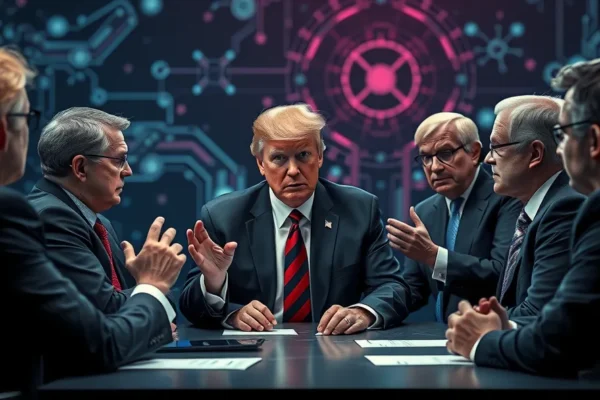
Understanding Plutopopulism and Its Impact on Business
Let’s break down a complex idea: plutopopulism. It might sound like a mouthful, but it’s a concept that’s increasingly shaping the world of business, especially for US business leaders. Imagine a political approach that combines the appeal of populism with the influence of wealth. Populism often champions the “common person” against an “elite.” Plutopopulism, however, sees wealthy individuals or groups, the “pluto” part, using populist rhetoric – speaking to the concerns of everyday people – to advance their own interests, sometimes through policies that might not be broadly beneficial.
Think of it like a popular chef who tells everyone their secret ingredient is a special, very expensive spice. They claim it’s what makes their food so good for everyone, but in reality, it benefits their own profit margin the most. This concept is crucial because it directly influences major economic forces like free trade and the stability of global alliances. These are the bedrock upon which much of modern international business is built. When leaders focus on policies driven by plutopopulist ideals, it can create uncertainty and disrupt long-held economic relationships that many businesses rely on.
How Plutopopulism Affects Free Trade and Global Alliances
At its core, plutopopulism can lead to policies that favor national interests over global cooperation, often under the guise of protecting domestic jobs or industries. This frequently manifests as economic nationalism and can directly challenge the principles of free trade. Free trade is essentially an agreement between countries to buy and sell goods and services from each other without imposing excessive taxes (called tariffs) or strict limits (quotas). The idea is that by trading freely, countries can specialize in what they do best, leading to lower prices and more choices for consumers.
Global alliances, on the other hand, are partnerships between countries that often have economic, political, and security benefits. Think of them like a group of friends who agree to help each other out when they need it, sharing resources and supporting each other’s goals. When plutopopulist ideas gain traction, leaders might prioritize what they see as immediate national gain, even if it means straining these alliances.
For instance, a leader influenced by plutopopulist thinking might impose tariffs on imported goods, claiming it helps domestic producers. The theory is to protect local jobs. However, this can backfire. Other countries often retaliate with their own tariffs, leading to trade wars. Imagine two neighbors who both start blocking each other’s driveways because one felt the other’s truck was too close. Soon, neither can easily get in or out, and everyone is inconvenienced. US business leaders who rely on international markets for sales or raw materials often find their operations disrupted. Their corporate strategy needs to adapt to this shifting landscape, which can involve costly supply chain disruption and a less predictable investment climate.
Why This Matters to Businesses and Individuals
The rise of plutopopulism and its strain on free trade and global alliances has tangible consequences. For US business leaders, it means increased uncertainty. When the rules of international trade change rapidly due to political decisions, it becomes harder to plan long-term. This can lead to reduced investment, as companies become hesitant to commit resources in an unstable environment. For larger corporations, this might mean re-evaluating where they manufacture goods or source materials, leading to shifts in their global supply chains.
On a personal level, this can affect your wallet. When tariffs are imposed, the cost of imported goods can rise. This means you might pay more for electronics, clothing, or even food. If trade wars escalate, companies might cut back on hiring or even lay off workers, impacting job security. On the flip side, some domestic industries might see a short-term boost if foreign competition is curtailed. However, the broader economic impact of disrupted trade and weakened alliances can lead to slower economic growth overall. The benefits are often concentrated, while the negative impacts can be more widespread.
Historical and Current Context
The tension between national interests and global cooperation in trade is not new. Historically, periods of increased globalization challenges have often been followed by waves of protectionism, where countries prioritize domestic industries. Economic nationalism has ebbed and flowed throughout history. However, the current interest in plutopopulism as a driving force behind these shifts is notable.
In recent years, certain political movements have gained traction by appealing to segments of the population feeling left behind by globalization. This often involves critiques of international trade agreements and global institutions. For example, the Trump administration’s “America First” policy, which included imposing tariffs on goods from China and other nations, and renegotiating trade deals like NAFTA (which became USMCA), exemplified a move away from established free trade principles. According to the Office of the United States Trade Representative, tariffs on specific goods were implemented to address trade imbalances and protect American industries. These actions, while supported by some, led to retaliatory tariffs from other countries, impacting various sectors of the US economy. This approach, often characterized by strong nationalist rhetoric and a focus on perceived national economic advantage, can be seen as a manifestation of plutopopulist tendencies, where the interests of certain powerful domestic groups are amplified under the banner of national well-being.
Practical Implications for Thinking About the Economy
When you encounter discussions about trade disputes, tariffs, or geopolitical shifts impacting international business, it’s helpful to consider the underlying motivations. Are policies being driven by a genuine effort to benefit all citizens, or are they potentially serving the interests of a select few under the guise of national pride?
A common misconception is that tariffs always protect jobs. While they might shield specific domestic industries in the short term, they can also lead to job losses in other sectors that rely on imports or face retaliatory tariffs. Another point to consider is that global alliances, while sometimes appearing costly, often provide stability and predictability for international business, which can ultimately benefit consumers through lower prices and greater access to goods.
When you see headlines about trade wars, think about the intricate web of supply chain disruption that might be affected. This affects not just big companies, but also the availability and price of the products you buy. Understanding the concept of plutopopulism helps you look beyond the surface-level arguments and question who truly benefits from policies that shift away from free trade and weaken global alliances.
Connecting Plutopopulism to Other Financial Ideas
This topic is deeply intertwined with several other financial and economic concepts. Understanding economic nationalism is key, as it often fuels protectionist policies. The idea of globalization challenges is also relevant, as the perceived downsides of globalization can create fertile ground for plutopopulist appeals. Furthermore, investment climate refers to the attractiveness of a country for investment, and trade tensions can significantly darken this climate. The disruptions to supply chain management highlight the interconnectedness of the global economy. When understanding these broader trends, it becomes clearer how decisions made on a national level can have far-reaching international and domestic implications.
Common Questions About Plutopopulism and Business
How does plutopopulism contribute to trade wars?
Plutopopulism can lead leaders to implement protectionist policies, like tariffs, justified by populist appeals to protect domestic interests. This often provokes retaliatory tariffs from other countries, escalating into trade wars that harm international business.
What is the impact of plutopopulism on US business leaders?
US business leaders face increased uncertainty due to unpredictable trade policies. This can disrupt supply chain operations, hinder international sales, and make long-term strategic planning more difficult, affecting their corporate strategy.
Can individuals control the effects of plutopopulism on free trade?
While individuals cannot directly control government policy, informed voters can influence elections by supporting leaders who champion stable free trade agreements and international cooperation. Consumer choices can also signal demand for globally sourced products.
What are the risks of weakening global alliances due to plutopopulist policies?
Weakening global alliances can lead to a less predictable international environment, reduced cooperation on global issues like climate change or pandemics, and potential increases in global instability, all of which can negatively impact the investment climate.
How does plutopopulism affect inflation and the cost of goods?
Policies driven by plutopopulism, such as tariffs, can increase the cost of imported goods. This can lead to higher prices for consumers, contributing to inflation, and can disrupt supply chain efficiencies that help keep costs down.
Is economic nationalism always a bad thing for a country?
While economic nationalism can sometimes protect nascent domestic industries, it often comes at the cost of reduced consumer choice, higher prices, and strained international relations, potentially leading to trade wars and impacting global alliances.
This content is for educational purposes only and does not constitute financial advice. Financial situations vary greatly, and it is always recommended to consult with a qualified financial professional for personalized advice tailored to your specific circumstances. Investing involves risk, and outcomes are not guaranteed.