Regulatory Headwinds for PepsiCo in the Indian Market
PepsiCo (PEP) has issued a cautious warning regarding the regulatory landscape for energy drinks in India. The company is alerting investors and stakeholders to the potential for a government-mandated energy drink ban or significantly stricter regulations on caffeine and sugar content. While this development has not yet triggered a massive sell-off in the global stock price, it has created a pocket of uncertainty for those tracking PepsiCo India and its expansion in emerging markets.
According to recent corporate communications and market reports from the region, the primary concern centers on how the Food Safety and Standards Authority of India (FSSAI) classifies energy drinks. If the government moves forward with a restrictive ban or imposes stringent labeling and ingredient caps, PepsiCo could face immediate disruptions in its India supplies and a forced reformulation of its product line. For global investors, this represents a classic case of regulatory risk in a high-growth market.
What is Driving the Current Uncertainty
The immediate catalyst for this warning is the Indian government’s increasing focus on public health, specifically regarding the consumption of high-caffeine and high-sugar beverages. The FSSAI has been reviewing the “energy drink” category to determine if these products should be classified as supplements or general beverages, as each category carries different legal requirements.
The trigger for the current market anxiety is the potential for a ban on specific stimulants or a mandatory “warning label” system similar to those used for tobacco or alcohol. In recent months, the beverage market in India has seen a shift where regulators are scrutinizing the caffeine content per milliliter. If the caffeine levels in PepsiCo’s energy portfolio exceed the newly proposed thresholds, the company may be forced to halt sales of certain SKUs (Stock Keeping Units) until they are reformulated.
This is not an isolated event but part of a broader trend of government regulations targeting non-communicable diseases. For PepsiCo, the risk is twofold: the immediate loss of revenue from halted sales and the long-term cost of redesigning products to meet local health standards without sacrificing the “energy” effect consumers expect.
The Financial Context of PepsiCo’s Indian Operations
To understand the impact, investors must look at PepsiCo’s global financial scale. According to PepsiCo’s 2023 annual report, the company generates annual revenues exceeding $91 billion. While the Indian market is a significant growth engine, it represents a fraction of the total global revenue. However, the energy drink segment is one of the fastest-growing categories in the Indian beverage industry, driven by a young, urban population and a rising “hustle culture.”
Historically, PepsiCo has navigated the Indian market by diversifying its portfolio between snacks (Lay’s, Kurkure) and beverages. This diversification provides a buffer. However, the energy drink sector has higher margins than traditional carbonated soft drinks. A disruption in this specific niche would impact the profitability of the regional portfolio more than the overall global bottom line.
Key metrics to consider include:
- Regional Growth: Emerging markets, including India, have been key drivers for PepsiCo’s organic revenue growth, often outpacing North American markets.
- Product Mix: The shift toward “functional beverages” (drinks that provide a health or energy benefit) has been a core part of PepsiCo’s strategy to move away from pure sugar-water products.
Fundamental Analysis of the Regulatory Impact
From a fundamental perspective, the potential energy drink ban in India signals a shift in the “cost of doing business” in the region. When a government introduces strict caffeine content rules, it creates a market disruption that favors companies with the most flexible supply chains.
Investors should monitor the following key metrics to gauge the severity of this move:
- Operating Margins in Asia-Pacific: If reformulation costs spike, we may see a dip in the regional operating margin.
- Inventory Turnover: A sudden ban often leads to “dead stock” where existing India supplies cannot be sold, leading to write-downs.
- Price-to-Earnings (P/E) Ratio: PEP typically trades at a premium due to its stability. Persistent regulatory issues in growth markets can lead to a slight compression of this multiple if investors perceive higher risk.
Current market sentiment suggests that while the risk is real, it is manageable. The company’s ability to pivot to “low-sugar” or “natural caffeine” alternatives indicates a level of agility. However, the move signals that the “wild west” era of energy drink expansion in India is ending, and a more regulated, clinical approach to beverage formulation is required.
Comparative Analysis: PepsiCo vs. Red Bull
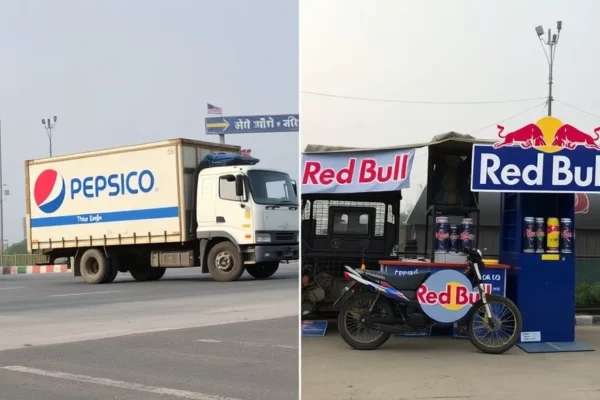
The situation highlights a stark contrast between PepsiCo and Red Bull in the Indian beverage market. While PepsiCo operates as a diversified conglomerate, Red Bull is a specialized powerhouse.
Red Bull has historically maintained a different market position in India, focusing on a premium, niche audience and leveraging a different ingredient profile. Because Red Bull operates with a leaner, more focused product line, it can often navigate regulatory shifts more quickly than a giant like PepsiCo, which manages hundreds of different product variations.
The competitive landscape is shifting in the following ways:
- Agility: Red Bull’s singular focus allows it to pivot its marketing and distribution faster if specific ingredients are banned.
- Market Share: If PepsiCo is forced to pull products from shelves for reformulation, Red Bull and other smaller, local energy drink brands may capture that vacated shelf space.
- Diversification: Conversely, if the energy drink category crashes entirely, Red Bull is far more exposed than PepsiCo, which can rely on its massive snacks and soda business to maintain revenue.
This development also opens doors for “health-first” beverage companies. Stocks focusing on organic energy, kombucha, or natural electrolytes may see an uptick in interest as consumers move away from synthetic caffeine sources in response to government warnings.
Future Outlook and Key Watchpoints
The outlook for PepsiCo India depends on the final wording of the FSSAI regulations. The market is currently in a “wait and see” period. There are three primary scenarios to watch for over the next 6 to 12 months:
First, the government may implement a “gradual phase-down” of caffeine and sugar. This would be the best-case scenario, allowing PepsiCo to reformulate products without interrupting India supplies.
Second, a “hard ban” on specific synthetic stimulants could occur. This would lead to immediate market disruption and a short-term hit to regional earnings.
Third, the government could introduce a “Sugar Tax” or “Caffeine Levy.” This would not stop sales but would compress profit margins, forcing the company to either raise prices (risking consumer volume) or absorb the cost.
Investors should keep a close eye on the next two quarterly earnings calls for any specific mentions of “regulatory headwinds” or “impairment charges” related to the Indian market. The timeline for these changes is likely to align with the next fiscal cycle in India, typically starting in April.
Past performance does not guarantee future results. Markets are volatile. This analysis is for informational purposes only and does not constitute financial advice. Readers should consult with a certified financial advisor before making investment decisions.
Frequently Asked Questions
What is the impact of the PepsiCo India energy drink ban?
The potential ban or restriction on energy drinks in India could lead to a disruption in India supplies and force PepsiCo to reformulate its products. While it is unlikely to crash the global stock price due to the company’s massive size, it could lower regional profit margins and cause short-term revenue volatility in the Asian market.
How does Red Bull compare to PepsiCo in the Indian beverage market?
Red Bull is a specialized energy drink company and is more exposed to category-specific risks than PepsiCo. However, Red Bull’s premium positioning and focused product line may allow it to adapt to government regulations more quickly than a diversified giant. If PepsiCo faces delays in reformulation, Red Bull could potentially gain market share.
What are the main risks for PepsiCo India regarding government regulations?
The primary risks include the mandatory reduction of caffeine content, new restrictions on sugar levels, and the requirement for health warning labels. These regulations can lead to “dead stock” (unsellable inventory) and increased research and development costs to create compliant versions of their energy drinks.
How do these regulations affect India supplies for the beverage industry?
Government regulations often require changes in sourcing and manufacturing. If certain ingredients are banned, the existing supply chain must be dismantled and rebuilt. This can lead to temporary product shortages and increased costs as companies search for approved alternative ingredients.
Is the potential energy drink ban a long-term threat to PEP stock?
For most global investors, this is a regional risk rather than a systemic threat. PepsiCo’s diversified portfolio across snacks and various beverage categories provides a significant safety net. The long-term impact would only be severe if similar regulations were adopted simultaneously across all major global markets.
What factors are driving the market disruption in the beverage industry?
The disruption is primarily driven by a global shift toward health and wellness and increased government scrutiny of synthetic additives. The FSSAI in India is mirroring a global trend where regulators aim to reduce obesity and caffeine-related health issues through stricter beverage industry standards.