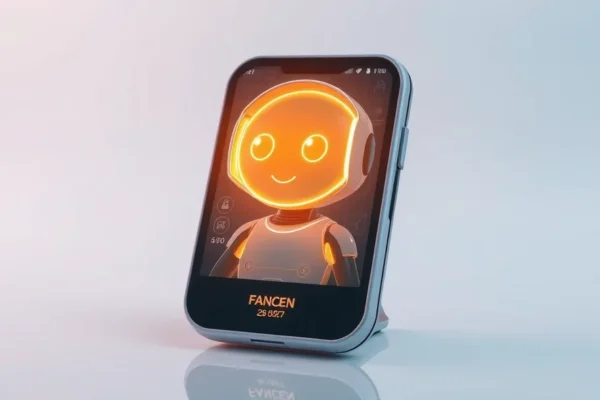
Introducing AI Tamagotchis and Dedicated AI Devices
The future of how we interact with artificial intelligence is rapidly shifting. Beyond the chatbots and voice assistants we’re accustomed to, tech giants like OpenAI and Meta are exploring a new frontier: dedicated AI hardware, often envisioned as personal “cutesy software agents” residing in physical devices. This isn’t just about smarter phones or more advanced computers; it’s about creating entirely new categories of devices purpose-built for AI. The concept of AI Tamagotchis, playfully referencing the digital pet craze of the 90s, captures the essence of these AI agents that are designed to be companions, assistants, and integrated parts of our daily lives, accessible through specialized AI devices.
This emerging trend signals a departure from the software-centric approach to AI, moving towards a hardware-software symbiosis. The problem these innovations aim to solve is the current limitation of AI being confined to screens and existing devices. The vision is to have AI seamlessly woven into our environment, accessible through intuitive interfaces that go beyond typing or speaking commands. Recent announcements and ongoing research from leading AI labs are fueling this excitement, suggesting that the era of dedicated AI devices is closer than we think.
How AI Tamagotchis and AI Devices Will Work
At its core, the idea behind these AI Tamagotchis and AI devices is to house powerful AI models in compact, often wearable or desktop gadgets. Think of it like this: currently, when you ask your smartphone a question, it sends that query to a distant server where a massive AI model processes it and sends back an answer. This requires a constant internet connection and relies on general-purpose hardware.
With dedicated AI devices, the goal is to integrate specialized AI chips, or “neuromorphic processors,” designed specifically for AI tasks. These chips can perform complex calculations much more efficiently and quickly than traditional processors. Furthermore, some of these devices aim to embed smaller, but highly capable, AI models directly onto the device, allowing for a significant portion of processing to happen locally. This means faster responses, better privacy (as less data needs to leave the device), and more reliable performance even without a strong internet connection.
The “cutesy software agent” aspect refers to the AI’s personality and interaction style. Instead of a purely functional interface, these AI agents are being designed to be more personable, adaptable, and even emotionally responsive, aiming to build a rapport with the user. This is akin to having a digital pet that learns your habits, understands your moods, and proactively offers assistance or companionship. For instance, an AI Tamagotchi might “nudge” you to take a break if it detects you’ve been working too long, or offer a helpful suggestion based on your current activity, all through a simple, perhaps animated, avatar on a small screen or even a projected interface.
Current State and Real-World Applications of AI Devices
While the full vision of AI Tamagotchis is still in its early stages, precursors and related AI devices are already making their way into the market. The Humane AI Pin, for instance, represents one of the most prominent early attempts at a dedicated AI device. Launched in April 2024, this screenless wearable projects an interface onto the user’s hand and relies on an AI assistant for a range of tasks, from sending messages to searching for information. While early reviews highlight both its innovative potential and its limitations, it offers a tangible glimpse into the future of AI in hardware.
Beyond the Humane AI Pin, we see AI integrated into other specialized hardware. Smart glasses are increasingly incorporating AI for real-time translation, object recognition, and augmented reality experiences. Companies are also developing AI-powered assistants for specific industries. For example, in healthcare, AI devices are being used for diagnostics and patient monitoring, and in manufacturing, they are optimizing production lines.
However, the concept of a truly personal, companion-like AI agent in a dedicated device, akin to an AI Tamagotchi, is largely still in development or in very early pilot phases. Major AI companies like OpenAI and Meta are investing heavily in research and development for the underlying AI models and the hardware to support them, but widespread consumer availability of such advanced, integrated AI devices is likely a few years away.
The Competitive Landscape for AI Devices
The race to define the future of AI devices is fiercely competitive, with multiple players vying for dominance. OpenAI, a leader in AI model development with its GPT series, has been rumored to be working on its own AI hardware initiatives, potentially in partnership with hardware manufacturers. Their focus is likely on leveraging their advanced AI models to power sophisticated AI agents within dedicated devices.
Meta, on the other hand, has a strong existing presence in hardware with its Oculus virtual reality headsets and is actively exploring AI integration into its future devices, including smart glasses and potentially new form factors. Their “AI agents” concept has been a consistent theme, aiming to create more natural and intuitive ways for people to interact with AI across their ecosystem.
Other significant players include companies like Google, with its Pixel phones and AI-powered Nest devices, and Apple, which has a long history of integrating AI capabilities into its hardware. Startups like Humane are also pushing boundaries, as seen with the AI Pin.
What differentiates the approaches often lies in the underlying AI architecture and the intended user experience. OpenAI and Meta are likely to focus on cutting-edge AI models that can handle complex reasoning and natural language understanding, while companies like Humane are prioritizing novel interfaces and form factors. The advantage could go to whichever company can best marry advanced AI capabilities with intuitive, seamless hardware design, potentially drawing inspiration from design luminaries like Jony Ive, who emphasized user experience and elegant integration.
Implications and Impact of AI Tamagotchis and AI Devices
The widespread adoption of AI Tamagotchis and dedicated AI devices could fundamentally reshape our relationship with technology and information. Imagine a world where AI is not just a tool you access, but a constant, unobtrusive companion that anticipates your needs. This could lead to significant boosts in personal productivity, as AI agents proactively manage schedules, filter information, and offer timely assistance.
Economically, this shift could spur the growth of new industries focused on AI hardware design, manufacturing, and software development. It might also create new business models centered around AI-powered services delivered through these devices. Jobs in areas requiring repetitive tasks or data analysis could be further augmented or automated, necessitating a workforce skilled in managing and collaborating with AI.
Socially, these AI devices could foster greater accessibility for individuals with disabilities, offering personalized support and bridging communication gaps. However, concerns about privacy, data security, and the potential for over-reliance on AI also loom large. The “cutesy” nature of some AI agents might also raise questions about emotional attachment to artificial entities and the blurring lines between human and machine interaction.
In the short term, we’ll likely see continued iteration and refinement of existing AI devices, with more sophisticated models and improved user interfaces. Long-term, this could lead to a pervasive AI presence in our lives, seamlessly integrated into everything from our clothing to our homes, transforming how we learn, work, and connect.
Limitations and Challenges for Dedicated AI Devices
Despite the exciting potential, the path to widespread adoption of dedicated AI devices, including the envisioned AI Tamagotchis, is paved with significant limitations and challenges. One of the most immediate hurdles is cost. Developing advanced AI chips and integrating them into sleek, functional hardware is an expensive undertaking. This means early iterations of these devices are likely to be premium products, inaccessible to a broad consumer base.
Technical challenges also abound. While AI models are becoming increasingly powerful, achieving true contextual understanding and natural, spontaneous interaction in a variety of real-world scenarios remains difficult. Battery life is another critical concern for wearable and portable AI devices; running powerful AI computations locally demands substantial power. Ensuring robust privacy and security for the sensitive data these devices will inevitably handle is paramount and complex.
User adoption itself is a significant barrier. People are accustomed to interacting with AI through smartphones and computers. Convincing consumers to adopt entirely new form factors and interaction paradigms requires a compelling value proposition and a seamless user experience, something even well-intentioned devices like the Humane AI Pin have struggled to fully achieve in their initial release. The “cutesy” approach, while appealing to some, might not resonate with all users, and the perceived novelty could wear off if the AI’s utility doesn’t consistently meet expectations.
The Future Trajectory of AI Tamagotchis and AI Devices
Looking ahead, the trajectory for AI Tamagotchis and dedicated AI devices is one of increasing sophistication and integration. We can expect to see advancements in specialized AI hardware, such as more energy-efficient neuromorphic processors, allowing for more complex AI tasks to be performed on-device. The AI models powering these agents will become more adept at understanding nuance, context, and even human emotions, leading to more natural and personalized interactions.
Companies like OpenAI and Meta will likely continue to push the boundaries of AI research, focusing on developing AI agents that can learn and adapt over time, becoming truly personalized companions. The form factors of these devices will also evolve, moving beyond wearables to integrated ambient AI, where intelligence is embedded within our surroundings.
Key developments to watch include breakthroughs in on-device AI processing that reduce reliance on cloud connectivity, advancements in multimodal AI that can understand and generate text, images, audio, and video, and the development of robust ethical frameworks to govern the deployment of these powerful AI systems. While specific timelines are difficult to pinpoint, experts suggest that we are on the cusp of a new era of AI hardware, with significant milestones likely in the next 3-5 years, moving from niche products to more mainstream adoption.
Key Questions and Answers About AI Tamagotchis and AI Devices
What exactly are AI Tamagotchis and AI Devices?
AI Tamagotchis are a playful term for upcoming AI agents designed to be personal companions residing in dedicated hardware devices. These AI devices are new gadgets built specifically to house and run advanced artificial intelligence, aiming for more seamless and intuitive interactions than current smartphones or computers.
Are AI Devices like the Humane AI Pin the future of personal technology?
The Humane AI Pin is an early example of a dedicated AI device, showcasing potential new interaction methods. While it represents a significant step, it’s too early to declare it the definitive future. Its success will depend on user adoption, ongoing innovation, and the ability of similar AI devices to prove their utility and value proposition over established technologies.
When will we see OpenAI and Meta release their own AI Devices?
While both OpenAI and Meta are heavily invested in AI research and development, including AI agents and hardware, specific product launch dates for dedicated AI devices have not been officially announced. Industry speculation suggests potential releases or more concrete announcements could emerge in the next few years, building on their ongoing AI innovation.
What are the main benefits of having a dedicated AI Device over a smartphone app?
Dedicated AI devices aim to offer a more integrated and proactive AI experience. They can potentially provide faster responses through on-device processing, more intuitive interfaces that don’t rely solely on screens, and a personalized AI companion that learns your habits and anticipates your needs, moving beyond the reactive nature of many current AI apps.
What are the biggest concerns with these AI Devices and AI Tamagotchis?
Key concerns include privacy and data security, as these devices will likely collect significant personal information. There are also worries about over-reliance on AI, the potential for job displacement, and the ethical implications of forming emotional bonds with AI agents. The cost and accessibility of these AI devices are also significant challenges.
How will AI Devices impact the market for traditional electronics?
The rise of dedicated AI devices could challenge the dominance of smartphones and laptops by offering specialized functionalities. This could lead to a diversification of the tech market, with consumers choosing devices optimized for specific AI-powered experiences, potentially impacting sales of general-purpose electronics over the long term.
This article explores emerging technologies and their potential, based on current research and industry announcements. The development and adoption timelines for these technologies are subject to change and may vary significantly.