

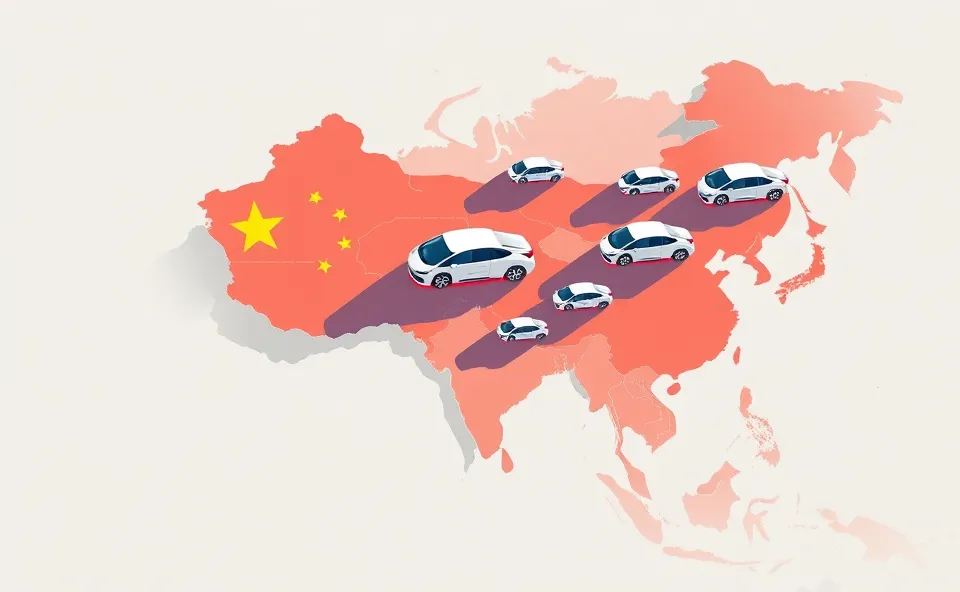
When global events shake up the car world
Imagine the world stage is buzzing with major news. Think about big international situations that grab everyone’s attention. Sometimes, these global events create ripples that reach far beyond politics and into everyday industries, like the one making our cars. Recently, some major international shifts have unexpectedly opened up new doors for car companies, especially those from China, while making things a bit tougher for traditional car makers, particularly in Detroit. It’s a fascinating turn of events that’s changing how we think about the auto industry.
Why are we talking about this now?
People are suddenly very interested in this topic because the challenges faced by established car giants and the opportunities popping up for Chinese electric vehicle makers are becoming more visible. The economic shifts happening globally, coupled with specific international events, are really highlighting how quickly the playing field can change. With discussions around inflation, potential tariffs, and the ongoing evolution of the EV market, everyone wants to understand who’s winning and who’s feeling the pressure. It’s a timely look at the global competition heating up in the automotive manufacturing sector.
A Little History to Understand the Shift
For decades, car manufacturing in places like Detroit has been the backbone of the global automotive world. These companies built a reputation for quality and innovation, becoming household names. However, the world doesn’t stand still. The rise of electric vehicles presented a massive opportunity, and for a while, many believed the established players would easily lead the charge. But the path to mass EV production hasn’t been smooth for everyone.
Think about the complexities: developing entirely new battery technologies, retooling massive factories, and dealing with volatile supply chains has been a huge undertaking. Add to that the rising costs due to inflation and the looming threat of tariffs on imported parts or even finished vehicles, and you have a recipe for challenges.
Meanwhile, Chinese automakers, often starting with a different economic and regulatory environment, have been aggressively investing in electric vehicles. They’ve focused on making EVs more affordable and accessible. They learned quickly, scaled up production, and have been steadily building their presence in various international markets. This steady, focused approach, combined with a domestic market that readily adopted EVs, has put them in a strong position.
The Unexpected Boost for Chinese EVs
So, what’s the real impact of these global events? For Chinese automakers, especially those focused on electric vehicles, it’s a moment to shine. As some traditional giants wrestle with production hurdles, rising costs, and the complex transition to electric, Chinese companies are finding it easier to enter and expand in markets that might have been harder to crack before.
Consider this: when major international conflicts or geopolitical tensions arise, global supply chains can get disrupted. This can make it more expensive and difficult for companies to get the parts they need. For automakers already struggling with these issues, it creates even more pressure.
On the flip side, Chinese manufacturers have often developed robust domestic supply chains and have been adept at navigating these kinds of global uncertainties. They can sometimes offer vehicles at more competitive prices, partly because they’ve managed their costs effectively and benefit from scale. This affordability is incredibly attractive, especially in times of economic uncertainty and rising inflation, where consumers are looking for value.
The EV market is still relatively young and evolving rapidly. This means that established dominance isn’t guaranteed. Companies that can offer compelling electric vehicles, especially at accessible price points, are poised to gain significant market share. Chinese EVs are increasingly fitting this description, offering a wider range of models and features that appeal to a broader audience.
For consumers, this competition is generally good news. More choices, potentially lower prices, and faster innovation in electric vehicles are all positive outcomes. For the broader automotive manufacturing landscape, it signals a significant shift in global power dynamics. It’s no longer just about who has the longest history, but who can adapt most effectively to new technologies, economic conditions, and global events. The impact on the future of electric vehicles is profound, as it accelerates the pace of change and pushes all players to be more agile and competitive.
What’s Next on the Road Ahead?
Looking forward, we can expect this trend to continue. Chinese automakers will likely keep pushing into new markets, leveraging their strengths in EV technology and cost-effective production. Detroit automakers and their global counterparts will be under immense pressure to accelerate their own EV development, improve efficiency, and find ways to compete on price without sacrificing quality.
We might see more strategic partnerships emerge as companies look to share costs and risks, especially in developing new battery technologies or securing critical materials. Governments may also play a larger role, with potential shifts in trade policies, tariffs, and incentives aimed at supporting domestic industries or promoting cleaner transportation. The race to dominate the EV market is intensifying, and the global events of recent times have certainly added some unexpected twists and turns to the journey. It’s a dynamic period for the auto industry, and the competition is only going to get fiercer.
Frequently Asked Questions
What are Chinese EVs doing differently in the global auto industry?
Chinese EVs are capitalizing on global events and Detroit’s challenges by focusing on affordability and rapid scaling of electric vehicle production. They often have more integrated supply chains and have been quicker to adapt to the evolving EV market, offering a wider range of competitive electric vehicles.
How do global events impact the EV market and Chinese automakers?
Global events, like geopolitical shifts or economic uncertainty, can disrupt supply chains and increase costs for established automakers. This creates an opportunity for Chinese EVs, which have often built resilient domestic production and supply networks, allowing them to maintain competitive pricing and continue their expansion in the EV market.
What challenges are Detroit automakers facing in the current automotive manufacturing landscape?
Detroit automakers are grappling with the complexities of transitioning to electric vehicles, managing rising inflation, navigating supply chain issues, and facing the potential impact of tariffs. These factors, combined with intense global competition, make it a challenging time for their traditional business models.
How does geopolitical impact affect the automotive manufacturing sector?
Geopolitical impacts can lead to trade disputes, affect the availability and cost of raw materials and components, and disrupt production schedules. This creates an uneven playing field, sometimes benefiting automakers in regions with more stable supply chains or less exposure to international conflicts, such as many Chinese EV manufacturers.
What is the future outlook for Chinese EVs amid global competition?
The future outlook for Chinese EVs appears strong, as they continue to innovate and expand their global reach. Facing less pressure from legacy costs and internal combustion engine operations, they are well-positioned to gain more market share in the growing electric vehicles sector, especially as economic shifts favor more affordable and accessible transportation solutions.











