

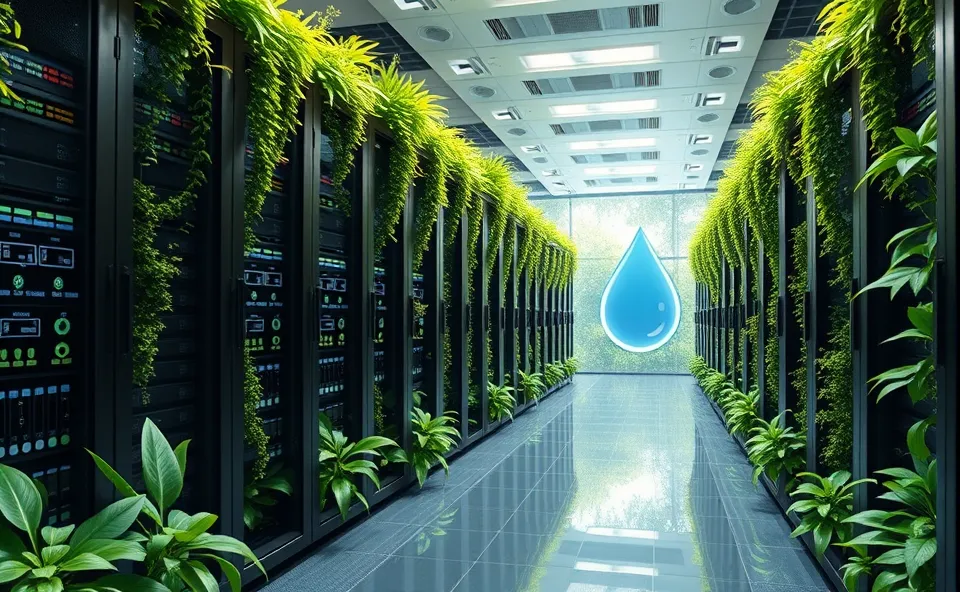
The Thirstiest Tech Giants Face a Water Reckoning
You know those massive buildings filled with humming servers that power everything from your Google searches to your Microsoft Teams calls? They’re called data centers, and they’re incredibly important for our digital lives. But here’s a little secret: these digital powerhouses consume a surprising amount of water, and that’s becoming a bigger and bigger issue. Companies like Google and Microsoft, often called hyperscalers because of their enormous scale, are now stepping up to address their significant water consumption and the impact it has on local resources.
Why Are We Talking About Data Center Water Use Right Now?
The conversation around data center water use is heating up because we’re living in a world where water scarcity is a growing concern. As more and more of our lives move online, the demand for these data centers keeps climbing. This increased demand means more servers, more processing power, and, unfortunately, more cooling needed to keep all that tech from overheating. Cooling these massive facilities often relies heavily on water, leading to a direct connection between our digital convenience and the availability of fresh water in many communities. As climate change exacerbates water stress in various regions, the tech industry’s reliance on water is coming under closer scrutiny, making data center water use and the broader issue of water scarcity urgent topics.
A Look Back: How We Got Here
For a long time, the sheer efficiency and power of data centers were the main focus. Keeping servers running smoothly and efficiently was paramount. The common method for cooling these facilities involves water. Think of it like a car’s radiator, but on a colossal scale. Water is circulated through cooling towers or other systems to absorb heat generated by the servers and then released back into the environment, often through evaporation. Historically, the availability of water wasn’t seen as a significant bottleneck. However, as data centers grew in number and size, and as droughts and water shortages became more frequent and intense in various parts of the world, the environmental impact of this water usage started to become a major talking point. The tech industry, once able to operate with less direct concern for local water tables, now faces the reality of resource limitations and the need for greater corporate responsibility.
What This Means for All of Us
This shift in focus for hyperscalers has several important implications. For communities located near these data centers, it can mean the difference between having enough water for daily needs and facing shortages. When large industrial facilities, including data centers, draw significant amounts of water, it can strain local supplies, especially during dry spells. This is where the concept of water scarcity truly hits home.
For the tech industry itself, it’s a push towards innovation and smarter resource management. Companies are realizing that sustainable practices aren’t just good for the planet; they’re crucial for long-term operational viability and public perception. The environmental impact of their operations can no longer be ignored.
For us as users, it might not be immediately obvious, but it means the companies providing our digital services are becoming more mindful of their footprint. This focus on sustainability could lead to more energy-efficient data centers and a more responsible approach to water usage, ultimately contributing to better water quality in affected areas. It’s about ensuring that our digital progress doesn’t come at the expense of essential natural resources.
The Road Ahead: Smarter Ways to Keep Cool
So, what’s next? The good news is that companies like Google and Microsoft aren’t just acknowledging the problem; they’re actively seeking solutions. We’re seeing a lot of investment in developing and implementing advanced cooling systems that use less water or no water at all.
One approach is to utilize renewable water sources. This could include recycled wastewater or even desalinated seawater in coastal areas, though these methods have their own challenges and energy demands.
Another significant trend is the development of more water-efficient cooling technologies. This might involve advanced air cooling techniques or closed-loop systems that recapture and reuse water much more effectively, minimizing overall consumption. The goal is to decouple the growth of data centers from increased water demand.
Furthermore, these companies are increasingly focusing on water stewardship, which means understanding the local water context and working with communities to ensure responsible water use. This involves conducting thorough water impact assessments and setting ambitious goals for reducing their water footprint. It’s a proactive move toward better resource management and a demonstration of corporate responsibility in the face of growing water scarcity concerns.
Frequently Asked Questions
How much water do data centers actually use?
Data center water use can be substantial, particularly for large hyperscalers. This water is primarily used for cooling systems to prevent servers from overheating. The exact amount varies greatly depending on the size of the facility, the type of cooling technology used, and the local climate. As water scarcity becomes more prevalent, the efficiency of these cooling systems is under increasing focus.
What are hyperscalers doing about their data center water use?
Hyperscalers like Google and Microsoft are investing heavily in sustainable solutions. This includes developing and deploying water-efficient cooling systems, exploring alternative water sources like recycled water, and setting ambitious targets for reducing their overall water consumption. They are also focusing on water stewardship, understanding their impact on local resources and working towards responsible resource management.
Why is water scarcity a growing problem for the tech industry?
The tech industry’s reliance on data centers, which require significant water for cooling, directly conflicts with global trends of increasing water scarcity. As demand for digital services grows, so does the footprint of data centers. This makes managing water resources a critical challenge for the industry, pushing for greater sustainability and environmental impact awareness.
What impact does data center water use have on local water quality?
While the primary concern is the quantity of water consumed, the discharge from cooling towers can sometimes affect local water quality if not properly managed. Companies are increasingly looking at closed-loop systems and responsible water discharge practices to mitigate any negative environmental impact and ensure better water quality.
How can I learn more about the tech industry’s efforts in sustainability and resource management?
You can follow updates from major tech companies directly, as many publish sustainability reports detailing their environmental initiatives, including their strategies for managing data center water use. Websites focused on technology and business trends also often cover these developments, highlighting corporate responsibility and innovative solutions to challenges like water scarcity.











