The Rising Cost of the Digital Brain and Gen Z’s Backlash
Imagine you’re building a massive, super-smart computer that can do things like understand your voice commands, recommend movies, and even help doctors diagnose diseases. This computer needs a special, very large building to live in, filled with powerful equipment. This building is called an AI data center. It’s essentially a high-tech home for the “brains” behind artificial intelligence (AI).
Now, think about what a big, busy house needs. It needs electricity to run its lights and appliances. Similarly, AI data centers need a tremendous amount of electricity to power all their complex machinery. This is where the concept of energy consumption becomes crucial. The more powerful the AI, the more electricity it needs, and the bigger its energy footprint.
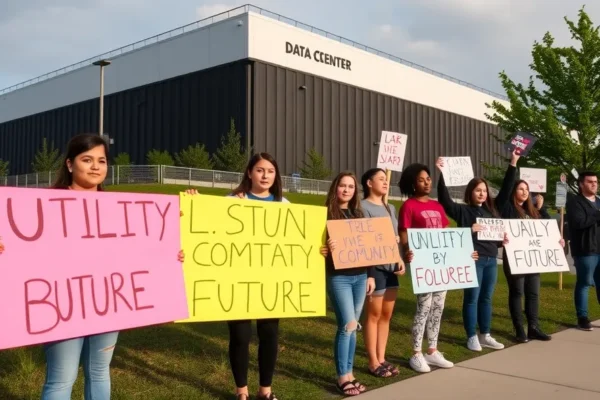
For many, especially the younger generation known as Gen Z, understanding the financial and environmental implications of these massive digital structures is becoming increasingly important. They are not just passively watching; they are actively voicing concerns and organizing. This article explores why Gen Z is leading the fight against the rapid expansion of AI data centers, focusing on rising costs, future concerns, and how their local activism is influencing political discussions.
How AI Data Centers Eat Up Resources
Let’s break down what happens when an AI data center is built and operates. Think of it like setting up a huge, power-hungry gaming rig. First, there’s the construction, which requires significant investment and resources. Then comes the operation. AI data centers are packed with thousands of powerful computers, called servers. These servers are constantly working, processing vast amounts of data, which generates a lot of heat. To keep these servers from overheating, massive cooling systems are needed, which also consume a lot of electricity. This continuous demand for power is what makes data center costs, particularly electricity bills, so high. These costs are not just borne by the companies that own the data centers; they can ripple through the economy, affecting the price of services that rely on AI.
Consider this scenario: A large tech company decides to build a new AI data center in a town. They might promise job creation, but the local community soon notices a significant increase in electricity usage in their area. This surge in demand can strain the local power grid and, according to community activists, lead to higher utility bills for residents. In some cases, the sheer demand for power might even impact the reliability of electricity for homes and businesses. This is a real-world concern that has emerged in various locations where AI infrastructure is being rapidly deployed. For example, in regions already facing energy challenges, the addition of power-hungry data centers can exacerbate existing problems, leading to more frequent outages or escalating energy prices for everyone.
Why This Fight Matters to Everyone’s Wallet
The concerns around AI data centers have profound implications for everyday people, especially young adults who are increasingly aware of economic and environmental issues. For Gen Z, understanding the youth economic impact AI can have is a critical part of their financial literacy. When AI data centers consume vast amounts of electricity, it can contribute to rising energy costs. This directly impacts household budgets. Think about it: if electricity prices go up because of increased demand from data centers, your own electricity bill will likely rise, leaving you with less money for other essential expenses or savings. This can also make it harder to save for major goals like buying a home or investing.
Furthermore, the immense power requirements of AI data centers can strain existing energy infrastructure. This can lead to situations where new renewable energy projects are diverted to power these centers, potentially slowing down the transition to cleaner energy for communities. The issue of housing affordability can also be indirectly affected. In areas where data centers are built, the demand for electricity and land might increase, potentially driving up costs for local residents and businesses. Those who benefit most are typically the large tech companies that operate these data centers and the shareholders who invest in them. However, the negative impacts, such as increased utility bills and potential environmental strain, are felt more broadly by the local communities and, in the long term, by the broader economy through inflationary pressures or resource scarcity.
The Evolving Landscape of AI Infrastructure
The concept of data centers isn’t new; they have been the backbone of the internet for decades. However, the current surge in interest and activism is driven by the explosive growth of Artificial Intelligence. The development of more sophisticated AI models, like those capable of generating text, images, and even complex code, requires exponentially more computing power. This has led to a race to build more, and larger, AI data centers globally.
Historically, the focus was on the speed and capacity of these centers. Now, the conversation is shifting due to the sheer scale of their resource needs. Recent data highlights the significant energy footprint of AI. For instance, some reports suggest that a single large AI model can consume as much energy in a year as hundreds of households. This has triggered a wave of concern, especially among younger generations who are more attuned to environmental issues and long-term economic sustainability. The environmental concerns are amplified by the fact that not all data centers are powered by renewable energy, contributing to carbon emissions. This has spurred greater scrutiny of the AI buildout impact on both local communities and the planet.
Thinking Financially About the AI Data Center Boom
For individuals, understanding the implications of AI data centers is about recognizing how large-scale technological and infrastructure projects can affect their personal finances and the broader economy. When you see news about new data center construction, it’s worth considering the potential downstream effects. This includes how it might influence local energy prices, the availability of renewable energy for your home, and even the cost of goods and services that increasingly rely on AI. Common misconceptions include assuming that the benefits of data centers are always localized and immediate, without considering the potential long-term costs and resource demands.
One practical insight is to stay informed about local zoning decisions and energy policies. When local governments are considering proposals for new AI data centers, there are often opportunities for public comment. Understanding how these decisions are made and what factors are being considered, such as energy usage, environmental impact, and community benefit, can help you form a more informed opinion. Another point to consider is the role of technological innovation. While AI data centers currently have a significant energy demand, ongoing research is focused on developing more energy-efficient AI models and computing hardware, which could mitigate future impacts.
Connecting AI Data Centers to Your Financial World
The discussion around Gen Z and AI data centers is interconnected with several other financial concepts. Understanding energy consumption is fundamental, as it directly relates to the cost of living and inflation. When energy prices rise due to increased demand, it can contribute to broader inflationary pressures, making goods and services more expensive for everyone. This connects to the concept of supply and demand; as the demand for electricity increases with AI infrastructure, and if the supply cannot keep up or becomes more expensive to produce, prices will rise.
The activism surrounding AI data centers also highlights the growing importance of environmental, social, and governance (ESG) investing. Investors are increasingly looking at how companies manage their environmental impact and their relationships with communities. The concerns raised by youth activists can influence corporate behavior and investor decisions, pushing companies towards more sustainable practices in their AI infrastructure development. Additionally, the push for more efficient AI and data center operations is a driver of innovation, which can create new economic opportunities in areas like green technology and advanced computing.
Frequently Asked Questions About Gen Z AI Data Centers
What are the main concerns of Gen Z regarding AI data centers?
Gen Z is primarily concerned about the escalating data center costs, which can lead to higher utility bills for residents. They also worry about the immense energy consumption of these facilities and their potential impact on environmental sustainability, as well as the broader AI buildout impact on communities and future resources.
How does the AI data center boom affect inflation?
The massive energy demands of AI data centers can increase overall energy costs. When energy becomes more expensive, it can contribute to inflation by raising the operational costs for many businesses, which may then pass those costs on to consumers through higher prices for goods and services.
Can individuals directly control the construction of AI data centers in their areas?
While individuals cannot directly control construction, they can influence decisions through community activism. Participating in local government meetings, voicing concerns to elected officials, and supporting organizations advocating for responsible AI infrastructure development are ways young voters and others can exert influence.
What are the economic risks associated with rapid AI infrastructure expansion?
Economic risks include increased energy prices, potential strain on power grids, and competition for resources that could affect other sectors. There are also concerns about whether the economic benefits promised by AI buildouts are equitably distributed among communities.
How does the demand for AI data centers relate to housing affordability?
Increased demand for electricity and land by large data center projects can sometimes drive up local utility costs and property values. This can indirectly make it more challenging for residents to afford housing in areas experiencing rapid AI infrastructure growth.
What are the environmental concerns associated with AI data centers?
The primary environmental concerns are the high energy consumption, which can contribute to carbon emissions if powered by non-renewable sources, and the significant water usage for cooling systems. These factors are central to the environmental concerns driving much of the protest.
This is educational content, not financial advice. Financial situations vary, and consulting with a qualified financial professional is recommended for personalized guidance. Outcomes are not guaranteed and depend on individual circumstances and market conditions.