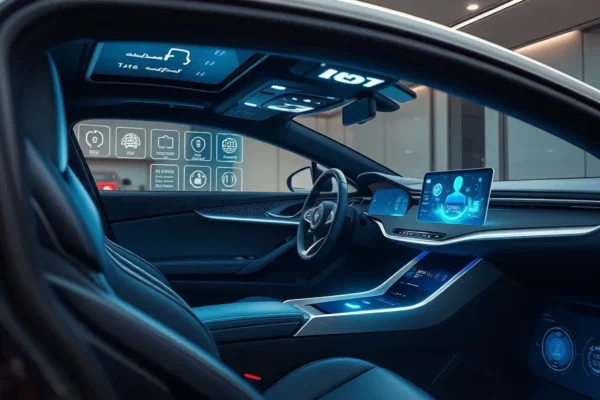
Your Car Is About to Become Your New Personal Assistant
Imagine if your morning commute wasn’t just about driving, but about checking off your to-do list before you even arrive at the office. GM is currently working to turn this scenario into reality. By evolving their fleet into autonomous personal assistant vehicles, GM is banking on the idea that your car should do more than just get you from point A to point B. This shift focuses on integrating smart car features directly into the driving experience, essentially creating an errand-running car that manages your schedule while navigating the road.
For the everyday driver, this means vehicle technology that might eventually handle grocery pickups, suggest time-saving routes based on your calendar, or even park itself while you run inside for a quick meeting. It is designed for busy professionals, parents juggling carpools, and anyone who feels like they are losing hours of their life behind the wheel. While fully autonomous driving is still a developing field, GM innovation in this space is moving toward a connected vehicle ecosystem that puts your needs at the center of the cabin.
What Your Day Looks Like with an Autonomous Assistant
How does this work in practice? Think of your vehicle as a digital butler that happens to have wheels. If you are a busy parent, the car could sync with your school drop-off schedule, adjust the interior climate for the kids, and even pull up your next meeting on the dashboard display while you are in transit. If you frequently travel for work, the car could automatically adjust its route to stop at a coffee shop you prefer, or even handle a mobile package drop-off while you are in a conference call inside the vehicle.
The core idea of automotive AI here is to reduce the mental load of daily life. Instead of juggling your phone to find an address or worrying about finding a parking spot in a crowded lot, the car handles the logistics. It feels like having a proactive partner that knows exactly what you need, whether it is rerouting to avoid an accident or pre-ordering your lunch so it is ready when you arrive.
Who Is This Tech For
This future of transportation is best for early adopters who love convenience and are comfortable with AI making small decisions for them. It is great for commuters who spend significant time in traffic and want that time to be productive rather than stressful. However, if you are a “driver’s driver” who enjoys the tactile feel of the road and prefers total control over every turn, this level of automation might feel like overkill. Skip this if you are hesitant about handing over control to software or if you prefer a simplified, analog driving experience without constant digital connectivity.
How GM Compares to the Competition
GM is competing with major players like Tesla and Waymo, as well as legacy brands like Ford and Mercedes-Benz. While Tesla is often viewed as the leader in consumer-facing self-driving features, GM’s approach relies heavily on a deeply integrated connected vehicle ecosystem, specifically through their Super Cruise technology and the OnStar platform. GM often leans toward a more traditional, comfortable vehicle feel compared to the stark, tech-heavy interiors of some competitors. In terms of value, GM offers a broader range of price points, making this technology accessible to a wider demographic than high-end luxury electric brands.
Getting Started with Your Smart Vehicle
You might wonder if you need an engineering degree to use these features. The good news is that GM has focused on a “set it and forget it” interface. Once you pair your smartphone and sync your calendars, the vehicle does most of the heavy lifting. The learning curve is similar to setting up a new smartphone. Most users find that within a few days, the voice-command prompts and automated suggestions become second nature. There are no complicated installations required, but you should expect to spend some time in the driveway on day one, customizing your settings to ensure the AI knows your preferences.
The Genuine Pros of GM Autonomous Features
- Significant Time Savings: By automating routine stops and providing real-time traffic intelligence, you reclaim lost minutes.
- Enhanced Safety: Advanced sensors and cameras can often react faster to road hazards than the average human driver.
- Seamless Connectivity: Your vehicle stays synced with your home and office, creating a unified digital experience.
- Reduced Stress: Letting the car handle the stop-and-go monotony of heavy traffic can significantly lower daily fatigue.
Real-World Limitations and Frustrations
It is not all smooth sailing. Users often report that autonomous features can be overly cautious in complex city traffic, occasionally leading to slower-than-expected maneuvers. Furthermore, the reliance on internet connectivity means that in remote areas with poor cell service, some of the “smart” features may become temporarily unavailable. Finally, while the AI is clever, it is not perfect; you still have to keep your eyes on the road. You cannot use this as an excuse to nap or work on a laptop, which is a common misconception among new users.
Price and Value Proposition
The cost of entry for these features varies widely depending on the specific GM vehicle model you choose. While some smart features are included in base models, the most advanced autonomous assistant capabilities are usually reserved for higher-tier trims or require a subscription to services like Super Cruise. For the average buyer, this is a premium investment. It is worth the price if you value your time and comfort, but if you are looking for a basic point-to-point commuter, the extra cost for advanced AI might not pay for itself immediately.
Our Final Verdict
GM’s move to turn vehicles into autonomous personal assistants is a fascinating glimpse into the future of transportation. For families and busy professionals, it offers a tangible upgrade to quality of life. However, it is important to remember that this technology is still evolving. We recommend this for those who want to be on the cutting edge of convenience, but we suggest that more cautious buyers wait for the next iteration to see how the software matures. It is a bold, exciting step forward, but treat it as a helpful assistant, not a chauffeur.
Common Questions About GM Autonomous Technology
Is this technology worth the price? It depends on your daily commute. If you spend over an hour a day in traffic, the convenience and stress reduction are often worth the premium price tag.
Do I need special equipment or accessories? No, these features are built directly into the car’s hardware and software. You only need a compatible smartphone to unlock the full ecosystem of services.
Is the system easy to learn? Most users find the interface intuitive. If you can use a modern smartphone or a smart home assistant, you will find the learning curve for GM’s system to be very manageable.
How long do these features last? These are software-driven features, so they often improve over time with “over-the-air” updates. However, like any computer, the hardware may eventually become outdated after several years.
Can I turn off the autonomous features? Yes, the driver always maintains control. You can disable the autonomous driving or assistant features at any time via the dashboard controls if you prefer to take full manual command.
Product prices and availability vary by region. Verify current pricing before purchase.