

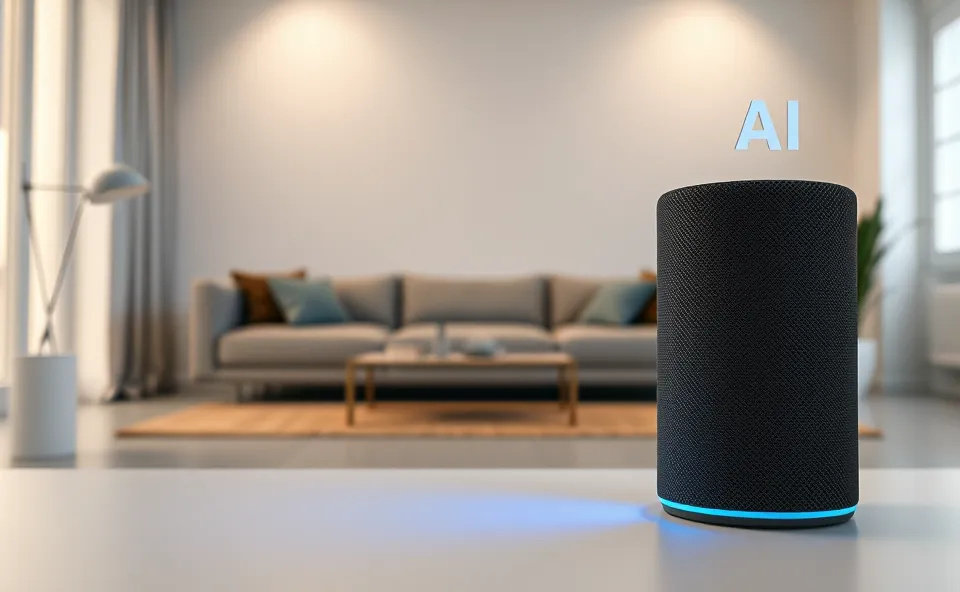
A Smarter Way to Talk to Your Home
Imagine walking into your living room and having a real conversation with your house. Not the kind of conversation where you have to use specific magic words or repeat yourself three times, but a natural chat. That is exactly what Google is aiming for with the new Gemini Google Home Speaker. Google is basically giving its smart home hardware a brain transplant, replacing the old system with Google Gemini AI.
For a long time, smart speakers felt like fancy timers or weather stations. They were great for simple tasks, but they often struggled with context. If you asked a follow up question, the speaker would sometimes forget what you were talking about two seconds earlier. The new Google Smart Speaker changes that. By integrating the Gemini chatbot directly into the hardware, the device can now understand nuance, remember previous parts of a conversation, and provide answers that feel human rather than robotic.
Along with the AI upgrade, we are seeing a Google Home redesign. Google is moving away from the purely utilitarian look and embracing a style that fits more naturally into a modern home. The hardware is sleeker, but the real beauty is in the software. The AI integrated speaker is no longer just a tool to turn off the lights. It is becoming a personal assistant that can actually help you think through problems or plan your day using voice alone.
Why Everyone is Buzzing About This Upgrade
You might wonder why this is such a big deal right now. We have had smart speakers for years, so why the sudden excitement? The answer lies in the massive leap in generative AI. Over the last year, tools like the Gemini chatbot have shown us that AI can do more than just search the web. It can write poems, code apps, and brainstorm business ideas.
People are searching for the Gemini Google Home Speaker because they want that same power in their physical space. Most of us are tired of the rigid nature of older smart home devices. We want a device that knows that when we say “do it again,” we mean the song we just played, or when we ask “how about tomorrow,” we are referring to the weather forecast we just heard.
There is also a huge amount of curiosity about how Google hardware will compete in this new AI race. With other tech giants pushing their own AI models, users want to know if Google can make their ecosystem feel seamless. The idea of a truly AI smart speaker that acts as a central hub for your entire digital life is a powerful draw for tech enthusiasts and casual users alike.
The Journey From Basic Commands to Real Conversations
To understand why this shift is so important, we have to look at how things used to work. For years, the smart assistant in our homes operated on something called intent based processing. Essentially, the device listened for a specific keyword and then looked for a matching command in a giant library. If you didn’t say the command exactly right, the speaker would tell you it didn’t understand.
It was a bit like talking to a very strict librarian. You had to follow the rules of the system to get the result you wanted. While this worked for setting alarms or playing a specific playlist, it failed miserably at complex tasks. If you asked for a recipe and then asked how to substitute one of the ingredients, the system often got lost.
The introduction of Google Gemini AI changes the fundamental logic of the device. Instead of looking for keywords, the speaker now uses a large language model to understand the meaning behind your words. This is a shift from command based interaction to conversational interaction. It means the Google Smart Speaker can now handle open ended questions and provide detailed, helpful responses that feel like they are coming from a person who actually understands you.
How Your Daily Routine is About to Change
So, what does this actually mean for you when you are standing in your kitchen or sitting in your office? The impact of an AI integrated speaker is all about reducing the friction in your day. We are moving toward a world where the technology disappears into the background and just works.
Here are a few ways this will likely change the user experience:
- Complex Planning: Instead of searching for a flight and then searching for a hotel, you can tell your Gemini Google Home Speaker that you want to go to Tokyo for a week in October with a budget of two thousand dollars. The AI can suggest an itinerary and help you organize it.
- Better Home Control: Instead of saying “turn off the living room lights,” you could say “I am heading to bed,” and the smart home devices will know to lock the doors, dim the lights, and set the alarm based on your usual habits.
- Educational Support: For parents or students, the speaker becomes a tutor. You can ask it to explain a complex physics concept in a way a ten year old would understand, and it can pivot the explanation based on the questions you ask.
- Seamless Integration: Because it is part of the Google ecosystem, the speaker can summarize your unread emails or tell you when your next meeting is, all while sounding natural.
For businesses, this means the barrier to entry for smart home adoption drops. When technology becomes easier to use, more people buy into it. This puts pressure on other manufacturers to move beyond simple voice commands and toward true intelligence.
Where Your Smart Home is Heading Next
Looking ahead, it is clear that the Gemini Google Home Speaker is just the beginning. We are moving toward a phase of proactive intelligence. Right now, we still have to initiate the conversation. We say the wake word and ask a question. In the near future, Google Gemini AI will likely become more anticipatory.
We can expect the AI to notice patterns in our behavior. If you always brew coffee at 7 AM and check the news, your Google Smart Speaker might start your coffee maker and have a brief summary of the morning headlines ready for you the moment you walk into the kitchen. It will not be about responding to commands, but about providing support before you even ask for it.
We will also likely see the Google Home redesign extend into other areas. As AI becomes the core of the experience, the physical buttons and screens might become less important. The voice interface will become so reliable that the hardware can become even more discreet, blending perfectly into the decor of our homes while remaining incredibly powerful.
Common Questions About the New Gemini Experience
How is the Gemini Google Home Speaker different from the old version?
The main difference is the brain. The old version used a basic assistant that relied on set commands. The new version uses Google Gemini AI, which allows it to have natural conversations, remember context, and handle much more complex requests without needing specific phrasing.
Do I need to buy new hardware for the Google Home redesign?
While Google is introducing new hardware designs to complement the AI, many of the Google Gemini AI features are being rolled out via software updates to existing smart home devices. However, the newest hardware is optimized to handle these AI tasks more efficiently.
Can the AI smart speaker actually control my other devices?
Yes, it can. Because it is a Google Smart Speaker, it works with the entire Google Home ecosystem. The addition of Gemini makes the control more intuitive, meaning you can give broader instructions instead of specific device commands.
Is the Gemini chatbot safe to use around children in the home?
Google has built in several safety filters for its AI integrated speaker to ensure the content is age appropriate. However, parents can still use the Google Home app to set restrictions and monitor how the smart assistant is being used.
Will the Google Smart Speaker work without an internet connection?
Since Google Gemini AI relies on powerful cloud servers to process complex language, a stable internet connection is required for the most advanced features. Basic local commands may still work, but the conversational intelligence happens in the cloud.











