Grokipedia v0.3 Unveils a Sharper Look and Dynamic Knowledge Tracking
The world of digital encyclopedias is seeing a new challenger emerge. Grokipedia, an AI-powered encyclopedia developed by SpaceXAI and championed by Elon Musk, has released its latest update, version 0.3. This update brings significant enhancements to its user interface (UI), introduces a novel “latest edits” tracker, and incorporates visually engaging 3D book elements, positioning Grokipedia as a direct competitor to established platforms like Wikipedia. The goal of Grokipedia is to provide a comprehensive and dynamic digital knowledge base, leveraging artificial intelligence to curate and present information. This Grokipedia update is significant because it marks a substantial step forward in user experience and content management, aiming to attract a broader audience and foster a more interactive learning environment. The announcement was made via official SpaceXAI channels, detailing the new features and their intended benefits for users seeking reliable information.
How Grokipedia’s New Design Aims to Enhance Knowledge Discovery
At its core, Grokipedia aims to revolutionize how we access and interact with information. The v0.3 update focuses heavily on user experience, introducing a redesigned website design that is both cleaner and more intuitive. Think of the UI as a librarian’s desk made digital – instead of rows of physical books, you have a streamlined digital interface that helps you find what you need faster. This new website design is not just about aesthetics; it’s intended to make navigating the vast amount of information within Grokipedia more efficient.
A key innovation in this Grokipedia update is the “latest edits” tracker. This feature acts like a live feed of changes happening within the encyclopedia. Imagine a bustling newsroom where editors are constantly updating stories; the tracker shows you these real-time modifications. This allows users to see how articles are evolving and can offer a glimpse into the collaborative process behind the AI-curated content. This functionality aims to increase transparency and allow users to follow the development of information.
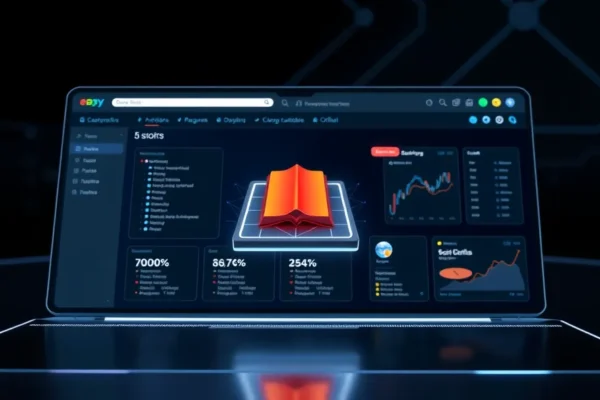
Furthermore, the update introduces 3D book visuals. Instead of just static images or text, certain featured articles are now presented with three-dimensional renderings of books. This adds a layer of visual richness and can make the act of exploring knowledge feel more tangible and engaging, akin to browsing a physical library but with advanced digital capabilities. This innovation in digital knowledge base presentation aims to capture attention and make learning more immersive.
Grokipedia’s Current Standing in the Digital Knowledge Landscape
Currently, Grokipedia is in its early stages of development and adoption, with the v0.3 update representing a significant stride in its growth. While it is available for public access, it is not yet at the mainstream adoption level of its established counterparts. The platform is primarily accessible through its website, serving as a digital knowledge base for those interested in exploring information curated and enhanced by AI.
The real-world applications are still being defined, but the vision is clear: to offer an alternative to traditional encyclopedias. For instance, the “latest edits” tracker could be invaluable for researchers or students who need to stay updated on the most recent information or track the evolution of specific topics. The 3D book visuals might appeal to educational institutions or individuals who find visual learning more effective. At this stage, Grokipedia can be seen as an experimental platform for AI-powered knowledge dissemination.
The Competitive Arena: Grokipedia vs. Wikipedia and Beyond
Grokipedia is directly entering a space dominated by giants, most notably Wikipedia. Wikipedia, a community-edited encyclopedia, has been the de facto global standard for free online information for decades. Its strength lies in its massive community of contributors and its extensive breadth and depth of articles.
Grokipedia’s approach differs significantly by leaning heavily on AI. While Wikipedia relies on human editors, Grokipedia uses AI to curate, generate, and update content. This AI-powered encyclopedia aims for efficiency and potentially greater accuracy through algorithmic verification, though the nuances of AI-driven fact-checking are still being explored. The new UI features, like the “latest edits” tracker and 3D visuals, are designed to offer a more modern and interactive experience that traditional platforms might struggle to replicate quickly.
Another angle of competition comes from other AI research labs and tech companies exploring similar ventures in AI-driven information synthesis. However, Grokipedia, backed by SpaceXAI and associated with Elon Musk, carries significant visibility and resources. The primary differentiator for Grokipedia v0.3 is its attempt to blend AI capabilities with a user-friendly and visually dynamic interface, aiming to bridge the gap between raw data processing and engaging human consumption of knowledge.
Implications of an AI-Driven Encyclopedia
The rise of an AI-powered encyclopedia like Grokipedia has far-reaching implications. Economically, it could disrupt traditional publishing models and change how information is monetized, if at all. For businesses, having a reliable, AI-curated knowledge base could streamline research and development. Socially, it promises to democratize access to information further, potentially making learning more accessible and engaging for a global audience. The “latest edits” tracker could foster greater transparency in knowledge creation, a welcome change for many users wary of information manipulation.
However, this also raises important questions about the potential for AI bias in content generation, the role of human oversight, and the long-term impact on critical thinking skills if users become too reliant on AI summaries. The timeline for widespread adoption is uncertain, but the continuous updates suggest a commitment to evolving the platform. In the short term, it offers an interesting alternative for information discovery. In the long term, it could fundamentally alter how we learn and interact with knowledge.
Navigating the Challenges of AI-Generated Knowledge
Despite the promising advancements in Grokipedia v0.3, several limitations and challenges persist. The most significant is the inherent complexity of artificial intelligence in accurately representing nuanced or subjective information. AI models can sometimes generate factual errors, exhibit biases present in their training data, or struggle with the subtle distinctions required for comprehensive historical or cultural context. The “latest edits” tracker, while transparent, relies on the accuracy of the AI’s underlying information, meaning errors could be tracked and propagated if not caught.
Furthermore, building trust with users is a critical hurdle. For an encyclopedia, accuracy and neutrality are paramount. Establishing Grokipedia as a reliable source, comparable to established platforms like Wikipedia, will require rigorous verification processes and ongoing efforts to mitigate AI bias. The 3D book visuals, while innovative, may also present accessibility challenges for users with certain disabilities or those on slower internet connections, a point to consider for a global audience. The maturity level of this AI-powered encyclopedia is still developing, and users should approach it with an understanding of these ongoing challenges.
The Road Ahead for Grokipedia
The future trajectory of Grokipedia appears focused on refining its AI capabilities and expanding its feature set. We can anticipate further enhancements to the website design, potentially incorporating more interactive elements and personalized learning experiences. The “latest edits” tracker will likely evolve to offer more sophisticated filtering and notification options, allowing users to customize their information streams.
SpaceXAI and Elon Musk have indicated a long-term vision for Grokipedia that involves deeper integration of AI for information synthesis and analysis. Future developments may include more advanced AI-driven summarization, fact-checking, and even content generation capabilities. The potential exists for Grokipedia to become not just an encyclopedia but a dynamic research and learning assistant. Key developments to watch will be how effectively the platform addresses issues of AI bias and misinformation, and whether it can foster a community of users who contribute to its improvement, much like Wikipedia has done.
Key Questions and Answers About Grokipedia v0.3
What is Grokipedia v0.3?
Grokipedia v0.3 is the latest update to SpaceXAI’s AI-powered encyclopedia, featuring an improved user interface, a real-time “latest edits” tracker, and 3D book visuals, aiming to compete with existing online encyclopedias.
Is Grokipedia a direct competitor to Wikipedia?
Yes, Grokipedia is explicitly positioned as a competitor to Wikipedia, offering an AI-driven approach to knowledge curation and presentation with a focus on user experience and dynamic content tracking.
How does the “latest edits” tracker work?
The “latest edits” tracker functions like a live feed, showing users real-time modifications and updates made to articles within Grokipedia, providing transparency into the AI’s content management process.
What are the benefits of the 3D book visuals?
The 3D book visuals are designed to enhance user engagement by making the exploration of featured articles more visually appealing and tangible, akin to a digital library experience.
Is Grokipedia currently mature and widely available?
Grokipedia is in its early stages of development and adoption; the v0.3 update signifies progress, but it is not yet at the mainstream level of established platforms like Wikipedia.
What are the potential risks or limitations of an AI-powered encyclopedia?
Potential risks include AI bias in content, the accuracy of AI-generated information, and the challenge of building user trust. Ongoing development is needed to address these limitations.
This article is based on information available as of its publication date and reflects the current capabilities and stated intentions of SpaceXAI regarding Grokipedia. Emerging technologies are subject to ongoing research and development, and future advancements may alter current understandings of their capabilities and applications.