

Hyundai’s Ambitious Georgia Metaplant Expansion: A Deep Dive into Economic and Strategic Implications
Hyundai Motor Group has signaled a significant potential ramp-up at its Metaplant America facility in Georgia, aiming to boost production capacity to an impressive 800,000 units annually. This move, if realized, represents a substantial leap in the company’s electric vehicle (EV) manufacturing ambitions within the United States and carries profound economic implications for Georgia and the broader automotive industry. The proposed expansion underscores Hyundai’s commitment to electrifying its global fleet and solidifying its presence in key markets.
The Strategic Move: Scaling Up EV Production in the US
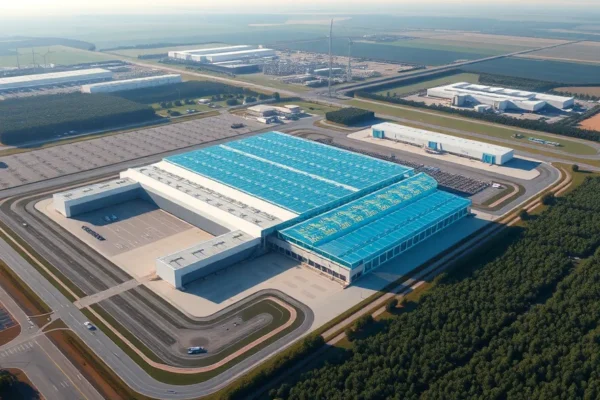
The development centers on Hyundai’s existing Metaplant America, located in Bryan County, Georgia. Initially designed for a capacity of 300,000 vehicles per year, the plant, which broke ground in 2022 and began initial production in late 2023, is reportedly being considered for a significant expansion to reach an 800,000 unit production capability. This ambition was first reported by the Korean Economic Daily, citing sources familiar with Hyundai Motor Group’s internal plans, and aligns with broader industry trends of scaling EV production to meet rising demand and government mandates.
This potential Hyundai expansion in Georgia is not just about increasing numbers; it’s a strategic pivot towards higher volume EV manufacturing in a crucial market. The initial investment in the Georgia EV factory was already substantial, representing one of the largest single automotive investments in the state’s history. The proposed increase in output signifies a confident bet on the future of electric mobility and Hyundai’s competitive positioning within it.
Strategic Rationale: Meeting Demand and Securing Market Share
The primary driver behind this potential Hyundai Metaplant Georgia expansion is the escalating global and U.S. demand for electric vehicles. Hyundai, along with its affiliate Kia, has been steadily increasing its EV sales, and the current Metaplant capacity is insufficient to meet projected future needs, especially considering potential incentives tied to domestic production. The U.S. market, in particular, is a battleground for EV market share, with stringent environmental regulations and consumer preferences shifting rapidly towards cleaner transportation.
This expansion allows Hyundai to localize a greater portion of its EV production, which can lead to several strategic advantages. Firstly, it reduces reliance on global supply chains, mitigating risks associated with shipping and geopolitical instability. Secondly, it positions Hyundai favorably to take advantage of U.S. tax credits and incentives for electric vehicles assembled domestically, a crucial factor for consumer adoption. By significantly increasing its US auto production capacity, Hyundai aims to capture a larger slice of the lucrative North American EV market. The company’s stated goal is to become a leader in sustainable mobility, and a robust domestic manufacturing base is essential for achieving this ambition.
Competitive Context: An EV Arms Race
Hyundai’s potential 800,000 unit production target places it firmly in competition with established automotive giants and emerging EV players. General Motors (GM) and Ford have also made massive investments in U.S.-based EV manufacturing, with plans to produce hundreds of thousands of EVs annually across multiple plants. Tesla, the current market leader, already operates large-scale Gigafactories in the U.S. The proposed Hyundai expansion indicates that the Korean automaker is not content to play a secondary role in this fiercely contested market.
This move signals an acceleration of the EV manufacturing arms race. Competitors like Toyota, which has been slower to embrace full electrification, may feel increased pressure to expedite their own EV production strategies in North America. The advantage gained by Hyundai would be a significantly strengthened supply chain, reduced per-unit costs through economies of scale, and a more agile response to U.S. market demands. Conversely, automakers with less localized EV production might find themselves at a competitive disadvantage, particularly if they are unable to secure sufficient domestic supply chains or benefit from local incentives.
Industry Implications: Accelerating the Electrification Shift
The potential Hyundai expansion at Metaplant Georgia is a strong signal about the accelerating shift towards electrification across the entire automotive industry. It highlights the critical role of domestic manufacturing in meeting future demand and navigating evolving regulatory landscapes. This move by Hyundai Motor Group suggests that the industry is moving beyond initial niche EV production towards mass-market manufacturing at scale.
This development will likely spur further investment in EV manufacturing infrastructure across the United States. Other global automakers may accelerate their own plans for U.S. factories or seek to expand existing ones. It also puts pressure on the supply chain for EV components, such as batteries, semiconductors, and raw materials, to scale up rapidly to support this increased production capacity. The race to secure reliable and cost-effective supply chains will intensify, potentially leading to more strategic partnerships and vertical integration within the sector.
Financial and Operational Impact: Economies of Scale and Supply Chain Efficiencies
A production capacity of 800,000 units at the Hyundai Metaplant Georgia would unlock significant economies of scale, potentially lowering the per-unit cost of EV production. This can translate to improved profitability margins or more competitive pricing for Hyundai’s electric vehicles in the U.S. market. While specific financial projections for the expansion have not been detailed, increased output generally correlates with higher revenue streams and improved operational efficiency, provided demand can be met.
Operationally, the expansion would require a substantial increase in workforce, likely tens of thousands of new jobs in the region, as well as a significant ramp-up in the supply chain. This includes not only the assembly of vehicles but also the local sourcing of key components. The long-term financial impact hinges on Hyundai’s ability to manage these increased operational complexities, control costs, and maintain high quality standards at this expanded scale. The initial investment in the Georgia EV factory was reported to be around $5.5 billion, and a significant expansion would undoubtedly require further substantial capital expenditure.
Execution Risks and Challenges: Scaling Pains and Market Volatility
Despite the ambitious target, the execution of this Hyundai expansion plan is fraught with potential risks and challenges. Scaling production from an initial 300,000 units to 800,000 units in a relatively short timeframe is a complex logistical undertaking. Ensuring a consistent and reliable supply of raw materials, particularly batteries, is paramount and can be subject to global supply chain disruptions and price volatility. This has been a common challenge for many automakers navigating the EV transition.
Furthermore, market demand for EVs, while growing, can be subject to economic downturns, changes in consumer preferences, and shifts in government incentives. A miscalculation of future demand could lead to overcapacity. Historically, large-scale manufacturing expansions require meticulous planning, skilled labor acquisition, and robust quality control. Hyundai’s track record with its existing global production facilities provides a basis for optimism, but the specific challenges of ramping up EV production at this scale in the U.S. market remain a significant hurdle. Past attempts by automakers to rapidly expand production have sometimes led to quality issues or inefficient operations during the initial ramp-up phases.
Stakeholder Implications: Jobs, Community, and Customer Access
The potential Hyundai expansion promises significant economic benefits for Georgia, including substantial job creation – estimated to add thousands of high-paying manufacturing roles to the region. This will undoubtedly boost the local economy through increased consumer spending and tax revenue, positioning Georgia as a major hub for automotive investment and innovation. For employees, it means increased opportunities and potential for career advancement within Hyundai’s expanding operations.
For customers, a larger production capacity means greater availability of Hyundai’s electric vehicles, potentially leading to shorter wait times and a wider selection of models. This increased supply could also put downward pressure on prices, making EVs more accessible. For investors, the expansion signals a strong commitment to the EV market and a strategy to capture significant market share, which could positively influence stock performance if executed successfully. However, the scale of the investment and the inherent risks of large manufacturing projects will also be a key consideration for financial markets.
Outlook and Next Steps: Monitoring Production and Market Penetration
The realization of an 800,000 unit production capacity at Hyundai Metaplant Georgia will be a multi-year process. Key milestones to watch include further official announcements from Hyundai regarding specific investment figures and timelines, the commencement of any new construction phases, and the ramp-up of component sourcing agreements within the U.S. The initial goal would be to consistently reach and exceed the original 300,000 unit capacity, followed by staged increases towards the 800,000 target.
Indicators of success will include the plant’s ability to meet its production targets consistently, maintain high quality standards, and achieve cost efficiencies. Market penetration data for Hyundai’s EVs in the U.S. will also be crucial. Within two to three years, we should begin to see a clearer picture of whether the plant is on track to meet its expanded capacity goals. Measurable outcomes will be seen in production volumes reported in industry data and Hyundai’s financial reports over the next five to seven years.
Key Questions and Answers
What is the primary goal of the Hyundai Metaplant Georgia expansion?
The primary goal is to significantly increase the plant’s electric vehicle (EV) manufacturing capacity to 800,000 units annually, enabling Hyundai to better meet growing U.S. demand and secure a stronger market position in the competitive EV landscape.
Why is Hyundai investing so heavily in EV manufacturing in Georgia?
This investment is driven by the need to localize production for key markets, reduce supply chain risks, and capitalize on U.S. government incentives for domestically produced electric vehicles, all while aligning with the company’s global strategy to become a leader in sustainable mobility.
How does this Hyundai expansion affect the U.S. auto production landscape?
It intensifies the competition in U.S. auto production, signaling a commitment to large-scale EV manufacturing and potentially pressuring competitors to accelerate their own domestic EV production plans and supply chain development.
What are the main execution risks for the Georgia EV factory’s increased output?
Key risks include challenges in scaling up the supply chain for critical components like batteries, securing sufficient skilled labor, managing operational complexities at higher volumes, and potential fluctuations in consumer demand for EVs.
When can we expect to see the full impact of this Hyundai production capacity increase?
The full impact of reaching an 800,000 unit production capacity is likely to unfold over several years, with significant milestones and measurable outcomes expected over a five to seven-year period.
What does this mean for job creation in Georgia?
This potential Hyundai expansion is expected to create thousands of new jobs, significantly contributing to economic development in the region and solidifying Georgia’s role as a hub for automotive investment and EV manufacturing Georgia.
This analysis is based on publicly available information and industry reports. Business outcomes are subject to execution risk and market dynamics.











