

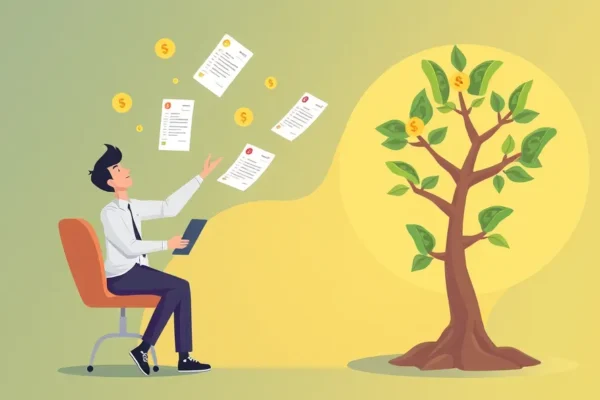
The Rollercoaster of Freelance Income
If you have ever stared at your bank account mid-month wondering why the balance looks like a desert, you are not alone. Freelancing offers amazing freedom, but it comes with a specific kind of financial weather pattern. One month you are flush with cash, and the next you are waiting on three different clients to clear their invoices. This cycle is what we call cash flow gaps. It is the period where you have already put in the work, but the money has not yet landed in your account to cover your rent, software subscriptions, or coffee.
Managing this rhythm is the biggest hurdle for anyone working for themselves. It is not necessarily about how much you earn over the course of a year, but rather how you handle the dry spells that pop up between client payments. When you rely on freelance income, your paycheck does not arrive on a predictable Friday. Instead, it arrives on a timeline set by invoice processing departments, bank transfers, and client approval processes.
Why Everyone Is Talking About Money Flow Right Now
You might notice more people in your professional circles bringing up self-employed cash flow lately. There is a reason for this. The way we work has shifted dramatically. More people than ever are taking the leap into independent work, and as the economy tightens, businesses are being more careful about when they release funds. This means the time between finishing a project and seeing the money hit your bank account is stretching longer than it used to.
People are searching for answers because they are tired of the anxiety that comes with financial unpredictability. We are moving away from the old idea that freelancers just have to “deal with it” and toward a more proactive approach where we treat our solo careers like actual businesses. Whether you are a writer, a designer, or a consultant, understanding these gaps is now considered a core professional skill rather than just a personal struggle.
How We Got Here With Project Payments
In the past, many freelancers operated on a project-by-project basis with little thought to the structure of their payments. You did the work, sent an invoice, and hoped for the best. Back then, if a payment was late, it was often viewed as a minor nuisance. However, as the freelance economy exploded, the administrative side of business caught up. We started dealing with larger companies that have rigid net 30 or net 60 payment terms. This standard practice was designed for large corporations with massive accounts receivable departments, but it was forced upon freelancers who need that money to pay their personal bills next week.
This historical context explains why so many of us feel like we are fighting a system not built for us. We were taught to be experts in our craft, but we were rarely taught how to manage invoice management effectively. Now that the gap between completing a task and receiving payment has widened, we have had to evolve our processes to keep our small business finance healthy.
The Real Impact on Your Business Life
These cash flow gaps are more than just a minor annoyance. When your business cash flow is inconsistent, it affects your ability to grow. If you are constantly worried about when the next payment is coming, you are less likely to invest in the tools, courses, or marketing that could actually help you earn more. It keeps you in a defensive mindset where you take any work just to fill the gap, even if it is not the right fit for your long-term goals.
On a practical level, these gaps create stress that bleeds into your creative process. It is hard to produce your best work when you are distracted by an unpaid invoice that is two weeks overdue. Managing finances effectively is not just about counting pennies. It is about creating a buffer that gives you the freedom to choose your projects wisely and maintain a professional reputation without having to chase down clients every single morning.
Building a Smoother Path Forward
The future of freelancing relies on changing how we interact with our clients before the work even begins. You can move toward a more stable model by implementing payment strategies that protect your bottom line. Instead of waiting for a single lump sum at the end of a project, try asking for deposits or milestone payments. This ensures that you are never working for free for an extended period.
We are also seeing a rise in better tools for managing cash flow gaps. From automated invoicing software that sends polite reminders to business accounts that help you set aside tax money automatically, the technology is catching up to our needs. In the coming years, we will likely see more freelancers using retainer models, where clients pay a fixed monthly fee for ongoing services. This shifts the dynamic from a feast and famine cycle to a predictable revenue stream that makes business planning much easier.
Common Questions About Freelance Financial Health
How can I reduce cash flow gaps as a freelancer?
The best way to reduce these gaps is to implement a deposit system where you require a percentage of the total fee upfront. This keeps your business cash flow moving while you work on the deliverables. Additionally, move toward monthly retainers instead of one-off projects to create consistent freelance income.
What are the best strategies for better invoice management?
Use digital invoicing software to automate your payment requests. Set your terms clearly before you start the work, and send automated follow-up emails a few days before a payment is due. Staying organized with your invoices prevents late payments from falling through the cracks.
Why is small business finance different for self-employed individuals?
Unlike a traditional employee, you are responsible for the entire life cycle of your money. You have to handle the intake, the taxes, and the planning for slow months. Managing finances as a freelancer requires you to wear a CFO hat alongside your primary job duties.
What should I do if a client is late on payments?
Start with a friendly check-in email to ensure they received the invoice. If the delay continues, have a clear, pre-written policy regarding late fees or paused work until the balance is cleared. Keeping your communication professional but firm helps you maintain boundaries while protecting your freelance income.
How can I prepare for months with low client payments?
The golden rule is to build a business emergency fund during your high-earning months. Treat this fund like a salary reserve. Even putting away ten percent of every check will eventually create a cushion that helps you navigate those inevitable cash flow gaps without panic.











