A New Vision for Mainstream Computing
For nearly a decade, the promise of virtual reality has been trapped behind a wall of bulky plastic and tethered cables. While the tech industry has chased the dream of total immersion, the average consumer has remained largely unimpressed, viewing the current generation of VR headsets as niche gaming tools rather than essential computing devices. Meta, the company formerly known as Facebook, is now betting that the path to widespread adoption is not just more immersive games, but the blurring of lines between the digital and physical worlds.
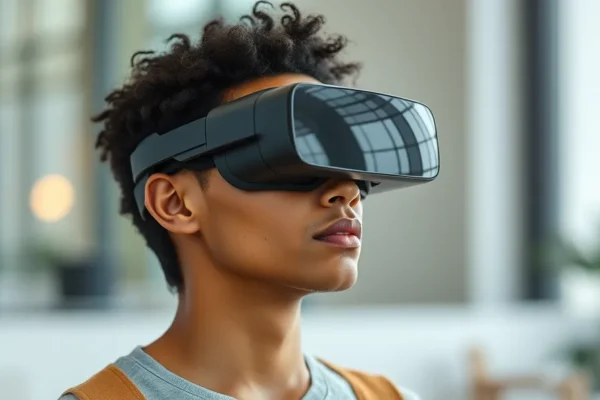
This approach, often described as hybrid reality, moves beyond the isolation of traditional virtual reality. Instead of shutting the user away from their surroundings, new devices—often referred to as Meta VR glasses or mixed reality headsets—aim to overlay digital information onto the real world. By shifting the focus from “escaping” reality to “enhancing” it, Meta hopes to finally turn virtual reality into a mainstream computing platform that sits comfortably alongside your laptop or smartphone.
How Hybrid Reality Changes the User Experience
To understand why this shift matters, consider the difference between watching a movie in a dark theater versus looking through a window that can display information. Traditional virtual reality (VR) replaces your entire field of vision with a digital environment. While this is great for gaming, it is isolating and often disorienting. Augmented reality (AR), on the other hand, keeps you grounded in your environment but has historically been limited by field-of-view constraints and clunky hardware.
Meta is bridging this gap by using a technique called video passthrough. Think of it like wearing a high-tech set of ski goggles that are actually opaque screens. External cameras capture the room in real time, and the internal processor feeds that live video to the screens inside the headset. Because the software understands the depth and geometry of your room, it can anchor digital objects—like a floating calendar or a virtual monitor—onto your physical desk. This allows you to interact with digital tools while still seeing your coffee cup, your keyboard, or your colleagues, making the technology feel less like a closed-off simulation and more like a natural extension of your environment.
Practical Applications in Today’s Market
We are currently in the early adoption phase of this technology. Products like the Meta Quest 3 and the Quest Pro serve as the primary vehicles for this transition. Unlike early VR headsets that required a powerful PC to function, these devices are standalone computers. You can strap them on, see your living room in full color, and begin working or playing without wires.
Industries are already beginning to experiment with these capabilities. In architecture and design, firms are using hybrid reality to overlay 3D models of buildings onto physical tables, allowing teams to collaborate on structural changes in real time. In the corporate world, remote workers are using virtual monitors that stay locked in space, effectively providing a multi-screen workspace in a small apartment. While these tools are not yet ubiquitous, they are being deployed in enterprise settings and by early-adopter consumers who want to test the boundaries of modern immersive technology.
Navigating the Competitive Landscape
Meta is not alone in its pursuit of this technology. The most prominent rival in the space is the Apple Vision Pro, which has set a high bar for display resolution and natural interface controls, such as eye and hand tracking. While Meta has focused on affordable, consumer-friendly pricing to drive mass adoption, Apple has positioned its hardware as a premium “spatial computer,” emphasizing build quality and integration with its existing ecosystem.
Other players remain active as well. Companies like Valve have long contributed to the ecosystem through SteamVR, focusing on the high-end gaming market, though they have yet to release a direct competitor in the portable mixed-reality space. The advantage for Meta lies in its massive user base and its focus on making VR pricing accessible to the average person. By keeping the cost of entry significantly lower than luxury headsets, Meta is attempting to build the “Android of VR”—a platform that can reach a broad audience rather than remaining a luxury item for enthusiasts.
The Future of Work and Social Interaction
The long-term implications of these devices are significant. If hybrid reality succeeds, it will fundamentally change how we interact with information. We are moving toward a future where “screens” become a concept rather than a physical piece of glass on your desk. This could reshape commercial real estate, as physical office space becomes less critical when every employee can carry a virtual office in their bag.
Socially, the implications are more complex. While the ability to project a virtual avatar or a 3D interface into a physical room could enhance collaboration, it also raises concerns about privacy and social withdrawal. If we spend our days looking through lenses, we must ensure that the digital layers we add to our world do not distract us from the human connections happening right in front of us. The shift will likely occur over the next decade, starting with productivity tools and gradually moving into daily social habits.
Limitations and Adoption Barriers
Despite the optimism, we are still far from a “Star Trek” future. The most immediate challenge is hardware comfort. Even the lightest headsets remain heavy enough to cause neck strain during long sessions. Battery life is another major bottleneck, as the processing power required to render high-resolution 3D environments drains power rapidly. Most current devices offer only two to three hours of use on a single charge.
There is also the “uncanny valley” of passthrough technology. While Meta has made great strides, the video feed inside the headset is not a perfect 1:1 match for human vision. It can sometimes feel slightly grainy or distorted, especially in low-light conditions. Furthermore, the societal barrier is real; wearing a large headset in a public coffee shop still attracts attention and can be perceived as antisocial. True mainstream adoption will likely require the tech to shrink into a form factor that resembles standard eyeglasses, a goal that researchers currently estimate is still several years away.
The Road Ahead
The trajectory for Meta VR glasses is focused on three key areas: miniaturization, intelligence, and integration. We can expect future iterations to include more advanced artificial intelligence that understands the environment better, allowing for more realistic interactions between virtual objects and real-world surfaces. The integration of eye tracking and improved hand gesture control will also make the interface feel more intuitive, moving away from clunky handheld controllers.
Experts generally agree that we are in a multi-year transition period. We should look for milestones in display panel technology—such as micro-OLEDs—which offer higher brightness and clarity in a smaller package. While we are not yet at the point where these devices are replacing smartphones for the general public, the rapid pace of innovation suggests that the gap between reality and digital overlays will continue to shrink with every product refresh.
Common Questions About Hybrid Reality
Is this technology mature enough for the average person?
While the hardware is capable of impressive experiences, it is still early for the average consumer. Current devices are best suited for gaming enthusiasts, early adopters, and those looking to experiment with new ways of working, rather than for the general public who may find the setup and battery life restrictive.
What is the difference between Meta VR glasses and a standard VR headset?
A standard VR headset fully blocks your vision to immerse you in a digital world. Meta VR glasses, or mixed reality headsets, use high-resolution cameras to capture your real-world environment and project it inside your lenses, allowing you to see your surroundings while digital objects appear to sit on your physical furniture.
Who benefits most from the current iteration of this tech?
Remote workers benefit by gaining a portable, multi-monitor workspace, while gamers enjoy more immersive experiences. Designers and architects are also seeing early benefits in being able to visualize 3D models in a shared physical space.
What are the primary risks associated with this tech?
Beyond physical comfort, the primary risks involve digital privacy—given that the headset must scan and map your home environment—and the potential for social disconnection. Users must be aware of how their data is handled and maintain a healthy balance between digital and physical interaction.
How long until we see mainstream, glasses-like form factors?
Industry consensus suggests that a device as slim as everyday eyeglasses is at least five to ten years away. The engineering challenges of fitting battery, optics, and processing power into a thin frame remain significant.
Note: This article discusses emerging technologies based on current product specifications, industry roadmaps, and public company disclosures. Technical capabilities and consumer availability are subject to change as the technology evolves.