

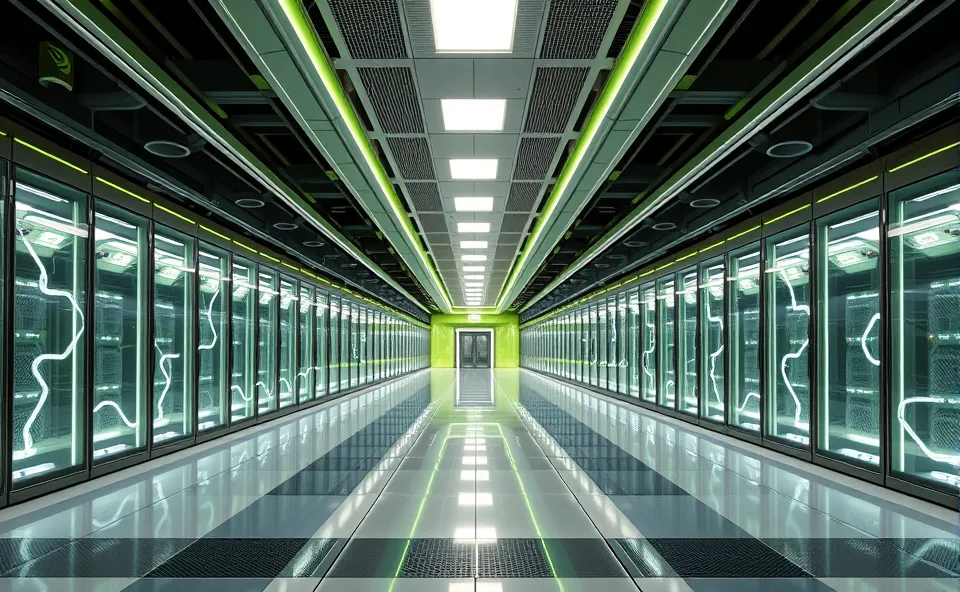
A surprising shift in how we cool the brain of AI
When we think about high tech, we usually think about things getting smaller, faster, and much cooler. In the world of computing, heat is the enemy. Most engineers spend their entire careers trying to find ways to keep chips as cold as possible. However, Nvidia is taking a completely different approach that might sound a bit backwards at first. Instead of fighting heat, they are designing new AI data center systems that actually run hotter on purpose.
This is not because they want to melt their hardware. It is a calculated move to solve one of the biggest problems facing the tech industry today. As we build more powerful tools, those tools require massive amounts of energy and even more water to keep them from overheating. By allowing the temperature inside the system to rise to a certain level, Nvidia is finding a way to use significantly less water to keep everything running smoothly. It is a clever bit of engineering that prioritizes the planet as much as it prioritizes processing power.
This new design uses a sophisticated method of liquid cooling. In a traditional setup, data centers often rely on massive amounts of water to absorb heat and then evaporate that water into the air to cool the facility down. This process is incredibly effective at cooling, but it consumes a staggering amount of water. Nvidia technology is changing this by creating a system where the liquid stays inside a closed loop. Because the system is designed to handle higher temperatures, it does not need to constantly replace evaporated water, which leads to massive savings in total water consumption.
Why the conversation about heat is heating up
You might be wondering why this is such a big deal right now. The reason is simple: the artificial intelligence explosion is happening at a scale we have never seen before. Every time someone uses a large language model or generates an image with AI, a server somewhere in a massive building is working incredibly hard. These servers are part of a massive AI infrastructure that is growing every single day.
As this infrastructure grows, so do the environmental concerns. People are starting to look closely at the environmental impact of the AI boom. It is no longer enough to just have the fastest chips in the world. Investors, governments, and the general public are now asking how much water these data centers are using and how much electricity they are pulling from the grid. The sheer volume of water needed to cool the next generation of AI models has become a major point of tension in many parts of the world.
Because of this, there is a huge push for more sustainable tech. Companies are under pressure to show that their growth does not come at the expense of local water supplies. This is why Nvidia’s shift toward higher temperature cooling is making headlines. It addresses the two biggest criticisms of the AI era: massive energy use and heavy water consumption. It turns a technical challenge into a way to demonstrate better energy efficiency and environmental responsibility.
The history of keeping computers cool
To understand why this new approach is so revolutionary, we have to look at how we got here. For decades, cooling a computer was relatively easy. Your laptop or desktop uses small fans to blow air over the components. As chips became more powerful, air cooling started to hit a wall. Air is not very good at carrying heat away compared to liquids. This led to the rise of massive air conditioning units in data centers, which used huge amounts of electricity.
As we moved into the era of heavy AI workloads, even air cooling became insufficient. The chips became so dense and so powerful that they generated heat faster than fans could move it. This forced the industry to look toward liquid cooling. Initially, liquid cooling was mostly about keeping things extremely cold to ensure maximum performance. The focus was entirely on the hardware and its ability to process data without crashing.
As we approach the Rubin generation of chips, the heat being produced is reaching levels that old-school cooling methods simply cannot handle. These new chips are incredibly dense. They pack more power into smaller spaces, which means the heat is even more concentrated. Nvidia recognized that if we kept following the old path of trying to keep everything ice cold, we would eventually run out of water or electricity to support the growth of AI. The transition to a hotter, water-efficient design is the logical next step in the evolution of computing.
How this changes the future of technology and business
The impact of this change reaches far beyond just the engineers at Nvidia. It has massive implications for how businesses build their digital foundations. For large tech companies, adopting this kind of liquid cooling can significantly improve their sustainability metrics. This is vital for companies that have public commitments to reduce their environmental footprint. Being able to scale AI without draining local reservoirs is a huge win for their reputation and their bottom line.
For the broader market, this technology helps ensure that the growth of AI remains sustainable. If the cost of cooling AI becomes too high, or if the environmental impact becomes politically or socially unacceptable, the growth of AI could slow down. By solving the cooling problem through smarter design rather than just more resources, Nvidia is helping to clear the path for continued innovation.
There are several key benefits to this shift:
- Improved Water Conservation: By using closed loop systems that operate at higher temperatures, data centers can drastically reduce their daily water consumption.
- Higher Energy Efficiency: Managing heat more effectively means less energy is wasted on massive, power hungry cooling systems.
- Better Scalability: Higher temperature tolerance allows for more powerful chips to be packed closer together, making AI infrastructure more compact and efficient.
- Lower Operational Costs: While the initial setup might be different, saving on water and electricity can lead to much lower long term costs for data center operators.
This approach also helps solve the problem of where to build data centers. Currently, many companies have to build near large bodies of water or in regions with abundant resources. If data centers become much more water efficient, they can be built in a wider variety of locations, making the global AI network more resilient and flexible.
What to expect in the coming years
Looking forward, we can expect to see a massive shift in how all AI data centers are designed. Nvidia is a leader, but their move toward high temperature liquid cooling will likely set a new standard for the entire industry. We will probably see a move away from traditional evaporative cooling toward these more advanced, closed loop systems. This will become a standard part of how we build any high performance computing facility.
As we enter the era of the Rubin generation and beyond, the integration of AI with sustainable tech will become inseparable. We will see more hardware that is designed not just for speed, but for environmental compatibility. This might mean chips that are specifically tuned to work at higher thermal thresholds or software that manages power and heat in real time to maximize efficiency.
We may also see a closer link between data center design and renewable energy. If we can master the heat and the water, the next step is making sure the energy itself is clean. The goal is a seamless ecosystem where AI provides incredible value to society while leaving a minimal footprint on the planet. The move toward hotter, more efficient cooling is a major step on that journey.
Common questions about Nvidia and AI cooling
How does a hotter AI data center actually save water?
Most traditional data centers use water to cool themselves by letting it evaporate, which carries heat away but loses the water in the process. Nvidia technology uses liquid cooling in a closed loop. Because the system is designed to work at higher temperatures, the liquid can circulate through the system and back again without needing to be replaced by evaporating more water. This keeps the water inside the machine and out of the atmosphere.
Will this new Nvidia technology make the chips less stable?
No, the goal is not to make the chips unstable. It is about designing the entire system, including the chips and the cooling hardware, to function perfectly at these higher temperatures. When the hardware and the cooling system are designed together from the start, they can maintain high performance and reliability even while running warmer than older systems.
Is liquid cooling more expensive than air cooling?
The initial setup for liquid cooling is often more complex and can require a higher upfront investment than simple air cooling. However, when you consider the long term savings in electricity and water, as well as the ability to run much more powerful AI infrastructure, it becomes a much more cost effective solution for large scale operations.
How does the Rubin generation relate to this cooling shift?
The Rubin generation represents the next leap in processing power. These chips are so powerful that they generate an intense amount of heat in a very small area. Traditional cooling methods simply cannot keep up with the density of these new chips. The move toward liquid cooling and higher temperature operation is essential to support the power levels that the Rubin generation will provide.
Does this mean all future AI will be more sustainable?
It is a very strong step in that direction. While one company cannot change the whole world, Nvidia is a major architect of the AI era. When the industry leader changes their design philosophy to prioritize energy efficiency and water conservation, it creates a ripple effect that forces other companies to follow suit, making the entire AI industry more sustainable.











