Understanding the Economics Behind Public Discontent
Imagine your household budget. If the cost of your groceries, rent, and electricity suddenly jumped way up, but your income stayed the same, you’d feel the pinch, right? You might start questioning where your money is going and why things are getting so expensive. This feeling, when multiplied across an entire country or city, can lead to what economists call social upheaval and civil unrest. It’s a situation where many people are deeply unhappy with their economic conditions, leading them to voice their concerns through protests and demonstrations.
Understanding these economic pressures is crucial because they directly impact how people manage their money and make financial decisions. When living costs rise faster than wages, families have to make tough choices. They might cut back on savings, delay big purchases, or even struggle to afford basic necessities. For individuals, this means re-evaluating budgets and financial goals. For the broader economy, it can lead to shifts in consumer spending, affecting businesses and job markets. This is why paying attention to the economic factors driving public discontent is important for everyone, not just policymakers.
How Rising Living Costs Fuel Protests
The core of many public demonstrations, like the recent Paris protests, often stems from a feeling that the economic system isn’t working fairly for everyone. Let’s break down how this happens. Think of the economy as a big pie. If the slices for everyday people aren’t growing, or are even shrinking, while some at the top get bigger slices, dissatisfaction can build.
The main ingredients in this discontent are usually a combination of rising prices (inflation) and stagnant wages. When prices for essentials like food, energy, and housing go up, people’s money doesn’t stretch as far. This is similar to if the price of your favorite coffee doubled overnight; you’d have to decide whether to pay more, drink less coffee, or find a cheaper alternative. When this happens with necessities, there are fewer alternatives.
Now, imagine your income isn’t increasing to match these higher prices. This is where the financial pressure really mounts. A family that could comfortably afford their rent and groceries a year ago might now find themselves struggling to make ends meet. This squeeze makes people question the economic policies in place and the priorities of their government. For instance, if there’s talk of budget cuts to vital public services like school funding while other areas receive increases, it can feel like a slap in the face to those who rely on those services.
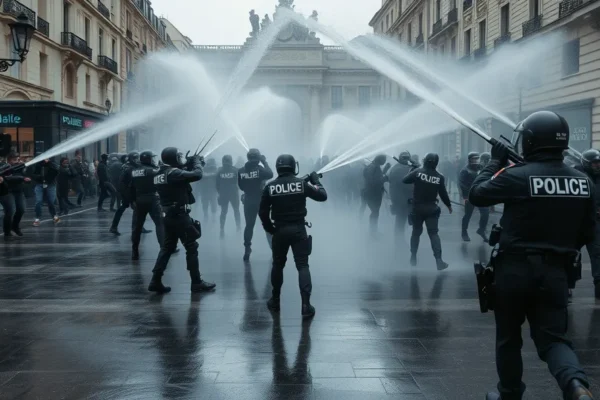
When a large number of people feel this economic pressure simultaneously, it can escalate from individual worries to collective action. A mass march, like the one seen in Paris with an estimated 400,000 participants, is a visible sign of this widespread frustration. These demonstrations are a way for citizens to demand change and make their voices heard by those in power. The response from authorities, often involving the French police, is also a critical element, as it can either de-escalate or amplify the situation.
Why Economic Discontent Matters to Your Finances
When you see reports of large-scale Paris protests driven by concerns over living costs and other economic issues, it’s more than just headlines from a distant city. These events have tangible ripple effects that can influence your own financial well-being, even if you don’t live in Paris.
For individuals, understanding these dynamics helps in making informed financial decisions. If inflation is high and wages are not keeping pace, it means your savings might lose purchasing power over time. This is because the money you have today will buy less tomorrow. It’s like having a basket of apples; if the price of apples goes up significantly, your existing money can only buy fewer apples.
On a broader economic level, widespread economic hardship and subsequent protests can signal an impending economic crisis or periods of significant change. Governments under pressure may implement new policies, such as tax changes, spending cuts, or stimulus packages. These can affect interest rates, employment levels, and investment opportunities. For example, if protests lead to a government investing heavily in social programs, it might mean higher taxes for some or a redirection of funds that could have been used elsewhere.
In such situations, certain groups may benefit. For instance, if the government increases spending on renewable energy due to public demand for environmental action influenced by economic concerns, companies in that sector might thrive. Conversely, those who rely on fixed incomes or whose wages are not keeping up with inflation are negatively affected. The very act of protest can sometimes disrupt local economies, leading to temporary losses for businesses due to reduced foot traffic or damaged property during potential urban riots.
The Evolution of Economic Protests
The idea that economic hardship can lead to public demonstrations is as old as organized societies themselves. Throughout history, people have protested against unfair taxation, food shortages, and economic inequality. Think of historical events like the French Revolution, which, while complex, had deep roots in economic distress and social inequality.
In modern times, the tools and scale of protests have evolved. While the core grievances of rising living costs, unequal distribution of wealth, and lack of opportunities remain, the way people organize and express their dissent has changed, especially with the advent of the internet and social media. This allows for faster mobilization and wider dissemination of information, sometimes turning local issues into global conversations.
The recent surge in interest and activity surrounding Paris protests, for example, is often triggered by specific economic events. A sudden spike in fuel prices, a perceived unfair tax increase, or a significant cut in public services like school funding can act as catalysts. For instance, data from organizations like the International Monetary Fund (IMF) often highlights global inflation trends, providing context for why citizens in various countries might be experiencing similar financial pressures and consequently, similar levels of discontent.
These protests are not isolated incidents but often reflect broader global economic trends. A rise in inflation, supply chain disruptions, or shifts in global markets can create fertile ground for public frustration. This ongoing interplay between economic conditions and public reaction means that understanding the historical context of such movements helps us interpret current events and anticipate potential future developments.
Navigating Financial Decisions Amidst Economic Uncertainty
When news of major Paris protests or similar events surfaces, it serves as a reminder of the interconnectedness of economic stability and social harmony. For individuals, this means staying informed and adaptable in their financial planning.
One common misconception is that economic hardship only affects those in developing nations. However, as seen with the Paris protests driven by living costs and concerns like school funding, even developed economies can experience significant economic stress that impacts large segments of the population. Another misconception is that protests are solely about political change; often, the underlying drivers are deeply economic.
When you hear about rising inflation or significant government spending changes in the news, consider how these might impact your personal finances. For example, if inflation is high, it’s a good time to review your savings and investment strategies to ensure your money is working to preserve its value. You might consider investing in assets that historically perform well during inflationary periods, or simply ensuring you have a solid emergency fund to weather unexpected expenses.
Actionable insights include regularly reviewing your budget to understand where your money is going, especially as prices change. Building a diversified savings and investment portfolio can also help cushion the impact of economic shocks. Being aware of government policies and economic trends can help you anticipate potential changes that might affect your job security, tax obligations, or the cost of goods and services.
Connections to Broader Economic Concepts
The widespread discontent observed in events like the Paris protests is not an isolated phenomenon but is deeply intertwined with several fundamental economic concepts. Understanding these connections can provide a more comprehensive view of the economic forces at play.
Inflation, the general increase in prices and decrease in the purchasing value of money, is a primary driver. When living costs rise faster than incomes, it directly impacts household budgets, leading to the kind of frustration seen in demonstrations. This is closely linked to the concept of purchasing power, which is the amount of goods and services an individual can buy with a unit of currency.
The protests also highlight issues of income inequality and wealth distribution. When the gap between the rich and the poor widens, it can fuel a sense of unfairness, even if the overall economy is growing. This relates to economic models that try to explain how wealth is created and distributed within a society.
Furthermore, government fiscal policy – how governments tax and spend – plays a crucial role. Decisions regarding school funding, social welfare programs, and public services are often at the heart of these protests. Understanding concepts like budget deficits and national debt can help explain the constraints governments face when trying to address public demands.
The phenomenon of civil unrest can also impact economic growth and market stability. When there is significant social upheaval, it can deter investment, disrupt supply chains, and lead to uncertainty, which are all detrimental to a healthy economy. Therefore, economic stability and social peace are closely linked.
Frequently Asked Questions About Economic Protests
Q1: How do rising living costs lead to Paris protests?
A: When essential goods and services become more expensive and people’s incomes don’t increase at the same rate, it creates financial hardship. This widespread economic pressure can lead to frustration and a desire to protest against government policies or economic conditions, as seen in the Paris protests.
Q2: What is the role of inflation in these protests?
A: Inflation erodes the purchasing power of money. If inflation is high, people can buy less with the same amount of money, making it harder to afford daily necessities. This direct impact on household budgets is a major reason why inflation often fuels civil unrest.
Q3: How does school funding relate to civil unrest?
A: Perceived underfunding or cuts to essential public services like school funding can be a significant grievance. When people feel that vital services they rely on are being neglected, especially while other government spending continues, it can contribute to anger and lead to protests.
Q4: Can individuals financially prepare for economic crises that cause protests?
A: While individuals cannot prevent economic crises or protests, they can build financial resilience. This includes maintaining an emergency fund, diversifying investments, managing debt wisely, and regularly reviewing personal budgets to adapt to changing economic conditions.
Q5: What are the risks of urban riots stemming from protests?
A: Urban riots pose risks such as property damage, personal injury, and disruption of essential services. Economically, they can deter investment, harm local businesses, and create a climate of uncertainty that can negatively impact economic recovery and growth.
Q6: How does economic inequality contribute to civil unrest?
A: Significant economic inequality can create a sense of injustice and unfairness. When a large portion of the population feels left behind or that the economic system is rigged against them, it can be a powerful motivator for collective action and protests.
This article provides general educational information about economic concepts and current events. It is not intended as personal financial advice. Financial situations are unique, and it is recommended to consult with a qualified financial professional for advice tailored to your specific circumstances. Investing involves risk, and outcomes can vary.