

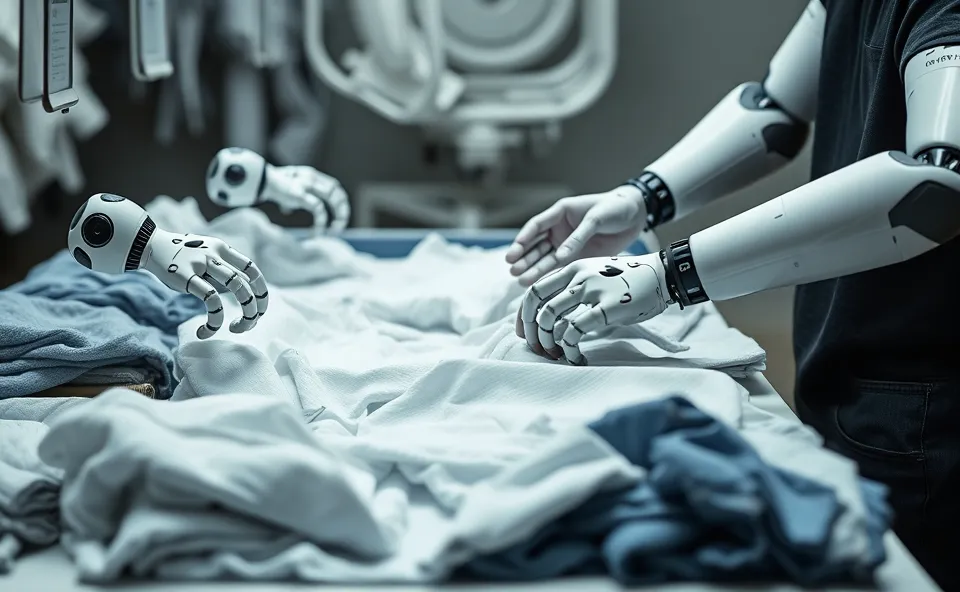
When Your Living Room Becomes a Robot’s Classroom
Imagine this: you’re folding laundry, wiping down the kitchen counter, or even just putting away groceries. But you’re not just doing chores; you’re starring in a movie, and your audience is a bunch of artificial intelligence. That’s the core of what’s happening when people record themselves doing household chores for robot training. It’s a fascinating, and sometimes funny, intersection of our everyday lives and the cutting edge of AI. Essentially, we’re teaching robots how to live with us by showing them exactly how we live, one mundane task at a time.
Think of it like this. We humans have learned to navigate our homes, interact with objects, and perform countless domestic tasks through years of practice and observation. Now, we’re distilling that knowledge into digital data. By meticulously recording actions like picking up a dirty sock, loading a dishwasher, or even sweeping a floor, we’re creating a rich dataset for machine learning algorithms. These algorithms then analyze this data to understand the patterns, movements, and sequences involved in each chore. The goal is to enable future domestic robots, like humanoid robots, to perform these tasks independently and efficiently.
Why Is This a Buzzworthy Topic Right Now?
The sudden surge of interest in this kind of data collection isn’t out of the blue. We’re at a tipping point with AI and automation. For years, robots were mostly confined to factory floors, performing repetitive, precise tasks. But the dream has always been for robots to join us in our homes, assisting with daily life. Now, with advancements in AI, particularly in areas like computer vision and natural language processing, that dream is becoming more tangible.
The push for more sophisticated domestic robots means there’s a huge demand for realistic data that captures the nuances of human behavior in a home environment. Simply programming a robot with a set of instructions isn’t enough. Robots need to learn from real-world examples, including all the little variations and imperfections that make household chores, well, chores. People recording themselves are essentially bridging the gap between theoretical AI and practical application, making this a hot topic for anyone interested in the future of AI and automation.
A Look Back: From Sci-Fi to Your Sofa
The idea of robots helping around the house isn’t new. It’s been a staple of science fiction for decades, conjuring images of helpful androids tidying up our homes. But the reality has always been far more complex. Early attempts at domestic robots were often clunky, limited in their capabilities, and expensive. They could perform very specific, pre-programmed tasks, but lacked the flexibility and intelligence to adapt to the unpredictable nature of a home.
The evolution of AI and machine learning has been the game changer. Instead of relying solely on rigid programming, we can now train AI models to learn from data. This is where data collection for robot training comes in. In the past, the data needed to train robots for complex tasks was scarce and expensive to acquire. Specialized labs might have set up controlled environments, but it didn’t truly represent the messiness of a real home. Now, with accessible technology and the growing need for practical AI solutions, everyday people are becoming the key players in gathering this crucial information. This shift from lab-based experimentation to crowd sourced real world data collection is a significant step forward.
What This Means for All of Us
This trend has a ripple effect that touches many aspects of our lives. For individuals, it means a potential future where household chores are significantly less burdensome. Imagine a robot that can competently do your laundry, clean your floors, or even prepare simple meals. This frees up our time and energy for more enjoyable or productive pursuits. It’s about enhancing our quality of life through automation.
For businesses and the technology sector, it signals a booming market for domestic robots and the AI systems that power them. Companies are investing heavily in developing these technologies, and high quality, diverse training data is essential for their success. This data collection effort directly fuels innovation in AI ethics, ensuring that as these robots become more integrated into our lives, they do so responsibly and beneficially. It also raises questions about the future of work, as automation continues to reshape industries. We’re not just talking about industrial robots anymore; we’re talking about robots that could become part of our domestic workforce.
The impact also extends to how we perceive AI. When we actively participate in training these systems, we gain a deeper understanding of how AI works and its limitations. It demystifies the technology and allows for more informed discussions about its integration into society. It’s a collaborative effort where human ingenuity is directly shaping the capabilities of artificial intelligence.
Looking Ahead: A Smarter Home, A Smarter Robot?
The trajectory here is clear: more sophisticated and capable domestic robots. As the quality and quantity of robot training data increase, so too will the abilities of these machines. We can expect robots to become increasingly adept at navigating complex home environments, understanding our commands, and performing a wider range of tasks with greater precision. This isn’t just about getting help with chores; it’s about creating a more integrated and intuitive relationship between humans and AI.
The development of AI ethics will be crucial. As robots become more autonomous, ensuring they operate safely, respectfully, and in alignment with human values will be paramount. We’ll likely see advancements in how robots learn and adapt, moving beyond simply mimicking human actions to developing a more generalized understanding of tasks and environments. This could lead to robots that are not just task performers but also helpful companions, capable of anticipating needs and offering proactive assistance. The future of household chores might involve less doing and more directing, as our robotic assistants become more capable and intuitive.
Frequently Asked Questions About Robot Training Data
What exactly is involved in robot training for household chores?
It involves people recording themselves performing common household chores like cleaning, cooking, or tidying up. This video or sensor data is then used to train machine learning models, helping AI understand the steps, movements, and object interactions required for a robot to learn and perform these tasks itself.
Why is collecting data on household chores important for AI development?
Household chores are complex, varied, and require fine motor skills and environmental awareness. Collecting real world data on these activities provides AI with the practical examples needed to develop versatile and capable domestic robots. This data is crucial for teaching humanoid robots how to function effectively in a human environment.
How does this type of data collection contribute to the future of automation in homes?
This data is the foundation for creating intelligent domestic robots that can assist with daily tasks. By learning from human actions, these robots can achieve a level of automation that makes homes smarter and frees up people’s time. It’s a key step towards widespread household automation.
Are there ethical considerations in collecting data for robot training?
Yes, AI ethics are a significant concern. This includes ensuring data privacy, obtaining informed consent from individuals providing data, and preventing bias in the AI models that are trained. Responsible data collection practices are essential for the ethical development of AI and robots.
What are the main benefits of having robots trained for household chores?
The primary benefits include significant time savings for individuals, increased independence for the elderly or those with disabilities, and the potential for a more comfortable and efficient home environment. It also drives innovation in the field of robotics and artificial intelligence, leading to new technologies and a more advanced future of work.











