

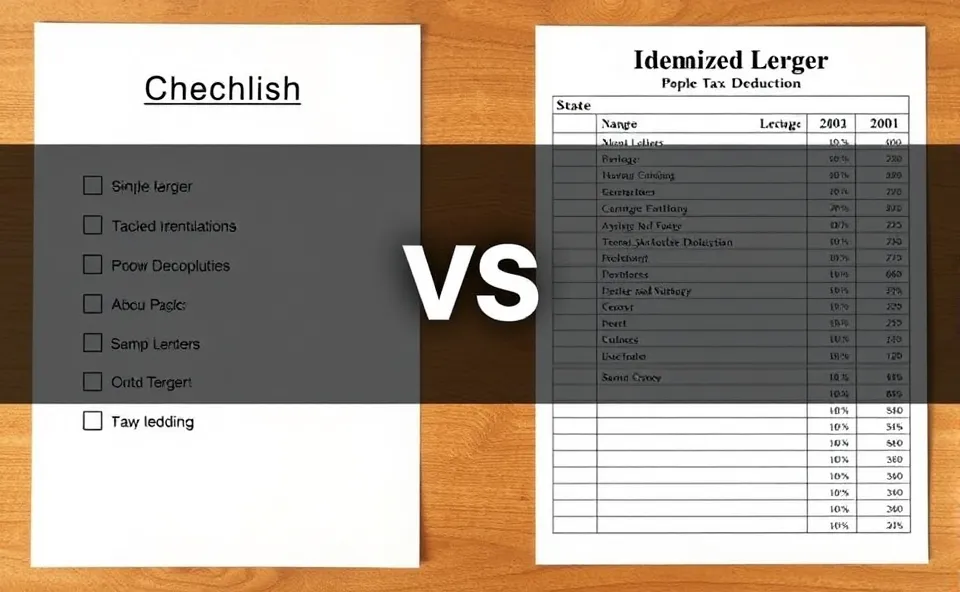
Let’s Talk Tax Deductions: Standard vs. Itemized, Which One Wins for You?
Hey there! When tax season rolls around, one of the big questions on everyone’s mind is how to save the most money. A huge part of that comes down to tax deductions. Think of them as ways to shrink the amount of your income that gets taxed. But here’s the catch: you generally have two main paths to choose from, and figuring out which one is best for your personal finance situation can feel a bit like a puzzle. We’re talking about the standard deduction versus itemized deductions. Let’s break it down so you can make the smartest choice for your tax filing.
Why Are We Chatting About This Now?
You might be wondering why tax deductions are such a hot topic right now. Well, honestly, people are always looking for ways to boost their tax savings, especially in uncertain economic times. Understanding how to maximize your deductions is a fundamental part of any good tax strategy. Plus, with tax laws sometimes shifting, it’s a great time to revisit your options and make sure you’re not leaving any money on the table. It’s all about making sure your deductions guide you to the best possible outcome.
A Little Trip Down Memory Lane: How We Got Here
The idea of tax deductions isn’t exactly new. Governments have used them for ages as a way to encourage certain behaviors or to offer relief to taxpayers. Historically, the system was designed to allow people to deduct specific expenses they incurred. For example, if you were a business owner, you could deduct the costs of running your business. Over time, this evolved to include personal expenses for individuals. The standard deduction was introduced as a simpler alternative for those who didn’t have many deductible expenses or found it too cumbersome to track them all. It’s essentially a set dollar amount that reduces your taxable income. The goal has always been to provide a fair system for tax filing, whether through specific itemized deductions or a general, standard deduction.
What This Means for Your Wallet and Your Peace of Mind
So, what’s the big deal? Choosing between standard and itemized deductions can have a real impact on how much tax you owe. If you have a lot of eligible expenses, itemizing might save you more. If your expenses are minimal, the standard deduction is likely the way to go. It’s all about finding the biggest tax benefits for your specific situation.
The Standard Deduction: Simple and Sweet
Imagine this: the IRS says, “Here’s a fixed amount you can subtract from your income, no questions asked.” That’s pretty much the standard deduction. It’s a fixed dollar amount that depends on your filing status (like single, married filing jointly, etc.) and your age or if you’re blind. It’s designed to be straightforward. You don’t need to keep receipts for every little thing, and it simplifies your tax filing process considerably. For many people, especially those who don’t have significant deductible expenses like medical bills or mortgage interest, the standard deduction is the easiest and often the most beneficial option.
Itemized Deductions: The Detailed Path
Now, let’s look at itemized deductions. This is where you get to dig into the nitty gritty of your spending. Instead of taking that fixed amount, you add up a list of specific, eligible expenses. If the total of these expenses is more than the standard deduction, then itemizing will likely save you more money. Common itemized deductions include:
- Medical and dental expenses (above a certain percentage of your Adjusted Gross Income)
- State and local taxes (SALT), including income or sales tax and property taxes, up to a limit
- Home mortgage interest
- Charitable contributions
- Certain other miscellaneous deductions
The catch with itemizing is that you need to meticulously track and document these expenses. You’ll need receipts, statements, and proof for everything you claim. It requires more effort during tax filing, but for those with significant qualifying expenses, the potential for greater tax savings can be well worth it.
How Do You Choose? The Big Decision
This is where the rubber meets the road. You don’t get to choose both. You have to pick one. Here’s how to think about it:
- Do the Math: The most important step is to calculate your potential itemized deductions. Add up all your eligible expenses.
- Compare: Compare the total of your itemized deductions to the standard deduction amount for your filing status.
- The Winner is Clear: Whichever number is higher is the one you should claim. It’s that simple! Your goal is to maximize deductions.
For example, if you’re single and the standard deduction is $13,850 (this amount changes yearly), but your itemized deductions (like mortgage interest, property taxes, and charitable donations) add up to $16,000, then itemizing is the way to go. You’d deduct that $16,000 from your taxable income. If your itemized deductions only came to $10,000, you’d be better off taking the $13,850 standard deduction.
Looking Ahead: What’s Next for Tax Deductions?
The landscape of tax deductions can evolve. Tax laws are subject to change, and policies can be adjusted based on economic conditions and governmental priorities. We might see shifts in which expenses are deductible or changes to the limits on certain deductions. For individuals, staying informed about these changes is key to maintaining an effective tax strategy. Technology could also play a role, perhaps with more sophisticated tools to help track expenses for itemizers or even streamlined ways to manage deductions. The core principle, however, will likely remain: providing opportunities for taxpayers to reduce their taxable income through various means, whether standard or itemized. It’s about adapting your personal finance approach to whatever the current tax environment presents.
Frequently Asked Questions About Tax Deductions
What is the main difference between standard deductions and itemized deductions?
The main difference is that standard deductions offer a fixed dollar amount to reduce your taxable income, while itemized deductions allow you to add up specific eligible expenses. You choose whichever offers a larger deduction for your tax filing.
How do I know if I should take the standard deduction or itemize?
You should compare the total of your potential itemized deductions to the standard deduction amount for your filing status. Whichever is greater is the better choice for your tax savings. This is crucial for choosing deductions wisely.
Are my charitable contributions always deductible?
Charitable contributions are a common itemized deduction, but there are rules and limits. You need to donate to qualified organizations and keep good records. They are a key part of a tax strategy for many.
When did standard deductions become a thing in personal finance?
The concept of a standard deduction has been around for a long time, evolving over many years to simplify tax filing and provide a baseline for deductions for individuals who may not have significant itemizable expenses.
How can I maximize my tax deductions each year?
To maximize your tax deductions, you should track your eligible expenses carefully throughout the year. Understand which expenses are deductible for itemizing, and compare that total to the standard deduction. This proactive approach is key to effective tax strategy and potential tax benefits.











