Stifel Boosts Q2 Holdings Target: Margin Gains Signal a Turnaround
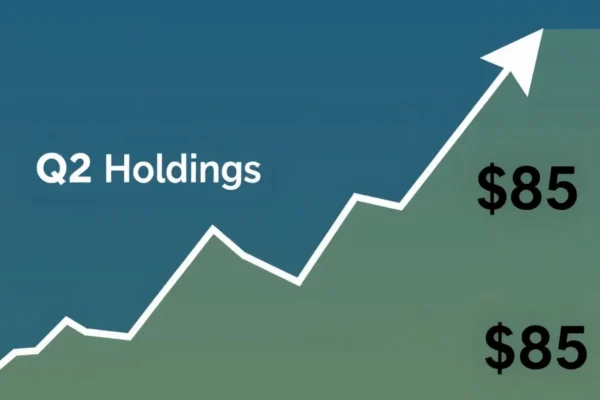
In a notable development for the financial technology sector, Stifel, a leading investment bank, recently elevated its stock price target for Q2 Holdings (QTWO) to $85 per share. This move, announced in a recent equity research report, signals a growing optimism among analysts regarding Q2 Holdings’ future financial performance, primarily driven by anticipated improvements in its profit margins. This strategic upward revision reflects a deeper dive into the company’s operational adjustments and its potential to capture a larger share of the evolving digital banking and payments market.
The Strategic Shift: Q2 Holdings’ Push for Profitability
The core of Stifel’s upgraded assessment for Q2 Holdings stock lies in the company’s demonstrated ability and strategic intent to improve its profit margins. In simple terms, profit margin is the percentage of revenue that remains as profit after all costs have been deducted. For Q2 Holdings, a provider of digital solutions for banks and credit unions, increasing these margins means becoming more efficient and profitable on every dollar it earns. This strategic focus on profitability, rather than solely on top-line revenue growth, is a critical pivot. It suggests that the company is mature enough to prioritize shareholder value through operational excellence and cost management. Stifel’s report, citing Stifel’s equity research, points to specific initiatives undertaken by Q2 Holdings that are expected to bear fruit in the coming quarters. This includes optimizing its product offerings, streamlining internal processes, and potentially leveraging its scale more effectively. The trigger for this increased confidence appears to be a combination of recent financial performance indicators and forward-looking management commentary, as detailed in Q2 Holdings’ latest earnings reports and investor presentations.
Competitive Landscape: Navigating a Crowded Fintech Arena
Q2 Holdings operates in a highly competitive financial technology (fintech) landscape. Its rivals include large, established players offering broad banking software suites, as well as nimble, specialized fintech startups vying for niche segments. Companies like NCR Corporation, Fiserv, and Jack Henry & Associates are significant competitors, often offering a wider range of services. Furthermore, the rise of cloud-native fintech solutions from newer entrants presents ongoing pressure. Stifel’s decision to raise the Q2 Holdings stock price target suggests that the investment bank believes Q2 Holdings is carving out a defensible position. By focusing on margin expansion, Q2 Holdings appears to be aiming for a strategy that balances growth with sustainable profitability, a move that can differentiate it from competitors solely focused on aggressive market share acquisition. This focus on efficiency could lead to a stronger financial profile, potentially making Q2 Holdings a more attractive long-term investment compared to peers that may be burning more cash to grow. The advantage gained would be a more robust and resilient business model, better equipped to withstand economic fluctuations and competitive onslaughts.
Industry Trends: The Maturation of Digital Banking Infrastructure
The fintech industry is witnessing a significant trend towards consolidation and a greater emphasis on profitability. As the initial hype around rapid, often unprofitable, growth subsides, financial institutions and their technology partners are increasingly prioritizing efficient, scalable, and secure solutions. Q2 Holdings’ strategic shift aligns perfectly with this industry maturation. The demand for digital banking solutions is still robust, driven by consumer expectations and the need for financial institutions to modernize. However, the market is now scrutinizing the underlying economics more closely. Stifel’s optimistic outlook on Q2 Holdings shares implies that the company is well-positioned to capitalize on this trend. The ability to demonstrate improved margins signals to the broader industry that it is possible to achieve profitable growth in the digital banking infrastructure space. This may encourage other players to reassess their own operational efficiencies and cost structures, potentially leading to further industry-wide adjustments.
Financial and Operational Impact: Efficiency Driving Profitability
The primary financial implication of Q2 Holdings’ focus on margin gains is improved profitability. This translates directly into higher earnings per share, a key metric for investors. For instance, if Q2 Holdings can reduce its cost of delivering its digital banking platform while maintaining or increasing its prices, its net income will rise even if its total revenue growth slows slightly. Operationally, this strategy likely involves optimizing cloud infrastructure, refining software development processes, and potentially rationalizing less profitable product lines. The short-term financial impact might involve investments in these efficiency initiatives, which could temporarily suppress growth figures. However, the long-term financial impact is expected to be substantial, leading to more predictable earnings and a stronger balance sheet. While specific financial forecasts from Q2 Holdings are subject to ongoing analysis, the trend toward margin improvement is a positive indicator for its financial health.
Execution Risks: The Hurdles on the Path to Higher Margins
While Stifel’s analyst rating is positive, the execution of Q2 Holdings’ margin improvement strategy is not without its risks. One significant challenge is the inherent complexity of integrating and optimizing diverse technology platforms, especially in a company that may have grown through acquisitions. Ensuring that cost savings do not come at the expense of product quality or customer service is paramount. For example, aggressive cost-cutting in customer support could alienate financial institutions, leading to churn. Historically, many tech companies have struggled to balance cost reduction with innovation and customer satisfaction. Market risks include potential shifts in demand for specific digital banking features or unexpected competitive pricing pressures. Furthermore, any delays in technological implementation or unforeseen regulatory changes could also hinder the company’s ability to achieve its projected margin gains. Q2 Holdings must navigate these challenges carefully to realize its strategic objectives.
Stakeholder Implications: A New Equilibrium for Q2 Holdings
The emphasis on margin gains has multifaceted implications for various stakeholders. For Q2 Holdings shareholders, the prospect of increased profitability is inherently positive, potentially leading to higher stock valuations and greater returns on investment. For customers, primarily banks and credit unions, the expectation is that improved efficiency might lead to more stable pricing or even better service, provided cost savings are reinvested wisely. However, if efficiency translates to reduced support or less frequent product updates, customer satisfaction could suffer. Employees might experience shifts in priorities, with a greater focus on operational efficiency and cost management, which could impact roles and team structures. For partners, the company’s financial strength and stability become more critical, as they rely on Q2 Holdings as a dependable technology provider. Overall, the shift signals a maturing business model, aiming for sustainable long-term value creation rather than hyper-growth alone.
Outlook and Next Steps: Monitoring the Trajectory of Q2 Holdings Shares
If Q2 Holdings successfully executes its strategy of improving profit margins, the outlook for its stock price target of $85, as set by Stifel, appears achievable. Key milestones to watch will include continued progress in the company’s reported profit margins over the next several quarters, consistent customer retention rates, and successful integration of any new product developments. Investors will be closely monitoring upcoming earnings reports for evidence of operating leverage – where revenue grows faster than costs. Indicators of success will include a steady increase in gross margins and operating margins, as well as positive cash flow generation. A timeline for measurable outcomes would likely be within the next 12-18 months, as the effects of operational changes become more pronounced in financial statements. Any significant deviation from this expected trajectory could lead to downward revisions in analyst ratings and stock price targets.
Key Questions and Answers on the Q2 Holdings Stock Target
What is the primary reason for Stifel’s Q2 Holdings stock price target increase?
Stifel raised its Q2 Holdings stock price target primarily due to the company’s focus on and anticipated success in improving its profit margins, signaling a stronger path to profitability and financial health.
How will Q2 Holdings’ margin gains impact its financial forecast?
Improved margins are expected to enhance Q2 Holdings’ overall financial forecast by increasing its profitability per dollar of revenue, leading to potentially higher earnings per share and a stronger bottom line over the long term.
What are the competitive implications of Q2 Holdings’ focus on margins?
By prioritizing margin gains, Q2 Holdings aims to build a more financially resilient business, potentially differentiating itself from competitors who may be focused solely on market share, and strengthening its market analysis position.
Are there any risks associated with Q2 Holdings’ strategy to increase margins?
Yes, risks include the potential for cost-cutting measures to negatively impact product quality or customer service, unforeseen technological challenges, and competitive pressures that could limit pricing power.
How does this decision affect Q2 Holdings shares for investors?
The increase in the stock price target by Stifel suggests a positive outlook for Q2 Holdings shares, indicating that the investment bank sees greater potential for investor returns driven by improved operational efficiency and profitability.
When can investors expect to see the full impact of these margin improvements?
While some early signs may be visible in upcoming financial reports, the full strategic and financial impact of Q2 Holdings’ margin improvement initiatives is likely to become more apparent over the next 12 to 18 months.
Business outcomes are subject to execution risk and market dynamics.