Tesla Cybercab Event Sparks Future Mobility Discussions
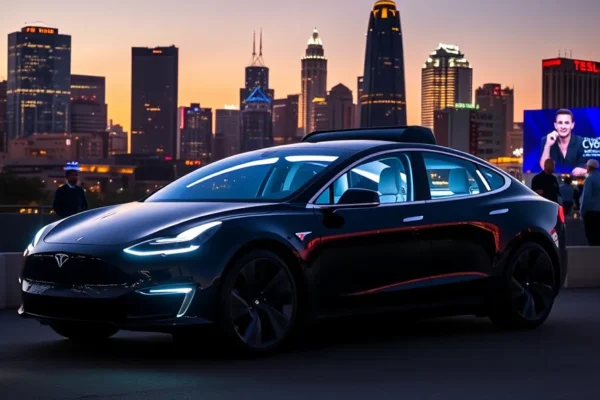
The automotive and technology sectors are abuzz with anticipation for Tesla’s upcoming Cybercab event in Austin, Texas. While specific dates and details remain under wraps, the event is widely expected to unveil significant advancements in Tesla’s vision for autonomous ride-hailing. This development centers on the company’s ongoing pursuit of a fully autonomous robotaxi service, a cornerstone of CEO Elon Musk’s long-term strategy for Tesla (TSLA). The focus on the Tesla Cybercab, and the potential implications of the Cybercab event, represent a critical moment for the electric vehicle (EV) technology leader and the broader future of transport.
What’s Driving the Focus on Cybercab Now?
The timing of this anticipated Austin Tesla event is crucial, occurring as Tesla navigates a complex market landscape. While the company has demonstrated impressive growth in EV deliveries, evidenced by its Q4 2023 vehicle deliveries exceeding 484,000 units according to their Q4 earnings report, investor focus is increasingly shifting towards future growth drivers beyond vehicle sales. The potential of a scalable robotaxi network, powered by its proprietary autonomous driving technology, presents a significant opportunity to unlock new revenue streams and redefine mobility solutions. This focus on autonomy is not new for Tesla, but the emphasis on a dedicated Cybercab product suggests a move towards tangible deployment rather than solely conceptual development.
Financial Context and Competitive Landscape
Tesla’s financial performance remains robust, with the company reporting a significant increase in revenue over the past few years. For instance, Tesla’s total revenue for the fiscal year 2023 reached $96.77 billion, a year-over-year increase according to their annual report. However, the company faces increasing competition in the EV market from both established automakers and new entrants. In the autonomous driving space, competition is fierce, with companies like Waymo (a subsidiary of Alphabet) already operating limited robotaxi services in select cities. Other players, including Cruise (partially owned by GM), are also investing heavily in self-driving cars. The success of Tesla’s robotaxi ambitions hinges on its ability to leverage its extensive EV customer base and its advanced Autopilot and Full Self-Driving (FSD) software. The development and launch of the Cybercab will be a key indicator of Tesla’s progress in translating its technological investments into a viable, large-scale commercial offering.
Analysis of Potential Market Impact
The successful unveiling and subsequent deployment of the Tesla Cybercab could have a profound impact on both Tesla’s valuation and the broader market for future transport. From a fundamental perspective, a commercial robotaxi service represents a recurring revenue model, potentially shifting Tesla’s valuation from a premium on hardware sales to a more diversified tech and service company. Key metrics to watch will include the estimated operational cost per mile for the Cybercab, the projected utilization rates, and the regulatory approvals required for widespread deployment. Market sentiment surrounding the robotaxi concept has historically been a significant driver of stock performance for companies involved in autonomous driving. Investor interest will likely focus on the scalability of the technology and the timeline for achieving profitability in this new venture. The Cybercab event will be a critical test of Tesla’s ability to execute on its ambitious self-driving cars vision.
Related Opportunities in the Mobility Ecosystem
The development of Tesla’s Cybercab has ripple effects across the automotive and technology industries. The potential success of a widespread robotaxi network could accelerate the adoption of autonomous driving technology across the board, benefiting companies involved in sensor technology, artificial intelligence (AI), and software development for autonomous vehicles. Competitors will undoubtedly be watching the Austin Tesla event closely to assess Tesla’s technological edge and deployment strategy. The competitive landscape for mobility solutions is evolving rapidly, and Tesla’s moves in the robotaxi space will likely spur further innovation and investment from rivals. The implications extend to urban planning and infrastructure, as cities begin to prepare for a future with more autonomous vehicles and reduced personal car ownership.
Future Outlook: What’s Next for Autonomous Driving?
The upcoming Cybercab event is a significant milestone, but it represents just one step in a long journey for autonomous driving. Investors will be looking for concrete details on the production timeline for the Cybercab, the geographic rollout strategy, and the economic viability of the service. Regulatory approvals remain a critical factor, with governments worldwide grappling with the safety and ethical considerations of self-driving cars. Future earnings reports will need to provide clear metrics on the progress and profitability of Tesla’s robotaxi division. The company’s ongoing advancements in EV technology and battery production will also continue to be watched, as these are foundational to the economic feasibility of a large-scale robotaxi fleet. Investors should also monitor the broader market trends in ride-sharing and the eventual integration of autonomous technology into other forms of public and private transportation.
Frequently Asked Questions
What is the Tesla Cybercab event in Austin?
The Tesla Cybercab event, anticipated to take place in Austin, is expected to be a reveal of Tesla’s dedicated robotaxi vehicle and its associated ride-hailing service. This event is central to Elon Musk’s vision for autonomous driving and future mobility solutions.
Is the Tesla Cybercab a robotaxi?
Yes, the Tesla Cybercab is designed to be a purpose-built robotaxi, intended to operate as a fully autonomous vehicle within Tesla’s planned ride-hailing network. It is a key component of Tesla’s strategy for self-driving cars.
What are the potential risks associated with the Tesla Cybercab launch?
Key risks include regulatory hurdles for autonomous driving, the high cost of development and deployment, intense competition from other autonomous driving companies, and the public’s acceptance of robotaxi services. Market sentiment can also shift rapidly based on technological breakthroughs or setbacks.
How does the Cybercab compare to competitors like Waymo?
While Waymo has an established operational history with its robotaxi service, the Cybercab aims to leverage Tesla’s vast manufacturing capabilities and existing customer base. Comparisons will focus on the technological sophistication of the autonomous driving systems, the cost-effectiveness of the vehicles, and the potential for scale in deployment.
What is the expected market impact of Tesla’s autonomous driving technology?
The successful implementation of Tesla’s autonomous driving technology through services like the Cybercab could disrupt the traditional automotive and ride-sharing industries. It signals a shift towards subscription-based mobility services and could significantly impact the valuation of companies in the EV technology and future transport sectors.
Is now a good time to invest in Tesla stock ahead of the Cybercab event?
Investment decisions should be based on thorough personal research and consultation with a qualified financial advisor. While the Cybercab event is a significant development, stock market performance is influenced by numerous factors, including broader economic conditions, company financials, and competitive dynamics. Investors should consider Tesla’s current valuation metrics, such as its P/E ratio, and its historical performance.
Past performance does not guarantee future results. Markets are volatile and can be unpredictable. This information is for informational purposes only and does not constitute financial advice. Investors should conduct their own due diligence and consult with a qualified financial advisor before making any investment decisions.