

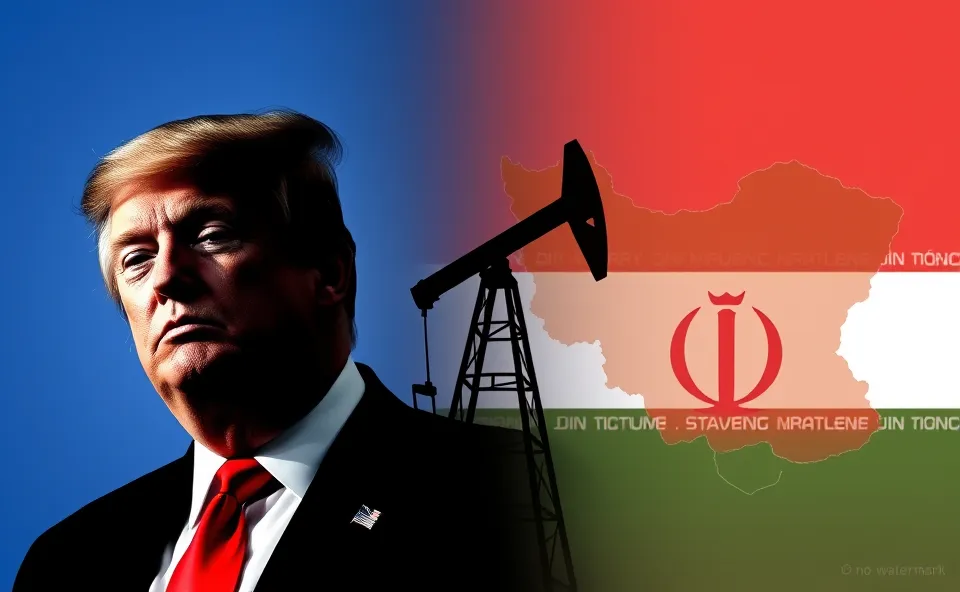
Hey there, tech and business buffs! Let’s dive into something that’s been rattling around the global oil market lately: the Iran deal and how Donald Trump’s past actions connect to today’s economic headaches. It might sound like ancient history, but trust me, this stuff has a real ripple effect on everything from your gas prices to the broader global economy.
Remembering the Big Nuclear Agreement
So, what exactly are we talking about when we mention the Iran deal? Back in 2015, a bunch of world powers, including the United States under President Obama, struck a deal with Iran. The main idea was to put a tight lid on Iran’s ability to develop nuclear weapons. In exchange for these strict limits, Iran was promised some relief from crushing economic sanctions. Think of it as a global agreement where Iran agreed to play by certain rules regarding its nuclear program, and in return, the world agreed to ease up on its economy.
The deal was pretty detailed. Iran had to significantly scale back its uranium enrichment activities, reduce its stockpile of enriched uranium, and allow international inspectors unprecedented access to its nuclear facilities. This was all about preventing Iran from getting close to having a nuclear bomb. The sanctions relief was a big deal for Iran’s economy, which had been struggling for years under the weight of international pressure.
Why the Buzz About Trump and the Iran Deal Now?
You might be asking, “Why are we revisiting this now?” The timing isn’t accidental. We’re seeing a lot of ups and downs in oil prices, and that often makes people look at the factors that can influence energy markets. When oil prices get volatile, it shakes up the global economy, and that’s when discussions about geopolitical risk and foreign policy start heating up. People are searching for answers, trying to connect the dots between past decisions and current financial realities.
The core of the current interest lies in the Trump administration’s decision to withdraw the United States from the Iran nuclear deal in 2018. This move immediately brought back severe economic sanctions on Iran. When those sanctions were reinstated, Iran’s oil exports, a major source of its revenue, were drastically cut. Now, as the world grapples with energy supply concerns and inflation, many are looking back to see if that decision played a role in the current landscape of oil prices and international trade tensions.
A Look Back: The Path to and from the Deal
To really get this, we need a little flashback. For years, the international community was deeply concerned about Iran’s nuclear ambitions. There were fears that Iran was secretly working towards building a nuclear weapon, which would have dramatically shifted the balance of power in the Middle East and posed a serious threat to global security. This led to a series of increasingly tough economic sanctions aimed at pressuring Iran to halt its nuclear activities.
The 2015 nuclear agreement, officially known as the Joint Comprehensive Plan of Action or JCPOA, was seen by many as a diplomatic triumph. It offered a structured way to verify that Iran was not pursuing nuclear weapons. However, it wasn’t without its critics. Some argued that the deal didn’t go far enough, that its sunset clauses were too generous, or that it didn’t address Iran’s other problematic behaviors, like its ballistic missile program or regional influence. This differing perspective set the stage for the policy shift that would come later.
When Donald Trump took office, he was a vocal critic of the Iran deal, calling it “the worst deal ever made.” His administration believed that the sanctions relief provided to Iran was not justified given its continued activities in the region and its other non-nuclear programs. The decision to withdraw from the nuclear agreement and reimpose sanctions was a major shift in US foreign policy and a significant blow to the international consensus that had been built around the deal.
How This Connects to Today’s Economic Picture
So, how does all this affect us today? The re-imposition of sanctions meant that Iran, which could have been a significant player in global oil markets, suddenly had its ability to export oil severely curtailed. This removed a substantial amount of potential oil supply from the world market. When supply is restricted, especially for a crucial commodity like oil, prices tend to go up.
This is where the connection to current oil prices and the global economy becomes clear. Several factors are currently contributing to volatile energy markets, including geopolitical events and lingering effects of the pandemic. However, the absence of Iranian oil, which could have provided a buffer or alternative source, is a significant piece of the puzzle. The economic sanctions not only impact Iran but also have ripple effects worldwide, influencing inflation and the cost of doing business for companies across various sectors.
Think about it:
- Higher Energy Costs: Less oil on the market generally means higher prices at the pump and for industrial energy use, affecting transportation and manufacturing costs.
- Impact on Businesses: Companies that rely heavily on oil and gas for their operations face increased expenses, which can be passed on to consumers.
- Global Economic Stability: Volatile oil prices can create uncertainty, making it harder for businesses and governments to plan and invest, potentially slowing down the global economy.
- Geopolitical Risk Premium: When major oil producers are subject to sanctions, it adds a layer of geopolitical risk to the energy markets, making them more sensitive to any supply disruptions or political developments.
- Trade Tensions: The US withdrawal and subsequent sanctions also contributed to broader trade tensions and strained diplomatic relationships, affecting international trade flows.
The Trump administration’s stance on the Iran deal, by reinstating sanctions, effectively took a significant amount of potential oil supply off the global market. While other factors are at play, this decision is often cited as a contributing reason for the tighter supply conditions that can exacerbate oil price volatility.
What Might Happen Next?
Looking ahead, the future of Iran’s oil production and its role in the global energy market largely depends on diplomatic developments. If there were a renewed push for sanctions relief, perhaps through a revived or renegotiated nuclear agreement, Iran could potentially increase its oil exports. This would likely put downward pressure on oil prices, assuming global demand remains stable.
Conversely, if the current trajectory continues with strict economic sanctions in place, Iran’s oil will remain largely sidelined. This means the global market will continue to rely on other producers to meet demand, and any disruptions from those sources could lead to further price spikes. The ongoing discussions about the Iran deal and its potential revival are therefore closely watched by energy market analysts and those concerned about the broader health of the global economy.
It’s a complex interplay of foreign policy decisions, economic incentives, and the fundamental forces of supply and demand in the energy markets. The lingering effects of past decisions, like Trump’s withdrawal from the Iran deal, continue to shape the economic landscape we navigate today.
Frequently Asked Questions
What was the main goal of the Iran deal?
The primary objective of the Iran deal was to prevent Iran from developing nuclear weapons by placing strict limits on its nuclear program and allowing for international inspections. In return, Iran was to receive sanctions relief, which would help its economy.
Why did Trump withdraw the US from the Iran deal?
President Trump withdrew the US from the Iran deal, also known as the JCPOA, because he believed it was too weak, did not address Iran’s other harmful activities like its ballistic missile program, and did not go far enough in preventing Iran from ever obtaining a nuclear weapon. He reimposed stringent economic sanctions on Iran.
How do economic sanctions on Iran affect oil prices?
Economic sanctions on Iran significantly limit its ability to export oil. When a major oil producer’s supply is reduced or removed from the global market due to sanctions, it can lead to tighter supply. This reduced supply, especially in the face of consistent demand, often drives oil prices higher, impacting the global economy.
What is the connection between the Iran deal and current geopolitical risk?
The status of the Iran deal and the imposition or removal of economic sanctions on Iran are significant factors in geopolitical risk. The tensions surrounding Iran’s nuclear program and its role in regional conflicts contribute to uncertainty in the energy markets. Any shifts in policy related to the Iran deal can either de-escalate or heighten these geopolitical tensions, affecting global stability and energy security.
What are the implications of the Trump administration’s stance on the nuclear agreement for the global economy?
The Trump administration’s decision to withdraw from the nuclear agreement and reimpose sanctions had several implications for the global economy. It contributed to tighter oil supplies, potentially higher energy prices, and increased trade tensions. For businesses and consumers, this can translate into higher operating costs and inflation, affecting overall economic growth and stability.











