

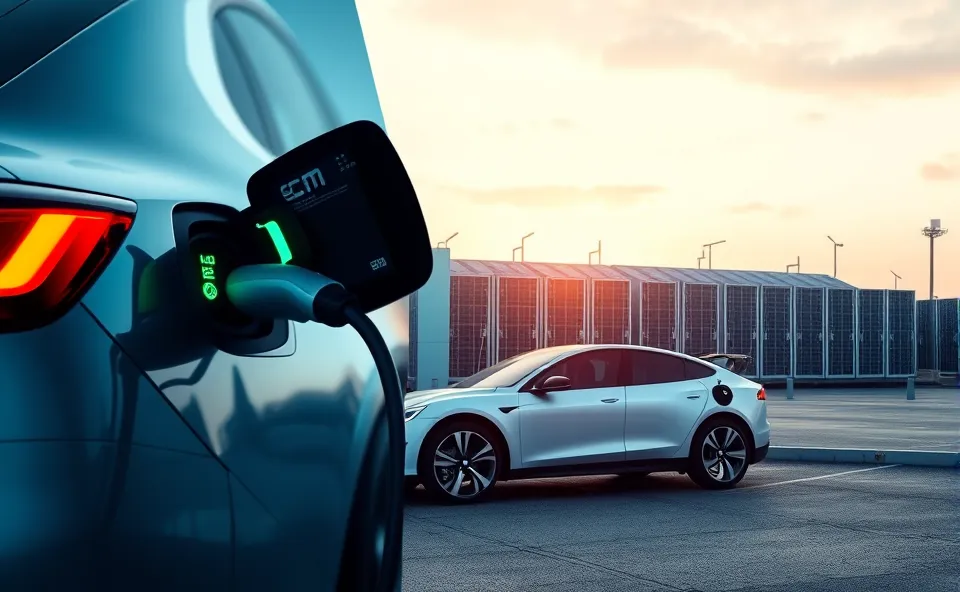
The Great Pivot: Why Ford and GM Are Rethinking Their EV Game
Hey there! You know how we’ve all been hearing non stop about electric vehicles EV for years? Well, it seems like some of the biggest names in the automotive industry, specifically Ford and GM, are subtly shifting their focus. They’re not exactly ditching EVs, not at all, but they’re pouring more energy and resources into something that might surprise you: battery storage. Think of it as a strategic U-turn, or maybe more accurately, a smart expansion of their vision. Instead of just making cars that run on batteries, they’re looking at the whole energy picture that surrounds those batteries.
Why Is This Conversation Heating Up Now?
It feels like just yesterday we were celebrating every new electric vehicle announcement. So why is the talk now about battery storage? A few things are happening all at once. First, the EV market, while growing, has hit some bumps. The initial hype is settling, and consumers are looking at practicalities like charging infrastructure and cost. At the same time, the world is waking up to the massive challenge of managing renewable energy, like solar and wind power. These energy sources are fantastic, but they’re not always on. That’s where storing that energy becomes absolutely critical. Automakers, with their deep understanding of battery technology, see a huge opportunity to play a role in this burgeoning energy sector. They have the expertise, the manufacturing might, and the vision to integrate transportation and energy in a way nobody else can. It’s a logical next step, and people are noticing.
A Look Back: The EV Dream Takes Shape
For decades, the idea of cars that didn’t rely on gasoline was a futuristic dream. Then, companies like Tesla proved it was possible, and soon, legacy automakers like Ford and GM jumped on board with their own electric vehicles. They invested billions, promising a future of clean transportation. We’ve seen some incredible electric vehicles roll off their production lines, and the pace of innovation in EV technology has been astounding. The focus was squarely on getting more EVs onto the road, on replacing the internal combustion engine with electric motors and battery packs. It was a massive undertaking, a complete reimagining of how cars are made and used. This push for EVs really set the stage for where we are today, building on the foundation of electric vehicle development.
Beyond the Tailpipe: What This Means for All of Us
So, what does this pivot to battery storage mean for you, for businesses, and for the future of energy? It’s actually pretty exciting. For consumers, it could mean more reliable power, even when the sun isn’t shining or the wind isn’t blowing. Imagine your EV not just being a car, but also a way to store excess solar power from your home and use it when needed, or even sell it back to the grid. This is called vehicle-to-grid or V2G technology, and it’s a game changer. For the energy sector, it means a more stable and resilient power grid. Large-scale battery storage systems, potentially powered by repurposed EV batteries, can help balance supply and demand, reducing reliance on fossil fuels and making renewable energy more dependable. For Ford and GM, it’s about diversification and staying ahead of the curve. They’re leveraging their core competencies in battery management and manufacturing to tap into a massive new market. This isn’t just about selling cars; it’s about becoming players in the broader energy ecosystem. This innovation has the potential to reshape how we think about energy consumption and generation.
The Road Ahead: A Smarter Energy Future
What’s next on this journey? We’re likely to see car companies deepening their partnerships with energy companies and developing more sophisticated battery storage solutions. AI will play a huge role here. Think about how AI can optimize charging patterns for EVs based on grid load and electricity prices, or how it can manage vast networks of battery storage systems to ensure consistent power delivery. AI can analyze complex data to predict energy needs and optimize the flow of power, making everything more efficient. We might also see a greater emphasis on the lifecycle of EV batteries, with automakers exploring ways to reuse and recycle them for stationary energy storage. This isn’t just about new cars; it’s about building a more sustainable and intelligent energy infrastructure. The integration of AI into battery management and grid operations is where much of the future innovation will lie, creating a seamless connection between our vehicles and our power sources. This continuous innovation is what will drive the future of energy forward.
Frequently Asked Questions
What’s the main reason US automakers are shifting focus from EVs to battery storage?
While they are not abandoning electric vehicles EV, automakers like Ford and GM are expanding their focus. They see a massive opportunity in battery storage to support the integration of renewable energy and stabilize the power grid, leveraging their expertise in battery technology beyond just powering cars.
How does AI fit into this transition to battery storage for automakers?
AI is crucial for optimizing battery performance and energy management. It can help manage large-scale battery storage systems, predict energy needs, optimize charging for electric vehicles EV, and ensure a stable power supply, making the entire energy ecosystem more efficient.
What are the benefits of battery storage for consumers in this new automotive trend?
For consumers, better battery storage could mean more reliable access to power, especially from renewable sources. It also opens up possibilities like using their electric vehicles EV as a mobile power source for their homes or even selling excess energy back to the grid.
How does this affect the future of the automotive industry and the energy sector?
This pivot means the automotive industry is becoming more intertwined with the energy sector. Automakers are moving from being solely car manufacturers to becoming integral parts of the energy infrastructure, contributing to renewable energy solutions and grid stability.
Is this a sign that the focus on electric vehicles EV is fading?
Not at all. The development of electric vehicles EV is still a core part of the strategy. The shift to battery storage is an expansion and evolution of their EV initiatives, recognizing that the batteries themselves have significant potential beyond just powering transportation, thus enhancing the overall value proposition of EVs.











