

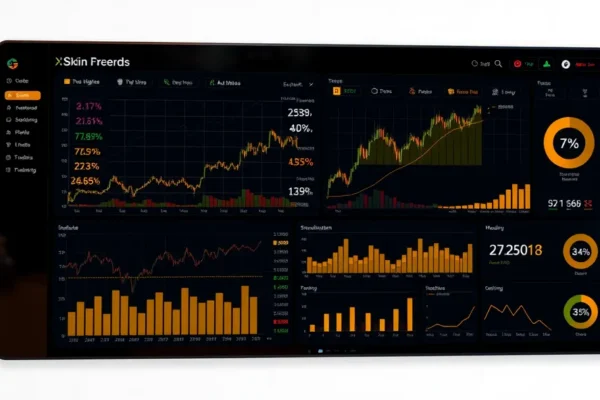
Current Market Performance and the State of ValuEngine Data
As we transition through the second half of the year, investors are increasingly looking for reliable data to navigate fluctuating market performance. According to the latest data from ValuEngine, the equity markets have navigated a complex environment defined by shifting interest rate expectations and varying corporate earnings outcomes. Year-to-date (YTD) figures indicate that while many major indices have maintained positive momentum, the underlying volatility suggests a rotation in investor sentiment across different sectors. Understanding these trends requires a rigorous look at the YTD and Q3 performance metrics, which provide a foundation for objective portfolio management in the current economic landscape.
What Triggered Recent Market Movements
The primary catalyst for recent market shifts has been the release of Q3 performance reports and the accompanying forward-looking guidance from major corporations. Data compiled by ValuEngine shows that sector-specific results are driving price action more than broad macroeconomic news. Specifically, sectors with strong pricing power and controlled operational costs have outperformed those heavily reliant on consumer discretionary spending, which has shown signs of softening. According to recent federal economic reports, inflation data has remained sticky, which continues to influence how institutional investors allocate capital across the equity market. This has led to a heightened focus on valuation models—specifically price-to-earnings (P/E) ratios—as participants look to justify current stock market trends in a high-rate environment.
Contextualizing Financial Fundamentals
To understand the current market outlook, one must evaluate the financial health of the companies within the major indices. ValuEngine’s recent analysis highlights a divergence between high-growth technology stocks and traditional value-oriented sectors. Historically, growth-heavy portfolios tend to experience significant swings when treasury yields fluctuate, a trend that has been consistent throughout this year. Data from S&P Global indicates that average profit margins have held relatively stable despite increased labor and supply chain costs, suggesting that corporate efficiency has acted as a buffer. When compared to the same period in previous years, the current market displays a higher degree of valuation sensitivity, meaning investors are less willing to pay a premium for earnings growth that is not clearly supported by cash flow generation.
Analysis of Technical and Fundamental Signals
A comprehensive equity analysis reveals that while the broader market indices have posted gains on a YTD basis, internal market breadth has been uneven. Technical indicators tracked by ValuEngine suggest that stock market trends are heavily influenced by a limited number of high-cap performers, while the broader market remains in a consolidation phase. From a fundamental perspective, the P/E ratio for the S&P 500 continues to sit above its 10-year average, prompting caution among value-oriented managers. Current market sentiment indicates a “wait-and-see” approach, where institutional traders are prioritizing stocks with high dividend coverage ratios and lower debt-to-equity levels. These signals indicate that while market participants remain optimistic about long-term growth, they are increasingly demanding higher risk-adjusted returns for their capital allocation.
Broadening the Lens to Related Opportunities
The movement in the broader equity market has significant implications for asset allocation strategies. As investors assess the Q3 performance metrics of major indices, there is a clear shift toward defensive sectors, including utilities and healthcare. These sectors have historically served as a hedge during periods of heightened volatility. Furthermore, the competitive landscape is shifting; as traditional companies invest heavily in artificial intelligence and automation to maintain margins, the divide between companies that successfully implement these technologies and those that do not is widening. This development creates a thematic opportunity for investors to look at mid-cap companies that are currently undervalued by the market but show strong operational scaling potential, as noted in recent institutional research reports.
Looking Toward the Future Outlook
Looking ahead, the market outlook will likely be dictated by upcoming labor market data and future Federal Reserve commentary. Based on historical cycles, the fourth quarter often brings a recalibration of portfolio positioning as institutional investors finalize their year-end strategies. Factors that could shift the current outlook include unexpected changes in consumer spending patterns during the holiday season or revisions to Q4 earnings forecasts. For investors, the timeline for potential market shifts is generally linked to upcoming earnings cycles and central bank policy meetings. Maintaining a disciplined approach to asset allocation, rather than reacting to short-term noise, remains a fundamental principle for navigating the remainder of the year.
Risk Disclaimer
Past performance does not guarantee future results. Financial markets are inherently volatile and subject to risks, including the loss of principal. The information provided is for educational purposes and does not constitute financial advice. All investors should conduct their own research and consult with a licensed financial advisor before making any investment decisions. ValuEngine data is a tool for analysis and should be used in conjunction with other financial metrics and professional guidance.
Frequently Asked Questions for Investors
How does ValuEngine market performance analysis help in portfolio management?
ValuEngine provides quantitative analysis and ranking models that help investors identify overvalued or undervalued stocks based on historical financial performance. By utilizing their YTD and Q3 performance metrics, investors can assess whether their current holdings align with long-term financial goals and risk tolerance. It allows for a data-driven approach to rebalancing portfolios based on objective fundamental data rather than emotional bias.
What are the primary risks associated with current stock market trends?
The primary risks in the current environment include interest rate sensitivity, inflation volatility, and slowing consumer demand. When market performance is driven by a small concentration of stocks, the risk of a broader sector correction increases. Investors should monitor how these trends impact their overall asset allocation and ensure they have adequate diversification to mitigate against sector-specific downturns.
How does the current Q3 performance compare to previous years?
According to historical financial commentary and earnings data, Q3 performance this year has been more sensitive to corporate guidance regarding future profit margins than in recent years. While revenue growth remains positive for many sectors, the market is placing a higher premium on efficiency and debt management compared to the post-pandemic recovery years. This indicates a transition toward a more conservative market valuation environment.
Is this the right time for adjustments in equity analysis and strategy?
Effective investment strategy often involves periodic review rather than constant adjustment. When equity analysis indicates that a specific sector or stock has reached a valuation extreme relative to its growth potential, investors typically reevaluate their position. Rather than trying to time the market, many professional investors focus on ensuring their asset allocation remains consistent with their risk profile through different market cycles.
How does ValuEngine data compare to other market outlook reports?
ValuEngine focuses on quantitative ranking and valuation-based metrics, providing a distinct perspective compared to macro-heavy economic reports. While many financial reports analyze qualitative news, ValuEngine emphasizes the mathematical relationship between stock prices and company fundamentals. Integrating this data with broader market outlook reports allows for a more holistic view of the potential risks and opportunities within a global investment portfolio.











