

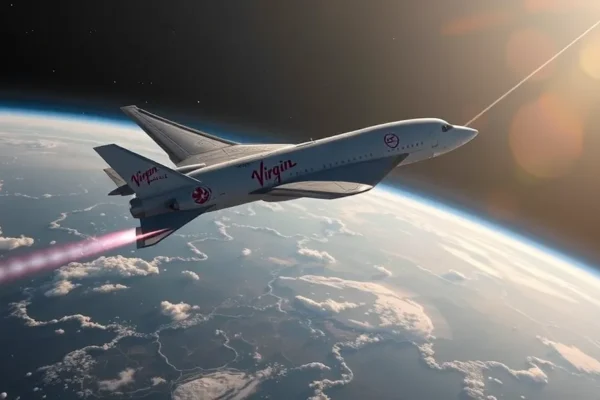
Virgin Galactic’s Path to Survival in the Commercial Spaceflight Arena
Virgin Galactic (SPCE) has captured imaginations with its vision of commercial spaceflight, but the company faces significant financial hurdles and a challenging path to sustained survival in this nascent industry. Investors are closely watching the company’s ability to navigate its financial challenges, execute its flight plan, and secure a profitable future.
Recent Market Movement for SPCE Stock
Virgin Galactic Holdings, Inc. (SPCE) stock has experienced considerable volatility, a common characteristic for companies in rapidly evolving, capital-intensive sectors. For instance, in the period surrounding its latest quarterly earnings release, the stock saw notable price fluctuations. On November 7, 2023, following the announcement of its third-quarter 2023 financial results, SPCE stock experienced a decline. While specific daily percentage moves can vary, reports from financial news outlets indicated that the market reaction was influenced by the company’s ongoing financial performance and outlook. For example, Yahoo Finance reported on November 7, 2023, that SPCE stock fell significantly in pre-market trading after the company reported its Q3 results and provided updated guidance.
Understanding the Recent Market Catalysts
The primary trigger for recent market movements in SPCE stock has consistently been the company’s financial results and operational updates. The third-quarter 2023 earnings report, released on November 7, 2023, provided key insights into Virgin Galactic’s financial standing and its trajectory. According to Virgin Galactic’s Q3 2023 earnings release, the company reported a net loss and detailed its cash burn rate, which remains a critical focus for investors. While the company continued to advance its flight program, achieving certain operational milestones, the economic realities of developing and operating a spaceflight service continue to weigh on its valuation.
Financial Realities and Competitive Landscape
Virgin Galactic operates within the burgeoning space tourism and commercial spaceflight sector, a field demanding substantial upfront investment and facing intense competition. The company’s financial performance has been characterized by significant operating expenses related to research and development, spacecraft manufacturing, and the establishment of launch operations. In its Q3 2023 earnings report, Virgin Galactic stated it had approximately $1.1 billion in cash and cash equivalents, equivalents, and restricted cash as of September 30, 2023. This liquidity is crucial for funding its ongoing operations and capital expenditures. However, the company has historically generated limited revenue from its commercial flights, relying heavily on capital raises to fund its operations. This has resulted in a persistent net loss, a common challenge for companies in their early stages of scaling complex technologies. The aerospace industry, particularly the commercial spaceflight segment, is inherently capital-intensive, with players like SpaceX and Blue Origin also investing heavily in infrastructure and innovation. Virgin Galactic’s ability to scale its operations and achieve profitability hinges on increasing flight frequency and ticket sales while managing its cost structure.
Analysis: What These Financials Mean for SPCE Stock
The financial narrative surrounding Virgin Galactic (SPCE) stock is one of persistent cash burn, strategic investment, and the critical need for revenue growth to achieve solvency. The company’s market capitalization fluctuates significantly, reflecting investor sentiment regarding its future prospects and its ability to overcome its financial challenges. Key metrics to watch include the company’s cash burn rate, the pace of its flight operations, the average revenue per customer, and its ability to secure future funding or generate substantial revenue to offset its costs. While Virgin Galactic is not yet profitable, indicated by its net losses reported in its financial statements, the company’s focus is on executing its flight schedule and expanding its service. Market sentiment often swings between optimism about the potential of space tourism and concern over the company’s financial sustainability. Investor implications revolve around the company’s ability to demonstrate a clear path to profitability and positive cash flow, rather than simply achieving operational milestones.
Related Opportunities and Competitive Dynamics
Virgin Galactic’s developments in the commercial spaceflight market have broader implications for the aerospace industry and the broader investment landscape. The success or failure of pioneers like Virgin Galactic can influence investor confidence in the entire space sector. Competitors, such as Blue Origin (privately held) and SpaceX (privately held, with a potential future IPO), are also actively developing their space tourism and commercial spaceflight capabilities. The advancements made by Virgin Galactic, including its VSS Unity spacecraft and its approach to suborbital space tourism, contribute to the overall growth and maturation of the industry. As the market for space tourism evolves, other companies involved in satellite launches, space-based research, and even lunar exploration could see their investment outlooks shaped by the broader trends in commercial spaceflight.
Future Outlook and Key Factors to Watch
The future prospects for Virgin Galactic’s survival and success in the commercial spaceflight market depend on several critical factors. Investors will be closely monitoring the company’s ability to: 1) Increase the frequency of its commercial flights, thereby generating more consistent revenue. 2) Manage and potentially reduce its operating costs per flight. 3) Secure additional capital, if needed, through equity offerings or debt financing, without excessively diluting existing shareholders. 4) Expand its customer base and potentially introduce new offerings or service tiers. Upcoming earnings reports will be crucial for assessing progress on these fronts. Regulatory developments concerning commercial spaceflight operations and safety standards could also impact the industry’s growth trajectory. Realistically, achieving profitability will require a sustained period of high flight cadence and robust demand, likely over several years. The ability to demonstrate a clear path to financial self-sufficiency, rather than reliance on external funding, will be the ultimate determinant of Virgin Galactic’s long-term survival.
Risk Disclaimer: Past performance does not guarantee future results. Markets are volatile and subject to unpredictable shifts. This article is for informational purposes only and does not constitute financial advice. Investors should conduct their own research and consult with a qualified financial advisor before making any investment decisions.
Frequently Asked Questions About Virgin Galactic’s Survival
Is SPCE stock a good buy for long-term investors looking at Virgin Galactic survival?
Assessing whether SPCE stock is a “good buy” depends on an individual investor’s risk tolerance and investment horizon. Virgin Galactic is currently operating at a net loss, with its survival hinging on its ability to scale revenue and manage costs. Long-term investors may consider its potential in the growing space tourism market, but must also acknowledge the significant financial challenges and inherent risks associated with this early-stage industry. Data from its financial reports, such as cash on hand and burn rate, are critical for informed decision-making.
What are the main financial challenges facing Virgin Galactic?
The primary financial challenges for Virgin Galactic include its high operating expenses related to research, development, and flight operations, which have historically resulted in significant net losses. The company also faces the challenge of generating sufficient revenue from its relatively low-frequency commercial flights to cover these costs. Maintaining adequate liquidity to fund ongoing operations and capital expenditures is also a continuous concern, as highlighted in its quarterly earnings releases.
How does Virgin Galactic compare to its competitors in the commercial spaceflight sector?
Virgin Galactic is a publicly traded company focused on suborbital space tourism, offering passengers a brief experience in space. Competitors like Blue Origin (privately held) are also developing space tourism capabilities with a similar suborbital focus. SpaceX (privately held), while also a major player in the aerospace industry, has a broader scope that includes orbital spaceflight, satellite launches, and cargo delivery to the International Space Station, and is considered a more established entity in terms of operational capacity and revenue generation.
What is Virgin Galactic’s strategy for long-term survival and profitability?
Virgin Galactic’s strategy for survival and profitability centers on increasing the cadence of its commercial spaceflights and eventually reducing the cost per flight. The company aims to achieve this by streamlining operations, improving its spacecraft reliability, and growing its customer base. Securing future funding rounds or debt financing may also be part of its strategy to bridge the gap until revenue generation can sustain its operations, as detailed in its investor presentations and earnings calls.
What are the key risks associated with investing in SPCE stock and Virgin Galactic survival?
Investing in SPCE stock carries significant risks, including the inherent volatility of the commercial spaceflight industry, potential technical challenges with its spacecraft, regulatory hurdles, and the company’s ongoing need for substantial capital. The competitive landscape is also evolving, with both established players and new entrants vying for market share. The company’s current lack of profitability and reliance on cash reserves are also key risks for investors concerned about Virgin Galactic’s long-term survival.
How has SPCE stock analysis been impacted by Virgin Galactic’s flight schedule and earnings reports?
SPCE stock analysis is heavily influenced by Virgin Galactic’s flight schedule and its financial results as reported in quarterly earnings. Delays in the flight schedule or lower-than-expected revenue can lead to negative sentiment and price declines. Conversely, successful flights, increased flight frequency, and positive financial metrics, such as progress toward reducing losses or improving cash flow, can boost investor confidence. Analysts often scrutinize the company’s guidance for future flights and revenue projections to assess its trajectory toward commercial viability.











