The Return of 3D Movies Through Personal Displays
For years, the promise of 3D movies felt like a fading trend relegated to expensive, uncomfortable cinema glasses and bulky home televisions. However, a new wave of entertainment tech is fundamentally changing how we experience depth on screen. Through the rise of AR/VR headsets and dedicated video glasses, the concept of immersive viewing is undergoing a renaissance. By leveraging advanced optics, companies like Apple, Meta, and Xreal are transforming small, portable devices into private, high-fidelity cinemas.
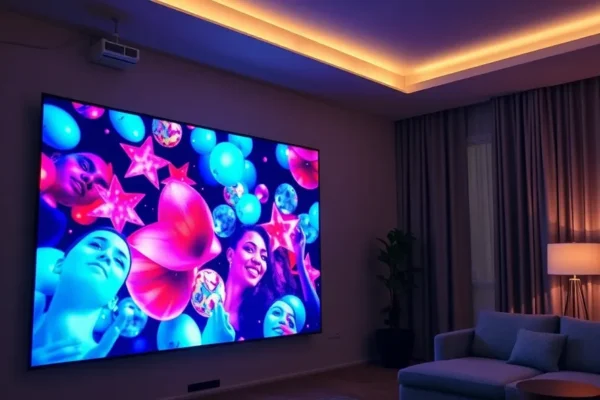
This resurgence is significant because it solves a long-standing accessibility problem. In the past, watching 3D Blu-ray content or high-quality 3D digital media required a specialized television set that had to be physically installed in a living room. Today, industry leaders are shifting this paradigm toward mobile, personal hardware. The launch of the Apple Vision Pro and the continued refinement of the Xreal Air series represent a breakthrough in how we deliver stereoscopic content—that is, images that simulate depth for the human eye—to a mass audience without the need for a dedicated home theater setup.
How Video Glasses Create Depth
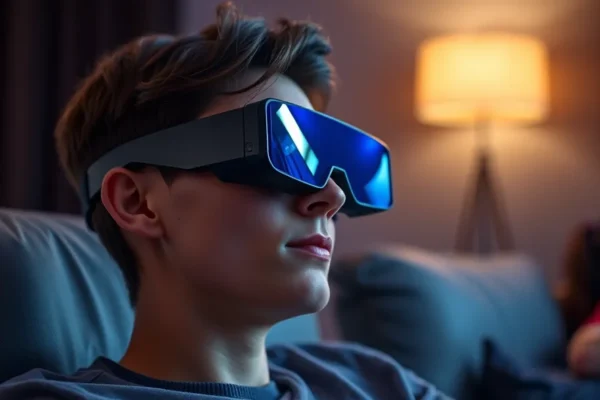
To understand why these devices are effective, it helps to think of them as a private movie theater worn on your face. Traditional 3D TVs relied on glasses that filtered light to trick your eyes, often resulting in a dim, flat picture. Modern video glasses, by contrast, use micro-OLED displays—tiny, high-resolution screens built directly into the lenses or headset housing. By placing two separate, high-resolution images inches from your eyes, the device forces your brain to perceive depth in exactly the same way it would in a real-world environment.
The core mechanism is display technology that mimics the physical distance between human eyes. This creates a wide field of view that gives the user the impression they are sitting in front of a giant cinema screen. While older 3D tech often suffered from “ghosting” or motion blur, current headsets like the Meta Quest series and the Vision Pro utilize high refresh rates—the speed at which images update on the screen—to maintain a smooth, realistic motion that feels natural to the human eye. The experience is essentially a hardware-level optical illusion, providing the clarity of a 4K television while occupying the footprint of a pair of sunglasses or a ski mask.
Current State and Real World Applications
Today, this technology is transitioning from an enthusiast niche into the early stages of mainstream adoption. For users of Xreal, the primary application is media consumption on the go. By connecting these glasses to a smartphone or a gaming console, a commuter can turn a cramped train seat into a personal viewing space. The maturity level here is high; these are consumer-ready products available for purchase now, providing a reliable way to watch 3D content or play video games in a private, floating display.
On the more advanced end of the spectrum, the Apple Vision Pro occupies a “spatial computing” space. It allows users to watch 3D movies while maintaining awareness of their actual environment. These devices are being used not just for entertainment but as a productivity tool, allowing users to arrange virtual screens anywhere in their room. While these devices are currently expensive, the presence of these products in retail stores confirms that the technology has moved well past the prototype phase and into a period of aggressive market testing and consumer feedback.
The Competitive Landscape of Immersive Entertainment
The market is currently divided between two distinct approaches. On one side are the lightweight “smart glasses” like those produced by Xreal. These prioritize portability and simplicity, acting primarily as a screen replacement. On the other side are the sophisticated AR/VR headsets, such as the Meta Quest 3 and the Apple Vision Pro. These provide a “total immersion” experience by fully sealing the user into a virtual environment.
Apple holds an advantage in display fidelity, offering an industry-leading resolution that makes reading text and viewing high-definition 3D movies feel indistinguishable from a physical screen. Meta, conversely, leads in terms of price-to-performance, making immersive viewing accessible to a much broader segment of the population. While smaller companies focus on niche portability, the giants are currently battling to define the “home theater experience” of the future by integrating software ecosystems that make finding and watching 3D films as seamless as opening a streaming app on your phone.
Implications for Media and Society
The shift toward video glasses has profound implications for the entertainment industry. If individuals can enjoy a true 3D cinematic quality at home, the demand for physical home theaters may decline. This creates a business opportunity for streaming services, which have historically been slow to offer high-quality 3D content. If the hardware is ready, the content libraries will likely follow, potentially leading to a new wave of 3D-remastered films for the home market.
Socially, this technology promotes the “private screen” culture. While this offers benefits—such as allowing family members to watch different 3D movies in the same room without noise or screen glare—it also poses questions about social isolation. The long-term impact will likely involve a balance between using these devices for private focus and the continued importance of shared physical screens for group gatherings. In the short term, expect these glasses to become a staple of travel and personal workspace setups.
Limitations and Challenges
Despite the excitement, we must remain balanced about the current reality. One of the primary bottlenecks is physical comfort. Wearing a headset for a two-hour film is significantly more taxing than sitting on a couch. Even lightweight glasses can cause fatigue, and many users report “vergence-accommodation conflict,” where the eyes struggle to focus because the screen is physically close but the image appears far away. These are genuine, unresolved biological challenges.
Furthermore, the cost of entry remains a significant barrier. While entry-level glasses are becoming affordable, the high-end headsets that offer a true “cinematic” level of immersion still carry a price tag that puts them out of reach for many. Finally, there is the issue of content availability. Despite the capability of the hardware, the lack of a standardized, easy-to-access 3D movie library means that users often struggle to find enough high-quality content to justify the investment in the gear itself.
The Future Trajectory of Immersive Viewing
Looking ahead, the next five years will be defined by miniaturization and increased content integration. We expect the heavy, bulky headsets of today to eventually converge into the form factor of standard eyeglasses. The goal is to reach a point where the hardware is “invisible,” meaning the user forgets they are wearing a device at all. This will be achieved through advances in waveguide technology, which allows light to be directed into the eye without the need for large, opaque lenses.
We should also anticipate that major streaming platforms will begin offering dedicated 3D tiers, similar to how they currently offer 4K or HDR options. As the hardware becomes more efficient, battery life will improve, likely moving from two-hour sessions to all-day usage. The industry consensus is that we are on the precipice of a new media format, where 3D is no longer a gimmick, but a standard feature of digital high-definition video.
Key Questions and Answers
Is 3D movies viewing via glasses better than a home theater?
It depends on the user. While video glasses offer a more intimate, high-definition 3D experience with superior depth perception, a traditional home theater provides a social, shared environment that is physically more comfortable for long-term viewing.
Are current video glasses mature enough for daily use?
For early adopters and tech enthusiasts, yes. However, for the average consumer, the current drawbacks regarding weight, battery life, and the limited availability of 3D content make these devices better suited for specific use cases like travel or specialized media consumption rather than everyday screen replacement.
Who benefits most from the move to AR/VR headsets?
Gamers and movie enthusiasts currently see the most value, as these groups are most likely to utilize the high-fidelity immersive capabilities of these devices. Productivity users are also starting to benefit from the ability to create multiple virtual, large-scale monitors.
What are the risks of using these devices?
The primary risks are eye strain and physical fatigue. Long-term usage in virtual environments can cause discomfort for some users, and there is an ongoing need for better software to manage these effects during extended cinematic viewings.
How long until immersive viewing becomes mainstream?
While we are already in the “early adoption” phase, mainstream ubiquity is likely another 5 to 10 years away. This timeline depends on the industry’s ability to reduce the cost of the hardware and increase the availability of high-quality 3D cinematic content.
Note: This article summarizes current developments in consumer-grade AR/VR hardware as of late 2024. The capabilities mentioned are based on current product releases from companies including Apple, Meta, and Xreal. Consumers should be aware that technological advancements in this field are rapid, and hardware comfort remains a subjective experience that varies by individual user.