The Next Step in Package Delivery
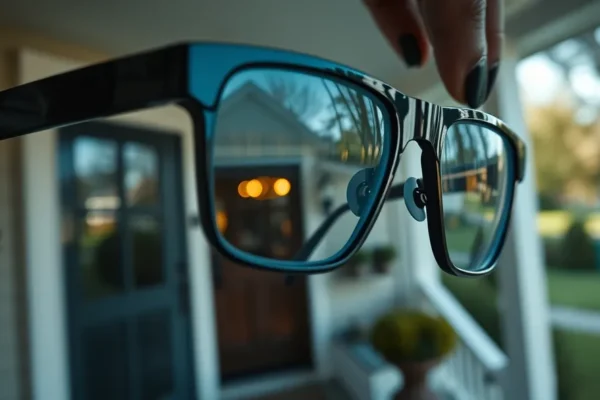
Amazon is moving toward a future where its delivery drivers are equipped with advanced wearable technology designed to capture vast amounts of visual data. Recent reports indicate that the retail giant is developing proprietary Amazon smart glasses to assist drivers in navigating the “last mile” of delivery, the final leg of a package’s journey from a distribution center to a doorstep. This technology aims to streamline logistics by providing turn-by-turn navigation directly in the driver’s field of view, while simultaneously capturing high-resolution photos of the environment.
The goal is to improve efficiency by reducing the time drivers spend searching for addresses or fumbling with handheld devices. By integrating cameras and digital overlays, the company hopes to optimize routing and simplify proof of delivery. This development is significant because it signals a shift toward persistent visual monitoring within the logistics workforce. While Amazon has long utilized various driver safety tools to monitor vehicle telemetry, such as speed and braking habits, the introduction of wearable cameras represents a deeper integration of surveillance technology into the daily lives of its workers and the public.
How Smart Glasses See the World
At its core, the technology functions as a heads-up display, similar to a fighter pilot’s cockpit interface, but scaled down into a lightweight frame. Think of it like having a digital assistant perched on your nose that constantly analyzes your surroundings. As a driver navigates a neighborhood, the glasses use AI data collection to identify house numbers, street signs, and package drop-off locations. When the driver reaches the final destination, the camera captures an image to confirm the delivery, a process that is currently manual and time-consuming.
These devices are powered by sophisticated computer vision algorithms. In simple terms, the glasses do not just see colors and shapes; they are trained to recognize specific patterns, such as “front porch” or “package location.” By processing this data in real time, the device can suggest the most efficient path to the door. While the hardware is designed for utility, the underlying mechanism is an always-on sensor suite that processes everything it encounters throughout a shift, turning every delivery route into a potential data-gathering mission.
Current State and Real World Applications
As of late 2024, the deployment of this technology remains in the internal testing and development phase. While companies like Amazon often pilot new hardware within select regional hubs before a wider rollout, these smart wearable devices are not yet a standard part of every delivery driver’s kit. The focus is primarily on improving operational efficiency within dense urban environments where address location is often the most significant bottleneck.
Currently, delivery drivers use mobile apps on standard smartphones to scan packages and confirm arrivals. Amazon’s proposed shift to smart glasses would move the interface from the hand to the eyes, allowing for a “hands-free” workflow. This is consistent with a broader trend in supply chain management, where companies are experimenting with augmented reality (AR) to speed up warehouse picking and sorting processes. However, the move to bring this tech onto public streets is a distinct evolution in the maturity of retail logistics.
The Competitive Landscape
Amazon is not alone in the race to refine delivery through wearable tech. Other logistics firms, such as UPS and FedEx, are also exploring various iterations of electronic tracking and navigation assistance. However, Amazon holds a significant advantage due to its scale and its deep investment in proprietary AI ecosystems, such as the rumored Wellspring AI initiatives designed to optimize complex logistical chains.
While rivals are largely focused on mobile-first solutions or vehicle-mounted telematics, Amazon’s approach is more aggressive regarding wearable integration. The differentiator here is the depth of data capture. By using glasses rather than a phone, Amazon gains a “first-person” perspective, which provides richer spatial data than a static camera mounted on a delivery truck. This allows the company to build a more granular map of residential areas, potentially creating a “digital twin” of city streets that could be used for autonomous vehicle training in the future.
Privacy Implications and the Opt-Out Challenge
The transition to wearable surveillance cameras has sparked intense debate regarding data privacy. Unlike a doorbell camera, which is stationary and belongs to the homeowner, Amazon smart glasses are mobile and controlled by a third party. As drivers traverse private property and public sidewalks, the devices effectively record thousands of images of homes, individuals, and passersby without their explicit consent.
The most contentious aspect of this plan is the apparent lack of an opt-out policy. Because the technology is framed as a requirement for the job, drivers have little recourse, and the public has no way to request that their property or likeness be excluded from the data set. This raises critical questions about the balance between corporate efficiency and the right to privacy in public and semi-private spaces. If a device is constantly capturing imagery, where is that data stored, how long is it kept, and who else can access it? These are the primary concerns for privacy advocates who argue that the convenience of faster delivery should not come at the expense of comprehensive street-level surveillance.
Limitations and Technical Bottlenecks
Despite the promise of high-tech efficiency, significant hurdles remain. First, there is the issue of hardware durability; delivery work is physically demanding, and standard smart glasses may not withstand the heat, cold, or accidental drops associated with long shifts. Second, there is the battery life problem. Processing high-definition video and running computer vision models consumes significant power, making it difficult to keep such devices running for a standard 8-to-10-hour delivery route without bulky external battery packs.
Furthermore, the regulatory environment is still catching up. Laws regarding the use of cameras by private employees in residential neighborhoods vary widely across states and countries. Amazon faces the risk of navigating a complex web of privacy litigation if they fail to implement robust data protections. Finally, there is the “human factor”: many drivers may find the glasses uncomfortable or distracting, which could ironically lead to more safety issues rather than fewer.
Future Trajectory
Looking ahead, it is likely that Amazon will continue to iterate on this hardware, focusing on weight reduction and longer battery life. If the company proves that these glasses significantly improve delivery speed and lower costs, we can expect a gradual, phased rollout starting in major urban centers. The long-term vision is clear: the integration of delivery infrastructure with real-time AI mapping.
Watch for future announcements regarding how Amazon manages the data captured by these devices. The company will likely face pressure to implement stricter privacy controls, such as automatic blurring of faces or license plates, to mitigate public backlash. Whether or not this technology reaches mass adoption will depend as much on public trust and legal frameworks as it does on the technical capabilities of the glasses themselves.
Questions and Answers
Is Amazon smart glasses technology currently in mainstream use?
No, the technology is currently in the research and testing phase. It is not yet a standard requirement for the general population of Amazon delivery drivers, as the company continues to refine the hardware and address logistical challenges.
What are the primary privacy concerns associated with this tech?
The main concern is the continuous, non-consensual capture of visual data in neighborhoods. Critics argue that the lack of an opt-out mechanism for residents means that people’s private homes and personal activities are being recorded by a corporate entity without their knowledge or permission.
How does this impact driver safety?
Amazon claims these tools are designed to assist with driver safety by reducing distractions and providing better navigation. However, critics worry that wearing a device that constant streams or records information could overwhelm drivers or cause physical discomfort, potentially creating new safety hazards.
What is Wellspring AI?
Wellspring AI is a term often associated with Amazon’s broader initiatives to integrate advanced machine learning into its logistics, search, and recommendation engines. In this context, it refers to the backend AI systems that process the vast amounts of visual data captured by wearable devices to optimize delivery routes.
Who benefits from the use of these smart wearable devices?
Amazon primarily benefits through increased operational efficiency, reduced delivery times, and the collection of valuable street-level spatial data. While customers may experience faster deliveries, the trade-off is a broader expansion of surveillance technology into their personal environments.
Note: This article is based on recent industry reporting and company patent filings. As this technology is currently in development, specific features, privacy policies, and deployment timelines are subject to change based on internal company decisions and potential legal or regulatory interventions.