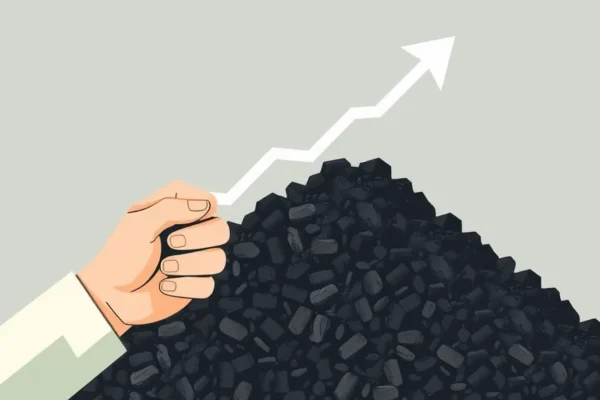
The Persistent Struggle of the Global Coal Supply Chain
In recent years, the global energy landscape has faced a reality check that few analysts anticipated a decade ago. Despite the widespread commitment to green energy transitions, coal supply has remained a bedrock of global power generation. The current crisis stems from a series of disruptions—ranging from geopolitical conflicts in Eastern Europe to climate-driven weather events—that have strained the traditional logistics of fossil fuels. As nations struggle to balance energy security with decarbonization goals, the reliance on thermal coal has surged, placing immense pressure on mining output and international logistics.
The Strategic Shift Toward Energy Security
The primary driver behind the current state of coal markets is a fundamental shift in how governments view energy security. Following the volatility triggered by the Ukraine conflict, major economies—including Germany, China, and India—have prioritized reliable electricity over long-term climate targets. This led to a scramble for coal reserves to insulate national grids from the unpredictability of natural gas prices. Companies like Glencore and Peabody Energy have responded not by expanding their long-term infrastructure, but by optimizing existing mines to meet immediate spikes in demand. This move is less about long-term growth and more about capturing high commodity prices while the market remains fractured.
Competitive Pressures in a Volatile Market
The competitive landscape for coal is defined by a dichotomy between Western mining giants and state-backed entities. Private firms are under intense scrutiny from environmental, social, and governance (ESG) investors, which limits their ability to raise capital for new projects. Conversely, state-owned enterprises in Asia are aggressively expanding production to ensure their domestic industries do not face blackouts. This creates a market where “first-mover advantage” belongs to those with existing, permitted assets rather than those attempting to break ground on new mines. The competitive edge today is defined by logistics efficiency—the ability to move coal from mines in Indonesia or Australia to power plants in Asia and Europe without being hit by shipping bottlenecks.
Reshaping the Global Energy Industry
The industry is witnessing a decoupling of global coal demand from global climate policy. While major financial institutions have restricted lending to the coal sector, the reality of high energy costs has forced a pragmatic retreat from these policies in several jurisdictions. We are seeing a trend where coal is being viewed as a “bridge fuel” once again, albeit under a different pretext: temporary stability. This has broad implications for the sector, as it signals that energy demand remains inelastic—meaning consumers and businesses will pay whatever is necessary to keep the lights on, regardless of the carbon cost.
Financial and Operational Realities
Financially, the coal sector has enjoyed record profits over the past 24 months, with companies reporting substantial cash flow increases. According to earnings reports from major producers, the windfall from high commodity prices has been largely redirected toward debt reduction and dividend payments to shareholders rather than capital expenditure. Operationally, companies are grappling with “input inflation,” where the costs of diesel, steel, and labor—necessary for mining—have eroded margins. While revenue figures appear inflated, the actual operational cost of moving coal through a strained supply chain has significantly reduced the net profitability of these transactions compared to pre-crisis years.
Execution Risks and Market Challenges
Strategy in the coal sector is currently plagued by execution risk. The largest danger is the regulatory environment; while current demand for coal is high, the legal framework for mining is becoming increasingly restrictive. Furthermore, the volatility of commodity prices means that investments made today to boost capacity may result in “stranded assets” if global demand falls sharply in five years. Historical precedent suggests that commodity cycles are unforgiving; companies that over-invest at the peak of a cycle often find themselves insolvent when the supply chain stabilizes and prices plummet to long-term averages.
Impact on Stakeholders and Investors
The current situation has created a complex environment for stakeholders. For investors, the coal sector offers high short-term returns but poses significant reputational and long-term valuation risks. For customers, particularly utility companies, the cost of coal remains a primary contributor to high electricity bills, which in turn pressures industrial output and household spending. There is a palpable cultural shift happening within companies, where leadership must balance the operational need to ramp up production with the corporate responsibility mandate to transition toward cleaner energy sources.
Future Outlook and Strategic Milestones
Moving forward, the industry must navigate the cooling of commodity prices and the potential for a global economic slowdown. Success will depend on the ability of mining firms to maintain disciplined operational costs while managing the transition to a lower-carbon future. Key milestones to watch include the rate of renewable energy deployment in China and India, as these nations are the largest determinants of global coal demand. If these countries successfully scale their nuclear and renewable infrastructure, the demand for thermal coal will likely see a structural decline, regardless of short-term energy crises.
Strategic Q&A on Coal and Energy Markets
Why is coal supply struggling despite high demand?
The struggle is largely due to underinvestment in mining and infrastructure over the past decade. Financial restrictions and ESG policies have made it difficult for mining firms to increase production capacity quickly enough to meet the rapid, post-pandemic surge in demand for electricity.
Is the current spike in commodity prices permanent?
Most industry analysts view the current high prices as a cyclical phenomenon driven by logistical bottlenecks and supply chain issues. As geopolitical tensions stabilize and supply chains normalize, commodity prices are expected to moderate toward long-term averages.
What are the biggest risks to energy security?
The primary risk is a lack of diversification in power generation. When nations over-rely on a single fuel source, such as thermal coal or natural gas, their energy security becomes highly vulnerable to external supply chain issues and price volatility.
How are mining companies handling the pressure to decarbonize?
Many mining firms are adopting a “harvest” strategy, focusing on milking existing assets for maximum cash flow while paying out dividends, rather than reinvesting in long-term fossil fuel projects that may face future regulatory hurdles.
Will coal remain a core part of electricity generation?
While coal will remain a critical part of global energy markets for the near future, its role is slowly being eclipsed by natural gas and renewable energy sources. However, as long as energy security is prioritized over environmental goals during crises, coal will continue to act as a essential backstop for global power generation.
Note: Business outcomes and market trends discussed in this analysis are subject to significant execution risk and external variables. Projections regarding the coal supply chain and commodity prices are not guarantees of future performance and should be evaluated alongside evolving regulatory and macroeconomic conditions.