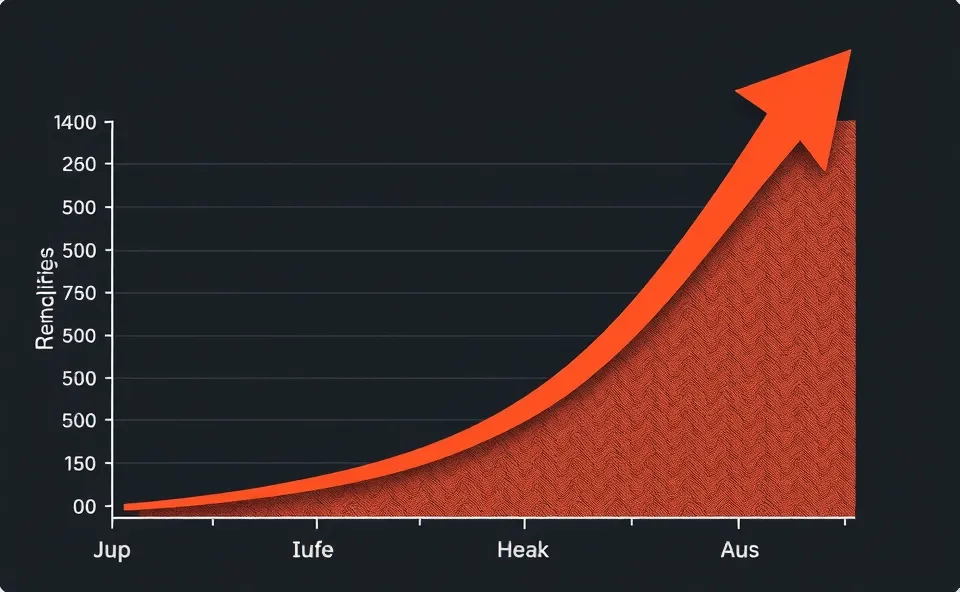
Goldman Sachs’ AI Adoption Tracker Signals Shifting Enterprise AI Landscape
Goldman Sachs recently updated its Artificial Intelligence (AI) adoption tracker, providing a crucial snapshot of how businesses across industries are integrating artificial intelligence into their operations. This ongoing analysis, most recently updated through October 2026 projections, highlights significant shifts in enterprise AI adoption, offering insights into key trends and future forecasts. The tracker serves as a vital tool for understanding the pace and depth of AI integration, from core business processes to innovative new product development. It reflects a concerted effort by Goldman Sachs to analyze the economic impact and technology investment patterns driven by artificial intelligence and machine learning.
Why Goldman Sachs is Monitoring Enterprise AI Closely
The rationale behind Goldman Sachs’ deep dive into AI adoption is multifaceted. In an era defined by rapid digital transformation, understanding the widespread integration of AI is critical for investment banking and market analysis. This tracker aims to identify which sectors and companies are leading the charge in adopting AI technologies, signaling future growth areas and potential disruptions. The impetus for these updates stems from the increasingly apparent influence of AI on productivity, efficiency, and competitive advantage across the global economy. Goldman Sachs, as a financial services giant, is acutely aware that AI’s economic impact can reshape entire industries, influencing its strategic investment decisions and client advisory services. By monitoring AI adoption, the firm seeks to anticipate market shifts, identify undervalued or overvalued technology investments, and advise clients on navigating this evolving landscape.
Competitive Dynamics in the Age of AI
The Goldman Sachs AI adoption tracker reveals a dynamic competitive landscape where early and effective AI integration can confer significant advantages. Companies that are aggressively adopting AI, as identified by the tracker, are often those poised to gain market share through enhanced operational efficiency, personalized customer experiences, and innovative product offerings. Conversely, laggards in AI adoption risk falling behind, facing challenges in cost competitiveness and market relevance. The tracker implicitly highlights companies like Microsoft, Google, and Amazon, which are not only developing advanced AI solutions but also rapidly integrating them into their own platforms and services, setting benchmarks for others. The implications are clear: AI adoption is no longer a niche strategy but a fundamental component of maintaining and enhancing competitive positioning in most sectors.
Industry Outlook: A Wave of AI Integration
The trends identified in the Goldman Sachs AI adoption tracker underscore a pervasive industry-wide push towards AI. Beyond the technology sector, industries such as finance, healthcare, retail, and manufacturing are demonstrating accelerated adoption rates. This indicates that artificial intelligence is moving from experimental phases to integral operational roles. Machine learning, a key component of AI, is enabling businesses to derive deeper insights from vast datasets, automate complex tasks, and create more sophisticated predictive models. The tracker’s forecasts through 2026 suggest this trend will continue, with continued technology investment in AI infrastructure, talent, and applications. This broad adoption signals a fundamental reshaping of how businesses operate, compete, and create value, driving a new wave of digital transformation across the global economy.
Financial and Operational Impacts of AI Adoption
The financial and operational implications of widespread AI adoption, as tracked by Goldman Sachs, are substantial. Companies demonstrating higher AI adoption rates are often seeing improvements in cost efficiencies through automation and optimized resource allocation. Revenue growth is also being fueled by AI-powered personalized marketing, new product development, and enhanced customer service. Operationally, AI integration necessitates significant shifts, including investments in data infrastructure, upskilling of the workforce, and restructuring of business processes. The long-term financial impact is projected to be a significant boost to productivity and economic output globally. While short-term costs for AI implementation can be high, the ongoing benefits of enhanced decision-making and operational agility are expected to yield strong returns on investment for early and effective adopters.
Execution Risks and Challenges in AI Integration
Despite the optimistic forecasts, the path to successful AI integration is fraught with execution risks and challenges. A key challenge is the availability of skilled AI talent, a bottleneck that can slow down adoption and implementation. Furthermore, ensuring data quality and privacy, crucial for effective AI, remains a significant hurdle for many organizations. There’s also the risk of bias in AI algorithms, which can lead to unintended negative consequences and reputational damage. Historical precedents show that while many companies announce ambitious AI strategies, translating these into tangible business outcomes requires sustained effort, significant investment, and a supportive organizational culture. Regulatory uncertainties surrounding AI development and deployment also pose a risk, potentially impacting how quickly and broadly AI can be implemented. The risk of cyberattacks targeting AI systems is another growing concern.
Stakeholder Implications: A Shifting Ecosystem
The accelerating pace of AI adoption has profound implications for all stakeholders. For employees, it signals a need for continuous learning and adaptation, with some roles being automated while new opportunities emerge in AI development and management. Customers stand to benefit from more personalized services, faster response times, and innovative products, but may also face concerns about data privacy. Partners in the technology ecosystem, from cloud providers to AI software vendors, are experiencing increased demand for their services. For investors, identifying companies with strong AI strategies and execution capabilities is becoming a key differentiator. Culturally, organizations embracing AI often need to foster a more data-driven and experimental mindset. Market sentiment is increasingly positive towards companies that demonstrate clear AI integration, impacting their valuation and access to capital.
Outlook and Next Steps: Navigating the AI Future
If Goldman Sachs’ AI adoption tracker proves accurate, the coming years will see a significant bifurcation in business performance. Companies that successfully navigate the complexities of AI integration will likely experience sustained growth, increased market share, and enhanced profitability. Key milestones to watch will include the successful deployment of large-scale AI projects, demonstrable improvements in key performance indicators (KPIs) directly attributable to AI, and the development of new AI-powered business models. Indicators of success will include improved operational efficiency metrics, increased customer engagement, and successful product launches leveraging AI. Measurable outcomes might be seen within 18-36 months as companies move past initial implementation phases and begin to realize the strategic benefits of their AI investments.
Key Questions and Answers on Goldman Sachs’ AI Adoption Tracker
What is the core insight from the Goldman Sachs AI adoption tracker?
The tracker highlights that enterprise AI adoption is accelerating across most industries, moving beyond pilot projects to integral business functions, and forecasts continued growth through 2026, impacting technology investment and industry outlook.
Why is Goldman Sachs’ AI forecast important for understanding enterprise AI?
Goldman Sachs, as a major financial institution, provides an investor’s perspective on AI adoption, analyzing its economic impact and market analysis, thus offering insights into where capital is flowing and which companies are poised for growth due to their AI integration.
How does this AI adoption tracker relate to digital transformation?
The tracker is a direct indicator of digital transformation progress. Widespread AI adoption signifies a fundamental shift in how businesses operate, driven by data and intelligent automation, which are core tenets of digital transformation.
What are the primary drivers of this AI adoption trend according to the tracker?
The tracker likely points to a combination of factors including the need for competitive advantage, the pursuit of operational efficiencies, advancements in machine learning capabilities, and the increasing availability of AI tools and platforms.
What are the potential risks for companies not keeping pace with AI adoption?
Companies lagging in AI adoption risk losing market share to more agile competitors, facing higher operational costs, struggling to meet evolving customer expectations, and becoming less innovative in their product development.
When can we expect to see the full economic impact of this AI adoption trend?
While specific outcomes vary, the Goldman Sachs AI forecast suggests significant economic impact will continue to unfold through 2026 and beyond, with companies achieving substantial returns on their AI investments over the medium to long term.
Business outcomes are subject to execution risk and market dynamics.