The Quiet Genius of the iPod: Simplicity as a Superpower
In the ever-accelerating world of technology, it’s easy to get swept up in the relentless march of features and connectivity. Yet, sometimes, the most impactful innovations are those that brilliantly simplify our lives. The Apple iPod, a device that once revolutionized how we consumed music, stands as a powerful testament to this principle. Its enduring legacy lies not in its complexity, but in its profound simplicity and its laser focus on a single, deeply personal experience: enjoying your music, offline.
Launched in October 2001, the iPod arrived at a time when digital music was becoming more accessible but also more fragmented. CDs were still king, MP3 players were clunky and difficult to use, and the internet was not yet the omnipresent force it is today. Apple, under the leadership of Steve Jobs, saw an opportunity to create a device that seamlessly integrated hardware, software, and the burgeoning digital music ecosystem. The problem it solved was the cumbersome nature of carrying around physical music collections and the often-frustrating user experience of early digital music players.
What made the iPod a perfect gadget for its era? It boiled down to a few key elements that resonated deeply with consumers. It wasn’t just about storing music; it was about the joy of curation and effortless playback. This Apple innovation offered a beautiful, intuitive interface and a dedicated, offline experience that many modern devices have forgotten.
How the iPod Made Music Personal Again
At its core, the Apple iPod was a masterclass in user experience. Unlike today’s smartphones that juggle dozens of applications and notifications, the original iPod was designed for one primary purpose: playing music. This singular focus meant that every aspect of its design, from the physical click wheel to the software interface, was optimized for this task.
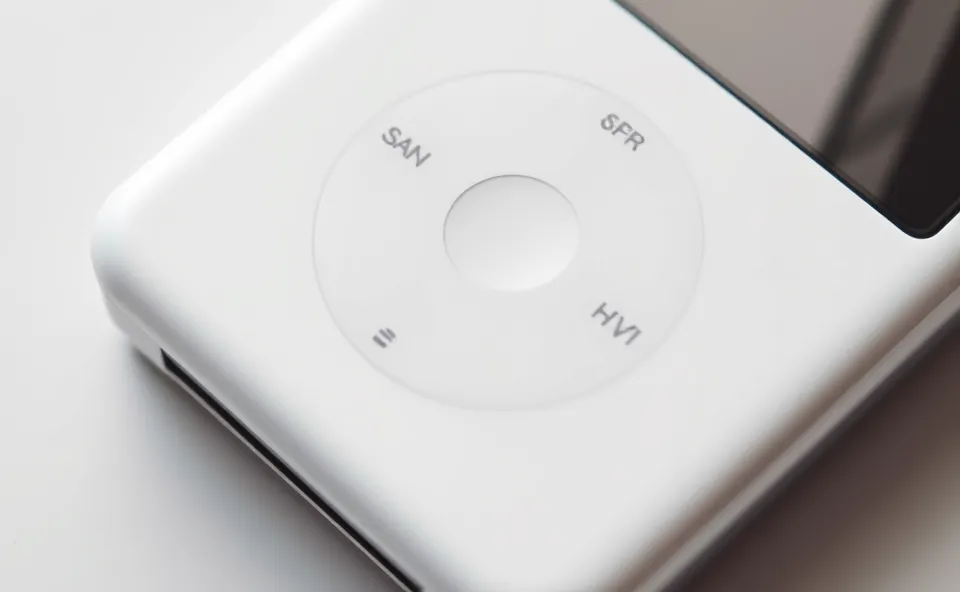
The iconic click wheel, a tactile input device, allowed users to scroll through vast music libraries with satisfying speed and precision. Think of it like a finely tuned rotary dial on a classic stereo system, but brought into the digital age. This physical interaction provided a direct, almost physical connection to your music library. When you wanted to find a song, you spun the wheel; when you wanted to play it, you pressed the center button. It was elegantly simple and incredibly efficient.
This was coupled with iTunes, the accompanying software that allowed users to manage their music collections on their computers. iTunes provided a straightforward way to rip CDs, purchase digital tracks from the nascent iTunes Music Store, organize playlists, and then synchronize everything to the iPod. The magic was in the seamless transfer: you curated on your computer, and with a simple connection (initially via FireWire, later USB), your entire music library was ready to go on a device that could fit in your pocket. This was a radical departure from the complicated software and manual file transfers of many competing MP3 players of the time. The iPod classic, with its emphasis on storage capacity and a simple interface, truly embodied this philosophy.
The iPod’s Reign: Offline Music in a Connected World
The Apple iPod found its stride by embracing the power of offline functionality. In a pre-ubiquitous Wi-Fi and cellular data world, the ability to carry thousands of songs in your pocket without needing an internet connection was revolutionary. This internet-free tech meant that your music was always with you, whether you were on a plane, in a subway, or simply in an area with poor signal. It offered a pure, uninterrupted listening experience, free from the distractions and buffering issues that plague connected devices.
For millions, the iPod became an indispensable companion for daily commutes, workouts, and travel. It fostered a deep, personal relationship with music. Users meticulously curated playlists for different moods and activities, building digital libraries that reflected their identity. This was a stark contrast to the ephemeral, often algorithm-driven recommendations of today’s streaming services. The iPod encouraged active engagement with music, transforming passive listening into a deliberate act of enjoyment.
The iPod, particularly the iPod classic, was a dominant force in the market for over a decade. It wasn’t just a music player; it was a cultural phenomenon. Its clean design, white earbuds, and the ubiquitous “silence” it brought to crowded public spaces became defining images of the early 2000s. While newer iPod models like the iPod Touch introduced touch screens and app capabilities, blurring the lines with smartphones, the core appeal of the original and classic models remained their dedicated, offline music experience. This focus on a singular, well-executed function is a core tenet of what makes a device a perfect gadget.
The Competitive Landscape of Digital Music
The Apple iPod did not emerge in a vacuum. When it launched, the market for portable music players was already heating up. Companies like Creative Labs (with its Nomad series) and Rio were offering early MP3 players. These devices, however, often suffered from clunky interfaces, limited storage, and less intuitive software for managing music libraries. Many required users to manually load MP3 files onto the device, a process that could be tedious and error-prone. Rival systems often lacked the integrated ecosystem that Apple built with iTunes.
Sony, a giant in portable electronics with its Walkman brand, also had digital music players. However, Apple’s strategic advantage lay in its understanding of the user experience and its ability to control both the hardware and software. The iTunes Music Store, launched in 2003, provided a legal and convenient way to purchase music, which significantly boosted iPod sales. This vertical integration, from hardware design to content distribution, gave Apple a commanding lead.
The subsequent rise of smartphones, particularly the iPhone, eventually began to eclipse dedicated MP3 players. Smartphones offered the convenience of a single device for multiple functions, including music playback. While this broadened access to digital music, it also began to diminish the appeal of single-purpose gadgets like the iPod. Competitors like Samsung, with its Galaxy line of smartphones, adopted a similar integrated approach, offering music playback as a core function within a larger ecosystem.
The iPod’s Enduring Impact on Our Relationship with Music
The Apple iPod fundamentally reshaped how we consume and interact with music. It democratized digital music ownership and portability, moving us away from physical media. It normalized the idea of carrying a vast music library in our pockets, transforming commutes and personal time into opportunities for curated audio experiences. This shift fostered a generation that valued personal playlists and the ability to soundtrack their lives.
Economically, the iPod and iTunes ecosystem created a new model for music distribution and revenue. It proved that consumers were willing to pay for digital music if it was convenient and legal. This paved the way for the current dominance of music streaming services, which built upon the foundation of digital access that the iPod helped establish. The impact extends to the creative industries, influencing how artists produce and distribute their work, and how labels approach marketing and sales.
Socially, the iPod became a symbol of individuality and personal taste. The act of sharing what you were listening to, or seeing someone with their distinctive white earbuds, created micro-communities and conversations. While the convenience of modern streaming offers unparalleled access, there’s a certain tech nostalgia for the deliberate, personal connection the iPod fostered. It encouraged a deeper engagement with music, fostering a sense of ownership and a curated identity through sound. This focus on a singular, well-executed experience highlights the value of simple gadgets in a complex world.
Limitations and the Dawn of the Connected Era
Despite its success, the Apple iPod had limitations, especially as technology evolved. Its primary strength – its offline focus – also became a constraint in an increasingly connected world. The inability to stream music, download new tracks on the go without a computer, or access a cloud-based library meant it was always tethered to a desktop synchronization process for many models. Early models also had relatively limited storage compared to today’s standards, though this improved significantly over time.
The iPod classic, for instance, relied on a hard drive for storage, which was more prone to damage from drops than solid-state memory. Battery life, while generally good, was still a finite resource that required recharging. Perhaps the most significant limitation, in hindsight, was its singular purpose. As smartphones became more powerful and versatile, the economic argument for carrying a separate music player diminished for many consumers. The cost of purchasing and maintaining a dedicated device started to feel redundant when a smartphone could perform the same function and more.
Adoption barriers for early MP3 players before the iPod often included the cost of the devices themselves and the complexity of digital rights management (DRM) for purchased music. Apple’s success with iTunes mitigated some of these issues for its users, but the inherent complexity of digital music management was a hurdle for less tech-savvy individuals. The transition from physical media to digital also posed challenges for some consumers who were accustomed to the tangible nature of CDs.
The Future Trajectory: Echoes in Modern Tech
While Apple officially discontinued the last iPod model, the iPod touch, in May 2022, its legacy continues to influence the tech landscape. The principles of simplicity, user experience, and dedicated functionality that made the iPod a perfect gadget are still highly relevant. We see echoes of this in the growing popularity of minimalist tech, distraction-free devices, and niche gadgets that excel at a single task.
For example, some audiophiles and digital minimalists are exploring modern iterations of offline music players that prioritize sound quality and a focused listening experience, free from the internet. This reflects a desire for a return to the intentionality that the iPod championed. Furthermore, the concept of a dedicated device for a specific, high-demand function is still alive in areas like portable gaming consoles (e.g., Nintendo Switch) and e-readers (e.g., Amazon Kindle).
The future trajectory for dedicated media players likely lies in highly specialized devices catering to specific user needs, rather than mass-market appeal. This could include professional audio recorders, high-fidelity audio players for enthusiasts, or simple, durable players for children or outdoor activities. The overarching trend, however, is towards integration. The lessons learned from the iPod about seamless user experience and ecosystem building are now applied across a much broader range of interconnected devices.
Key Questions and Answers About the iPod’s Legacy
Is the iPod still relevant today?
While the iPod as a mainstream product is gone, its principles remain highly relevant. It serves as a benchmark for user experience and the power of focused design. For those seeking an offline music player without smartphone distractions, or for collectors who appreciate its place in tech nostalgia, the iPod classic and other models hold value. Its influence on Apple innovation and the digital music landscape is undeniable.
What made the iPod a “perfect gadget”?
The Apple iPod was considered a perfect gadget due to its exceptional simplicity, intuitive interface (especially the click wheel), and its dedicated, internet-free tech focus on playing music. It solved the problem of managing and accessing a large music library in a portable, user-friendly way, creating a deeply personal and enjoyable experience for millions.
Who benefits from the iPod’s design philosophy today?
Individuals seeking a distraction-free listening experience, those who value curated offline libraries, and audiophiles looking for dedicated audio devices benefit from the design philosophy embodied by the iPod. The emphasis on simple gadgets also appeals to those who find modern smartphones overwhelming.
What were the main limitations of the iPod?
The primary limitation was its lack of connectivity; most models required a computer for syncing and adding music, making on-the-go updates difficult. As smartphones evolved, the redundancy of a separate music player became a significant drawback for many consumers.
How did the iPod compare to competing offline music players?
The iPod’s key differentiator was its seamless integration of hardware and software, particularly with iTunes. This provided a superior and more intuitive user experience compared to most competing MP3 players, which often had clunky interfaces and less robust music management software. It also offered better storage and battery life for its time.
What is the future of internet-free tech like the iPod?
While mass-market devices are increasingly connected, there’s a growing niche for internet-free tech that offers focused functionality. This includes specialized audio players, e-readers, and even simple communication devices. The iPod’s legacy lives on in the appreciation for devices that prioritize a single, well-executed purpose over feature bloat.
This article explores the historical impact and design philosophy of the Apple iPod. Capabilities and specifications are based on publicly available information and historical product releases. Future technological developments are based on current trends and expert analysis, and actual outcomes may vary.