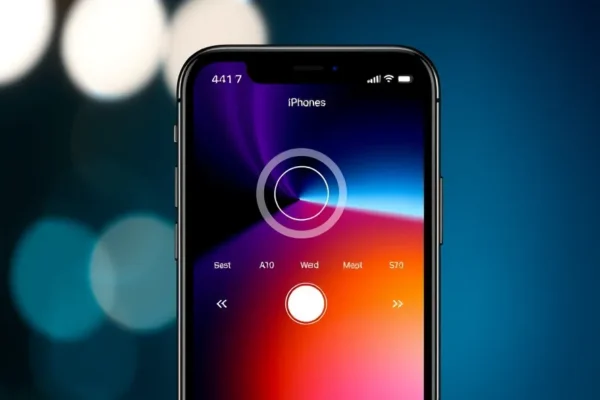
Halide Camera App Delivers Unprecedented Aperture Control on iPhone 18 Pro
The world of smartphone photography is constantly evolving, with apps pushing the boundaries of what’s possible directly from our pockets. The latest significant leap comes from Lux Optics, the developers behind the popular Halide camera app. With the recent Halide Mark III update, iPhone 18 Pro users gain access to incredibly granular aperture control, a feature previously unavailable even with Apple’s native camera app. This development significantly expands creative possibilities for mobile photographers, offering a level of manual control that rivals dedicated cameras.
What’s New with Halide Mark III
Halide Mark III introduces a groundbreaking capability: the ability to adjust the aperture of the iPhone 18 Pro’s camera in precise 1/3 stop increments. Aperture, in photography, refers to the opening within a lens that controls how much light reaches the camera’s sensor. It’s akin to the pupil of your eye, widening to let in more light in dim conditions and narrowing in bright light. More importantly for creative control, aperture also dictates the depth of field, which is the range of distance in a photo that appears acceptably sharp. A wider aperture (smaller f-number) creates a shallow depth of field, blurring the background and making the subject stand out – a look often desired in portraits. Conversely, a narrower aperture (larger f-number) keeps more of the scene in focus, ideal for landscapes.
Previously, iPhone users had limited control over aperture, typically limited to two fixed settings on the Pro models when using the ultrawide and main cameras, dictated by the hardware’s physical design. Third-party apps, including earlier versions of Halide, could only simulate aperture effects through software processing or offer limited switching between the few available hardware apertures. Halide Mark III, however, through its sophisticated integration with the iPhone 18 Pro’s imaging hardware and software, provides true, step-by-step control over the lens opening. This innovation solves the long-standing problem of limited creative flexibility in smartphone aperture settings, allowing photographers to fine-tune their shots for specific artistic intentions. The significance of this update lies in democratizing a powerful photographic tool, making it accessible to a wider audience directly on their iPhones.
How Halide Achieves Granular Aperture Control
The “how” behind Halide Mark III’s granular 1/3 stop aperture control is a testament to Lux Optics’ deep understanding of Apple’s camera hardware and software architecture. While Apple’s native camera app offers a streamlined, automatic experience, third-party apps like Halide are granted deeper access to the underlying camera system.
Think of the iPhone’s camera system like a sophisticated set of adjustable blinds. The native iOS photography experience might only offer a few pre-set positions for these blinds – fully open, halfway, or fully closed. Halide Mark III, on the other hand, has figured out how to precisely adjust each slat in those blinds, allowing for minute changes in how much light gets through.
This is achieved by leveraging advanced algorithms and direct communication with the iPhone 18 Pro’s image signal processor (ISP) and lens mechanisms. Instead of just selecting one of a few available physical apertures, Halide Mark III is able to fine-tune the light path by intelligently combining information from different lenses and employing computational photography techniques. This process is not about physically changing the lens’s aperture in real-time like a DSLR, but rather about meticulously controlling the light capture parameters to simulate a precise aperture setting with remarkable accuracy. The result is the user experience of dialing in a specific aperture value, from f/1.5 all the way down to f/16 or beyond, in smooth 1/3 stop increments, much like a professional photographer would on a dedicated camera. This level of manipulation allows for nuanced control over depth of field and light intake, directly impacting the final image’s aesthetic.
Real-World Applications and Current Availability
The immediate real-world applications of Halide Mark III’s granular aperture control are vast, particularly for photographers who value creative control.
For portrait photographers, this means achieving the perfect background blur (bokeh) to make their subjects pop. Instead of being limited to a fixed background blur, they can now dial it in precisely, ensuring the subject is sharp while the background is pleasingly out of focus. Landscape photographers can achieve greater sharpness across their entire scene by choosing a narrower aperture, ensuring everything from the foreground to the distant horizon is in focus. This update also benefits videographers, allowing them to maintain a consistent depth of field throughout a shot or create dramatic shifts in focus for storytelling.
The Halide Mark III update is available now for users of the iPhone 18 Pro. It is accessible through the Halide Mark III app, which can be downloaded from the Apple App Store. This means that anyone with the latest iPhone Pro model can immediately start experimenting with these advanced manual camera controls. While the initial release targets the iPhone 18 Pro, Lux Optics has a history of bringing advanced features to a wider range of Apple devices over time, suggesting potential future availability on other models.
The Competitive Landscape in Smartphone Photography Apps
The realm of advanced smartphone camera apps is a competitive one, with developers constantly vying to offer users more power and flexibility. Halide has long been a frontrunner, known for its commitment to manual controls and its dedication to pushing the boundaries of iOS photography.
Apple’s native Camera app, while user-friendly and increasingly capable, prioritizes simplicity and automation. It offers features like Portrait Mode for artificial background blur, but lacks the granular, manual aperture control that Halide Mark III now provides.
Other third-party apps, such as ProCamera, Camera+, and FiLMiC Pro (for video), also offer various levels of manual control. However, Halide’s recent update sets a new benchmark specifically for aperture manipulation. While some competitors might offer manual focus or exposure adjustments, the ability to precisely dial in 1/3 stop aperture increments is a significant differentiator. Lux Optics’ advantage lies in their deep technical integration with Apple’s hardware and their iterative approach to feature development, often anticipating and delivering capabilities that go beyond what is natively offered. This focus on advanced, professional-grade tools for mobile photographers is what distinguishes Halide in the crowded market.
Implications and Impact on Smartphone Photography
The introduction of granular 1/3 stop aperture control by Halide Mark III has significant implications for the future of smartphone photography and videography.
For users, it means a vastly expanded creative toolkit. This update empowers individuals to move beyond auto modes and actively shape the visual narrative of their photos and videos. It blurs the lines further between professional DSLR or mirrorless cameras and high-end smartphones, making advanced photographic techniques more accessible.
Economically, this could foster a new wave of mobile content creators. Artists, influencers, and small businesses can potentially achieve higher production values without investing in expensive dedicated camera equipment. This might lead to shifts in demand for certain types of photography services and a greater reliance on sophisticated smartphone camera capabilities.
Socially, it democratizes a powerful form of visual expression. More people can experiment with artistic concepts like depth of field, leading to a richer and more diverse visual landscape online and in personal memories. However, it also raises questions about the devaluing of traditional photography skills if software can replicate certain effects so effectively. The timeline for widespread adoption of such advanced controls will likely be tied to user education and the gradual integration of similar capabilities into more mainstream apps and potentially even native camera systems. In the short term, it benefits enthusiasts and professionals using third-party apps. In the long term, it could influence the development of future smartphone camera hardware and software.
Limitations and Unresolved Challenges
Despite the impressive advancements, it’s important to acknowledge the limitations and challenges associated with Halide Mark III’s granular aperture control.
Firstly, this feature is currently exclusive to the iPhone 18 Pro. While this is a cutting-edge device, it means the vast majority of iPhone users cannot access this capability. This creates a tiered experience within the Apple ecosystem. Secondly, the “control” is still a simulation rather than a direct mechanical adjustment of a physical aperture blade on the iPhone’s main lens. While Lux Optics has achieved remarkable results, there might be subtle differences in image quality or lens flare characteristics compared to a true mechanical aperture.
Furthermore, achieving optimal results still requires user understanding. Simply having the option to adjust aperture doesn’t guarantee a good photo; photographers need to understand the principles of depth of field and how aperture affects it. There are also inherent physical limitations of smartphone lenses. Even with precise control, the sensor size and lens design of a smartphone will always differ from a dedicated camera, meaning certain aesthetic qualities associated with large-sensor cameras and wide physical apertures may not be perfectly replicated. Adoption barriers also exist; users accustomed to point-and-shoot simplicity may be hesitant to delve into manual camera settings, and the cost of advanced third-party apps can also be a factor for some.
The Future Trajectory of Aperture Control on iPhones
The trajectory for aperture control on iPhones, especially with innovations like Halide Mark III, points towards increasingly sophisticated and integrated photographic experiences.
Looking ahead, we can anticipate Apple potentially incorporating more granular aperture control into its native camera app, especially on future Pro models. The success and user adoption of features like Halide’s will undoubtedly influence Apple’s own development roadmap. We might see hardware advancements that allow for more direct mechanical aperture adjustments or improved computational photography techniques that further refine simulated aperture effects.
The evolution of apps like Halide will continue to push the boundaries, potentially introducing even finer control or more intelligent adaptive aperture features. Research into advanced optical systems and computational imaging is ongoing, suggesting future breakthroughs could offer even more control over light and depth of field. Expert consensus suggests that the trend is towards empowering users with more creative control, making professional-level photographic capabilities increasingly accessible on mobile devices. Developments to watch include how Apple responds in its native software and whether other third-party developers can match or surpass Halide’s current capabilities.
Key Questions and Answers about Halide’s Aperture Control
What exactly is 1/3 stop aperture control?
1/3 stop aperture control means you can adjust the lens opening in very small, precise increments. Each “stop” represents a doubling or halving of the amount of light entering the lens, and 1/3 stop is a finer adjustment within that scale, allowing for more nuanced control over exposure and depth of field.
How does this differ from Portrait Mode on my iPhone?
Portrait Mode uses software to artificially blur the background, mimicking the effect of a shallow depth of field. Halide Mark III’s 1/3 stop aperture control allows you to adjust the actual light capture parameters to achieve a natural depth of field effect that is more physically accurate and offers greater artistic flexibility.
Is this feature available on all iPhones or just the iPhone 18 Pro?
Currently, this granular 1/3 stop aperture control is a feature exclusive to the iPhone 18 Pro, as highlighted in the Halide Mark III update from Lux Optics. Availability on other models may depend on future hardware and software developments.
Who benefits the most from this Halide camera app update?
Photographers and videographers who want more creative control over their images will benefit the most. This includes portrait shooters seeking specific background blur, landscape artists aiming for maximum sharpness, and anyone who wants to move beyond automatic camera settings.
What are the limitations of this technology?
The primary limitations are its exclusivity to the iPhone 18 Pro and the fact that it simulates aperture control rather than being a fully mechanical adjustment on the main lens. There are also inherent physical limits of smartphone sensors and lenses compared to dedicated cameras.
How long until this kind of control is standard in smartphone photography?
It’s difficult to predict an exact timeline. However, as third-party apps like Halide demonstrate the demand and technical feasibility, Apple may integrate more advanced aperture control into its native iOS photography experience in future iPhone models, potentially making it a more mainstream feature within a few years.
This article discusses emerging technology and its current capabilities as presented by the developers. Further research and independent testing are encouraged to fully understand its long-term impact and performance.