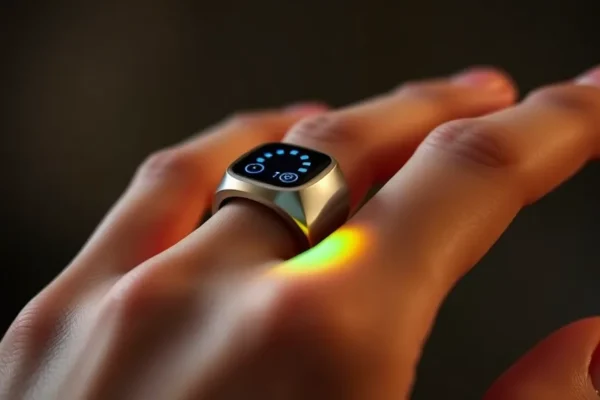
The Aura of the AI-Powered Smart Ring
A new contender has entered the rapidly evolving world of wearable technology. Natura, a company previously known for its beauty and personal care products, has unveiled the Interface, a $99 smart ring that aims to blend artificial intelligence with everyday life. This isn’t just another device for counting steps; the Interface promises to act as an AI agent, capable of completing tasks, capturing thoughts, controlling other devices, and tracking health metrics. The significance of this announcement lies in its ambitious integration of sophisticated AI capabilities into an accessible, finger-worn form factor, potentially democratizing advanced AI assistance for a broader audience.
How the Natura Interface Works Its Magic
At its core, the Natura Interface functions by leveraging a combination of sensors, miniature processors, and connectivity to a user’s smartphone and cloud-based AI systems. Think of the ring as a tiny, intelligent concierge for your finger. It uses sophisticated microphones to pick up voice commands, much like a smart speaker. When you speak to it, your request is processed locally for basic functions or sent to powerful AI models running on your phone or in the cloud. These AI models, or “agents,” are trained to understand natural language and perform a wide range of actions.
For task completion, the AI agents can interact with other smart devices. If you say, “Turn off the living room lights,” the ring sends a signal through your home’s smart ecosystem. For thought capture, imagine a fleeting idea; instead of fumbling for your phone, you can subtly activate the ring to record a voice memo or jot down a quick note that the AI then transcribes and organizes. Health tracking is achieved through integrated sensors that monitor heart rate, sleep patterns, and activity levels, with the AI analyzing this data to provide insights and recommendations. The Interface relies on a sophisticated understanding of user context – where you are, what you’re doing – to provide relevant assistance.
Real-World Applications Emerge
While the Natura Interface is a new product, its capabilities tap into a growing ecosystem of AI and wearable tech. The most immediate applications are for convenience and efficiency. Users can manage their digital lives, from setting reminders and sending quick messages to controlling smart home devices, all with simple voice commands or subtle gestures. The health tracking features align with the increasing consumer demand for personal wellness data, offering a discreet way to monitor vital signs and activity.
Natura has positioned the Interface for broad consumer adoption, aiming to move beyond niche markets. The $99 price point is a key factor in its accessibility. Currently, the Interface is available for pre-order with an expected shipping date in late [Insert Year of Announcement – e.g., 2024]. This suggests it’s moving from a concept to an early adoption phase, with the company clearly aiming for wider market penetration soon after. Companies in the smart device and AI assistant space are also exploring similar integrated approaches, though the ring’s form factor offers a unique proposition.
The Competitive Landscape of Smart Wearables
The smart ring market, while still nascent, is becoming increasingly crowded. Competitors like Oura Ring have focused heavily on sleep and recovery tracking, establishing a strong presence in the health and wellness segment. Other companies are exploring various form factors for AI integration, from smartwatches that offer more screen real estate to advanced earbuds.
What differentiates Natura’s Interface is its explicit emphasis on AI agents for task completion and device control, moving beyond pure health metrics. While smartwatches offer similar functionalities, the ring’s discreet nature and focus on “AI on finger” presents a distinct user experience. Competitors like Apple and Samsung, dominant in the smartwatch arena, are also heavily investing in AI integration, but their approach is typically tied to larger, screen-based devices. Natura’s advantage could lie in its focused, lower-cost, and more minimalist design, aiming to integrate AI more seamlessly into the background of daily life rather than demanding constant visual interaction.
Implications for Our Connected Lives
The widespread adoption of AI-powered smart rings like the Natura Interface could significantly reshape how we interact with technology and each other. For individuals, it promises a more frictionless digital experience, reducing the need to pull out phones for many routine tasks. This could lead to increased productivity and a more present engagement with the physical world. Economically, it could fuel further growth in the wearable tech and AI industries, creating new markets for accessories and services that integrate with these devices.
Socially, these devices could enhance accessibility for individuals with certain disabilities, offering new ways to control their environment and communicate. However, concerns around data privacy and security are paramount. As these devices collect intimate health and behavioral data, robust safeguards will be crucial to prevent misuse. In the short term, we can expect increased convenience and personalized health insights. In the long term, this could pave the way for more intuitive human-AI collaboration in everyday scenarios.
Navigating the Limitations and Challenges
Despite its promising capabilities, the Natura Interface, like any emerging technology, faces several limitations. Battery life remains a significant hurdle for any continuously active wearable device. While specific battery life figures for the Interface have not been extensively detailed, it’s a common challenge for smart rings to balance functionality with the need for frequent charging. The accuracy and reliability of AI agents, particularly in diverse and noisy environments, is another area that requires continuous improvement. False positives or misunderstood commands could lead to user frustration.
Furthermore, the reliance on voice control, while convenient, can be impractical or inappropriate in many social settings. The effectiveness of the AI agents will also depend heavily on the quality of the underlying AI models and the seamless integration with other smart devices and services. Adoption barriers may include user skepticism about the privacy implications of constant data collection and the learning curve associated with mastering new voice commands and AI interactions. The precise capabilities and limitations will become clearer as the device moves beyond the initial announcement phase.
The Future Trajectory of AI on Your Finger
The trajectory for AI-powered smart rings points towards increasing sophistication and integration. We can anticipate advancements in miniaturization, allowing for more powerful processors and longer-lasting batteries within even smaller form factors. Future developments will likely include enhanced contextual awareness, enabling the AI agents to anticipate user needs proactively rather than just reacting to commands. This could involve more sophisticated gesture recognition and haptic feedback for more nuanced interactions.
Research in areas like on-device AI processing could reduce reliance on cloud connectivity, improving privacy and responsiveness. Companies will also likely focus on expanding the range of compatible smart devices and services, creating a more unified ecosystem. For Natura, continued refinement of their AI agents and a steady stream of software updates will be key to staying competitive and fulfilling the promise of a truly intelligent wearable companion. Expert consensus suggests that this category of wearable will continue to evolve, moving from niche health trackers to more general-purpose AI interfaces.
Key Questions About the Natura Interface
What is the Natura Interface?
The Natura Interface is a new $99 smart ring that integrates AI agents to help users complete tasks, capture thoughts, control smart devices, and track health data.
How does the AI assistant in the smart ring work?
The AI assistant uses microphones and sensors to understand voice commands and user context, then processes these requests using cloud-based AI models to perform actions like controlling smart devices or recording notes.
What are the main real-world applications for this wearable tech?
Key applications include hands-free device control, quick note-taking, managing daily schedules, and monitoring personal health metrics like heart rate and sleep.
When will the Natura Interface be available?
The smart ring is currently available for pre-order with an expected shipping date in late [Insert Year of Announcement – e.g., 2024].
What are the potential risks or concerns with this technology?
Primary concerns revolve around data privacy and security, as the device collects intimate personal information, and the potential for misuse or breaches.
How does this compare to other smart rings or AI assistants?
Natura’s Interface distinguishes itself by focusing on AI agents for task completion and device control at an accessible price point, whereas some competitors lean more heavily on health tracking.
This article is based on information available at the time of publication, including company announcements and industry trends. Specific capabilities and performance metrics will become clearer upon wider release and independent testing.