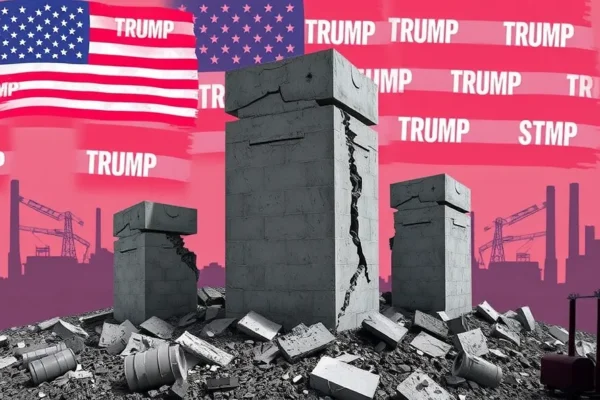
Understanding Tariffs, Immigration, and Labor Shortages on US Tech Production
Financial concepts can sometimes feel distant, but understanding them helps us make sense of the world around us. Today, we’re going to explore how three seemingly separate issues — tariffs, immigration, and labor shortages — are creating a challenging environment for US tech production, and how this relates to the economic ambitions of figures like former President Donald Trump.
What Are Tariffs?
Let’s start with tariffs. Think of tariffs as a special tax that a country puts on goods imported from other countries. Imagine you want to buy a video game console made in another country. A tariff would be an extra fee added to the price of that console, making it more expensive for you to buy. Governments use tariffs for various reasons, often to make domestically produced goods more competitive or to encourage other countries to change their trade practices. For businesses, tariffs increase the cost of imported components or finished products, which can squeeze their profit margins or force them to raise prices.
How Tariffs, Immigration, and Labor Shortages Impact US Tech Production
Now, let’s see how these factors interact and create hurdles for the technology industry in the United States.
Imagine a US company that designs advanced computer chips. To build these chips, they need specialized machinery, rare earth minerals, and components sourced from all over the world. They also need highly skilled engineers and technicians to design and manufacture them.
- Tariffs on Components: If the US government imposes tariffs on imported electronic components, our chip company’s cost of materials goes up. If they import many of these parts, this can significantly increase their production expenses. This is like paying extra for the ingredients needed to bake a cake – if the flour and sugar become more expensive, the final cake will cost more to make.
- Immigration Policies and Skilled Labor: The technology industry, especially in areas like advanced manufacturing and research, relies heavily on skilled labor. This often includes engineers, programmers, and technicians who may come from other countries. Stricter immigration policies can make it harder for these talented individuals to come to the US, work for tech companies, or obtain the necessary visas. This is like a bakery trying to hire the best pastry chefs, but finding the immigration rules make it difficult for experienced chefs from abroad to get jobs there.
- Labor Shortages: Even without immigration challenges, the US tech sector faces significant labor shortages in specific areas. There simply aren’t enough trained workers available to fill all the open positions, particularly for highly specialized roles in manufacturing and R&D. This is akin to a popular restaurant struggling to find enough experienced cooks and waiters to keep up with customer demand, leading to longer wait times and potentially lower quality service.
When these three factors combine, the effect on US tech production can be substantial. Tariffs increase costs, while immigration restrictions and existing labor shortages limit the availability of the skilled workforce needed to innovate and manufacture. This makes it harder for US companies to compete globally and to ramp up their domestic manufacturing capabilities, which has been a goal of economic policy for various administrations, including those aiming to boost “US production” and bring “manufacturing” back home.
For instance, in recent years, the semiconductor industry has been a focal point. The US wants to increase its domestic chip manufacturing capacity to reduce reliance on foreign suppliers. However, building these sophisticated “manufacturing” plants requires massive investment and a huge pool of highly specialized workers. Tariffs on equipment or materials can slow down these investments, while difficulties in attracting global “skilled labor” and existing domestic “labor shortages” can delay the opening and full operation of these factories. This directly hinders the ambition to bolster “US production” in critical technology sectors.
Why This Matters to You
Understanding these interconnected issues is crucial because they directly affect your wallet and the economy.
- Personal Impact: When tech companies face higher production costs due to tariffs or struggle to find workers, they might pass those costs on to consumers. This means the smartphones, computers, laptops, and other electronic devices you buy could become more expensive. Persistent “labor shortages” can also lead to delays in product releases or fewer new innovations reaching the market.
- Economic Impact: For the broader economy, these challenges can slow down growth in the technology industry, a key driver of innovation and jobs. If the US can’t produce enough advanced technology domestically, it can lead to increased reliance on foreign supply chains, which can be vulnerable to geopolitical events. This can also impact national security and economic competitiveness. The ambition to create more jobs and strengthen the “technology industry” within the US is directly challenged by these production bottlenecks.
- Who Benefits and Who is Affected: Tariffs can sometimes benefit domestic industries that compete with imports, as they make foreign goods more expensive. However, they can negatively impact consumers who face higher prices and businesses that rely on imported components. Immigration policies that restrict the flow of “skilled labor” can benefit those who are already in high-demand fields domestically, as their skills become even more valuable. Conversely, companies that struggle to fill roles and consumers who face higher prices are negatively impacted.
A Look at the Current Landscape
The interplay of “tariffs,” “immigration,” and “labor shortages” isn’t new, but it has become a significant talking point in recent years, particularly in discussions about economic policy and trade.
Historically, tariffs have been used as a tool of economic policy for centuries. In the US, the debate over tariffs has ebbed and flowed, with periods of high protectionism followed by eras of more open trade.
The recent focus on boosting domestic “manufacturing” and “US production,” especially in strategic sectors like semiconductors and advanced electronics, gained momentum due to concerns about supply chain vulnerabilities exposed by global events and a desire to compete with other major economies. The Trump administration, for instance, actively pursued policies involving tariffs on goods from countries like China, with the stated goal of protecting American industries and jobs. Simultaneously, changes in immigration policy were debated and implemented, affecting the availability of foreign talent.
Recent data highlights the severity of labor market challenges. According to the Bureau of Labor Statistics, in early 2024, there were millions of job openings across various sectors in the US, indicating widespread “labor shortages.” The technology sector, in particular, faces ongoing demand for specialized talent. For example, the Semiconductor Industry Association has pointed to a significant projected need for skilled workers in the coming years to support the growth of domestic chip “manufacturing.”
Navigating the Practical Implications
For individuals and businesses, understanding these dynamics is key to making informed decisions.
- Consumer Considerations: Be aware that prices for electronics and other tech-related goods might fluctuate based on trade policies and supply chain issues. Diversification of supply chains by companies could eventually lead to more stable pricing.
- Business Strategy: Companies in the tech sector need to develop strategies to mitigate these risks. This might involve diversifying their sourcing of materials, investing in domestic “manufacturing” capabilities, and exploring new ways to attract and retain “skilled labor,” including training programs for the existing workforce.
- Policy Awareness: Keep an eye on government policies related to trade, immigration, and workforce development. These policies can have a direct impact on industries and, consequently, on job markets and consumer prices.
A common misconception is that tariffs solely lead to job creation domestically. While they can protect some domestic industries, they can also increase costs for others that rely on imported goods, potentially leading to job losses in those sectors or higher prices for consumers. Another misconception is that “labor shortages” can be solved instantly by simply increasing immigration; effective solutions often involve a combination of policies, including education, training, and targeted immigration pathways for needed skills.
Connecting to Other Financial Concepts
This discussion touches upon several related financial and economic ideas:
- Globalization: The interconnectedness of global supply chains and how disruptions in one part of the world can affect others.
- Supply and Demand: How the availability of goods and services (supply) and the desire for them (demand) influence prices and production levels.
- Inflation: The general increase in prices and decrease in the purchasing value of money. Tariffs and supply chain issues can contribute to inflationary pressures.
- Trade Balances: The difference between a country’s imports and exports, and how policies like tariffs aim to influence this balance.
- Economic Policy: The actions taken by governments to influence economic activity, such as fiscal (taxing and spending) and monetary (interest rates) policies, and in this case, trade and immigration policies.
- Human Capital: The economic value of a worker’s experience and skills, highlighting why attracting and retaining “skilled labor” is vital for the “technology industry.”
Frequently Asked Questions About Trump, Tech Production, and Trade
- How do Trump’s policies on tariffs affect US tech production?
Trump’s administration implemented tariffs on various goods, including those used in tech manufacturing. These tariffs increased the cost of imported components and materials for US tech companies, potentially raising their production expenses and affecting their ability to compete or invest in domestic “manufacturing.”
- Can immigration policy significantly impact labor shortages in the US tech industry?
Yes, immigration policies play a crucial role in the availability of “skilled labor.” By making it easier or harder for foreign professionals to work in the US, these policies can either alleviate or exacerbate “labor shortages” within sectors like technology that rely on specialized expertise.
- What are the economic risks associated with relying heavily on foreign tech production?
Over-reliance on foreign production can lead to supply chain vulnerabilities, as seen during global disruptions. It can also mean less control over intellectual property and a potential disadvantage in terms of innovation speed and cost for domestic industries.
- How do labor shortages specifically hinder US tech production ambitions, like bringing manufacturing back?
“Labor shortages” mean that even if companies want to build more factories in the US (“US production”), they may not have enough trained workers to operate them efficiently. This slows down the expansion of domestic “manufacturing” and the realization of ambitious goals.
- Can individuals protect themselves from rising tech prices caused by tariffs or labor shortages?
While individuals cannot directly control these macro factors, they can make informed purchasing decisions by comparing prices and considering when to buy or upgrade devices. Building personal financial resilience through saving and investing can also help buffer against price increases.
- What is the connection between “Trump,” “tech,” and “US production”?
The connection lies in the policy decisions made during the Trump administration. His focus on renegotiating trade deals, imposing “tariffs,” and influencing “immigration” was aimed at boosting “US production” and strengthening American industries, including the “technology industry,” by making domestic production more attractive and competitive.
This educational content is for informational purposes only and does not constitute financial advice. Financial situations vary greatly, and you should consult with a qualified financial professional for personalized advice regarding your specific circumstances.