Pope Leo XIV’s Stance on AI Art A Defining Moment
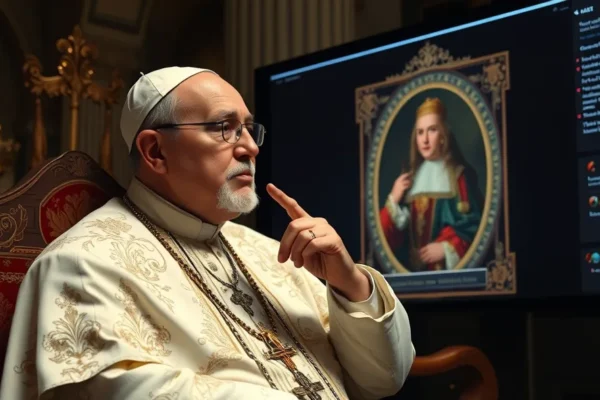
The world of art and technology has been set abuzz by a significant pronouncement from Pope Leo XIV. His Holiness has publicly expressed strong reservations, bordering on condemnation, regarding art created by artificial intelligence (AI). This Papal view on AI, specifically concerning AI-generated art, isn’t just a religious statement; it delves into profound questions about the nature of creativity, consciousness, and the very essence of what constitutes art. This intervention by Pope Leo XIV highlights the growing tension between technological advancement and deeply held humanistic values, making AI art criticism a critical area of discussion.
Understanding the Core of AI-Generated Art
At its heart, AI-generated art is the product of sophisticated computer programs, often referred to as machine learning models. These systems are trained on vast datasets of existing human-created art, text, and images. Think of it like an apprentice artist who has studied every painting ever made, every poem ever written, and every photograph ever taken. The AI doesn’t “understand” the art in a human sense; instead, it learns patterns, styles, and relationships within this data. When prompted by a user – for example, with a text description like “a serene landscape with a solitary oak tree under a twilight sky” – the AI uses its learned patterns to generate a novel image that statistically fits the description. Companies like Midjourney, Stability AI with its Stable Diffusion model, and OpenAI with DALL-E 2 are prominent players in this rapidly evolving field.
AI Art in the Real World Today
AI-generated art is no longer a mere laboratory experiment. It’s increasingly accessible to the public and finding its way into various creative industries. Millions of users are experimenting with platforms like Midjourney and Stable Diffusion to create unique visuals for personal projects, social media, and even commercial endeavors. Some independent artists are incorporating AI tools into their workflows, using them for inspiration, initial drafts, or to generate specific elements they then refine with traditional methods. Digital art controversy often surrounds these applications, particularly regarding copyright and originality. While still in its early adoption phase for many professional applications, the widespread availability of user-friendly interfaces means AI art tools are already a part of the digital art landscape for a growing number of people.
The Diverse Field of AI Art Creation
The landscape of AI art development is vibrant and competitive. Several major tech companies and research labs are pushing the boundaries. OpenAI, with its DALL-E series, has been a pioneer in text-to-image generation. Google has its own research in this area, including models like Imagen. Stability AI’s Stable Diffusion has gained significant traction due to its open-source nature, fostering a large community of developers and users. Midjourney, known for its artistic output, offers a more curated experience. These approaches vary in their underlying algorithms and the datasets they are trained on, leading to different strengths and aesthetic qualities in the generated art. The competition centers on image quality, speed of generation, user control, and the underlying ethical considerations of their training data.
The Profound Implications of AI Art
Pope Leo XIV’s condemnation points to some of the most significant implications of AI-generated art. The core concern often revolves around the ontological difference art holds. For many, art is deeply tied to human experience, emotion, intention, and the artist’s unique perspective. If algorithms lack humanity, can their output truly be considered art in the same vein? This discussion has far-reaching consequences. Economically, it could democratize visual creation, enabling individuals with no traditional artistic skills to produce compelling imagery, potentially impacting the livelihoods of professional artists and designers. Socially, it raises questions about authenticity, copyright, and the potential for misinformation or the devaluation of human creativity. The future of art is undeniably being reshaped, forcing us to reconsider what we value in creative expression.
Navigating the Limitations and Challenges
Despite the impressive capabilities of AI art tools, significant limitations and challenges remain. A primary concern is the inherent bias within the training data. If an AI is trained on predominantly Western art, its outputs may reflect and perpetuate those aesthetic biases. Furthermore, algorithms lack genuine consciousness, subjective experience, and intent – elements many consider crucial to the artistic process. The current generation of AI art can sometimes produce uncanny or nonsensical results, particularly with complex prompts or when depicting specific details like hands. Ethical challenges also loom large, including the sourcing of training data, which can include copyrighted material without artist consent, leading to ongoing digital art controversy.
The Evolving Trajectory of AI Art
The future trajectory of AI-generated art is one of rapid refinement and integration. We can expect models to become more nuanced, offering greater control to users over style, composition, and specific elements. Research is ongoing to address biases in training data and to develop methods for AI to better understand context and subjective meaning. The integration of AI into existing creative software and workflows will likely deepen, making it a more seamless tool for professionals. While the debate about whether AI can truly be “creative” will persist, its role as a powerful tool for visual generation and exploration is undeniable. Key developments to watch include advancements in multimodal AI, which can understand and generate across different forms of media, and efforts to build more transparent and ethically sourced AI models.
Key Questions and Answers on Pope Leo XIV and AI Art
What is Pope Leo XIV’s primary concern regarding AI-generated art?
Pope Leo XIV’s Papal view on AI, as expressed in his recent statements, centers on the idea that AI-generated art lacks the human intention, soul, and lived experience that are fundamental to genuine artistic creation. He suggests algorithms lack the capacity for true creativity.
Can AI art be considered “art” in the traditional sense?
This is the crux of the AI art criticism. While AI can produce visually impressive outputs based on patterns learned from human art, many, including Pope Leo XIV, argue that the absence of human consciousness, emotion, and subjective intent means it occupies a different ontological category art.
What are the real-world applications of AI art right now?
Currently, AI-generated art is used for generating illustrations, concept art, marketing materials, and unique visuals for social media and personal projects. Platforms like Midjourney and Stable Diffusion are widely accessible for these purposes.
Who are the major players in the AI art development space?
Key companies and organizations include OpenAI (DALL-E), Stability AI (Stable Diffusion), and Midjourney. Google also conducts significant research in this area with models like Imagen.
What are the ethical considerations surrounding AI art?
Major ethical concerns involve the use of copyrighted material in training datasets without artist permission, the potential for AI to displace human artists, and the challenge of attributing authorship and ownership of AI-generated works, contributing to the ongoing digital art controversy.
How might AI ethics and religious views shape the future of art?
Religious and ethical considerations, like those voiced by Pope Leo XIV, could lead to greater emphasis on provenance, human oversight, and the ethical sourcing of AI training data. This might foster a future where AI art is viewed more as a collaborative tool rather than a replacement for human creativity.
This article has explored the recent stance of Pope Leo XIV on AI-generated art, delving into its technical underpinnings, current applications, and profound implications. It’s important to note that the field of AI is constantly evolving, and this analysis reflects the understanding and capabilities as of its writing. Further research and ongoing technological developments will continue to shape our perception and use of AI in creative domains.