Understanding Political Stability and Your Money
When we talk about Macron and the French riots, we are really talking about a concept called political stability. In simple terms, political stability is the predictability of a government. It is the belief that the people in charge can manage the country without sudden, violent changes or a total collapse of law and order.
Think of political stability like the foundation of a house. When the foundation is strong and steady, you can comfortably decorate the rooms, buy furniture, and plan for the future. You aren’t worried that the walls will suddenly crack or the floor will give way. However, when the foundation shakes, you stop worrying about the curtains and start worrying about whether the whole building is safe. In the world of finance, political stability is that foundation. When it shakes, investors and citizens become nervous about their money.
Understanding this is important because politics and money are not separate. Every law passed, every protest in the street, and every election result can change the value of a currency, the cost of borrowing money, and the price of the goods you buy at the store.
How Civil Unrest Creates an Economic Chain Reaction
Street violence does not just damage buildings; it creates a ripple effect that moves through the entire economy. To understand how this works, imagine a small business owner in Paris named Marie who runs a boutique hotel.
First, the immediate impact happens. If street violence breaks out near Marie’s hotel, she may have to close her doors for safety. She loses daily income, but she still has to pay her staff and her rent. This is the direct cost of civil unrest.
Second, the ripple effect spreads to investors. Imagine a large company in the United States that was planning to build a new office in France. They see news of a political firestorm and ongoing riots. They might think, “If the government cannot keep the streets safe, maybe my employees won’t be safe, or my building might be damaged.” They decide to put their money into a different country instead. This is called a decrease in Foreign Direct Investment.
Third, the government must react. To stop the violence, the government spends more money on police and security. To fix the damage, they spend more on infrastructure. Since this money was not planned in the original budget, the government might have to borrow more money. When a country borrows too much, it can lead to higher interest rates or a weaker currency.
Why Political Turmoil Matters to Your Wallet
You might wonder why unrest in France matters if you live in another part of the world. The answer lies in how global markets are connected. France is one of the largest economies in the world and a leader in the European Union.
Personal Financial Impact
- Currency Fluctuations: If the world loses confidence in Emmanuel Macron and the stability of French politics, the value of the Euro may drop. If you hold Euros or travel to Europe, your money might buy less than it did before.
- Cost of Goods: France exports many luxury goods, aircraft, and agricultural products. If production is disrupted by strikes or riots, the supply of these goods drops. Basic economics tells us that when supply drops but demand stays the same, prices go up. This contributes to inflation.
Broader Economic Impact
- Market Volatility: Stock markets hate uncertainty. When there is civil unrest, stock prices for French companies often dip because investors fear lower profits.
- Job Security: In sectors like tourism and retail, street violence leads to immediate job losses or reduced hours for workers.
In this scenario, security firms and insurance companies might see a short term increase in business, but the general population and small business owners usually suffer the most.
The Context of Macron and the EU Elections
To understand the current tension, we have to look at the timing. The EU elections are a critical moment for any European leader. These elections determine who sits in the European Parliament, which helps shape the laws for all member states.
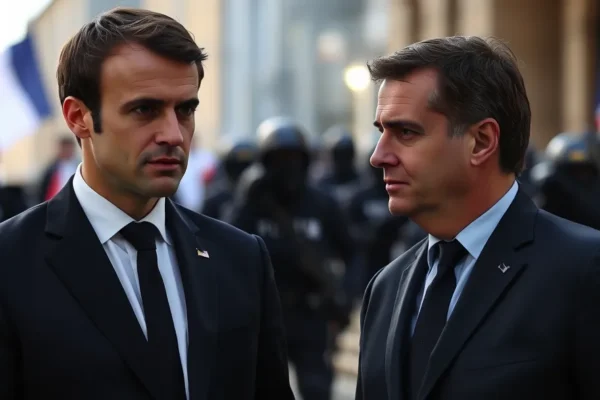
President Emmanuel Macron has positioned himself as a champion of a strong, integrated Europe. However, his domestic standing has been challenged by several waves of unrest. From the Yellow Vest protests years ago to more recent French riots triggered by social inequality and police incidents, the narrative has been one of a “disconnect” between the president and the working class.
According to polling data from sources like Ipsos, approval ratings for the presidency often fluctuate during times of social instability. When violence hits the streets, it provides a visual signal to voters that the current leadership may be losing control. This creates a vacuum that opposing political parties, particularly those on the far right or far left, often fill by promising “law and order” or “radical change.”
This is why the current unrest is more than just a security issue; it is a political liability. If the France election results show a surge in extremist parties, it could signal a shift away from the pro-EU policies that Macron supports, potentially destabilizing the European Union’s collective economic strategy.
How to Process Political News in Your Financial Life
When you see headlines about riots or political crises, it is easy to react with emotion. However, a financial educator suggests a more analytical approach.
First, distinguish between “noise” and “structural change.” Noise is a short term event, like a three day protest that closes a few streets. It is upsetting, but it rarely changes the long term economy. Structural change is when the unrest leads to a change in government, a total rewrite of tax laws, or a permanent exit from a trade agreement. Structural changes are what truly impact your long term investments.
Second, watch the “Sovereign Credit Rating.” Agencies like Moody’s or Standard & Poor’s grade countries based on their ability to pay back debt. If they downgrade France because of social stability issues, it is a clear sign that the risk has moved from “noise” to “structural.”
Actionable Insights:
- Diversify: Never keep all your savings in one currency or one country’s assets. This protects you if one region experiences a political crisis.
- Monitor Inflation: If you rely on imports from a volatile region, look for alternative suppliers before prices spike.
Connecting Stability to Other Financial Concepts
The situation in France is a perfect example of how several financial ideas overlap. To deepen your understanding, you can explore these related concepts:
Sovereign Risk: This is the risk that a government will default on its debt payments. Political instability increases sovereign risk.
Market Sentiment: This refers to the overall attitude of investors toward a particular market. Sentiment can be “bullish” (positive) or “bearish” (negative). Street violence almost always creates bearish sentiment.
Fiscal Policy: This is how a government spends money and collects taxes. When a government has to spend billions on riot control and repairs, it changes its fiscal policy, which can lead to higher taxes later.
Understanding how social stability connects to these terms helps you see the “big picture” when reading the news.
Common Questions About the Crisis in France
How do the French riots affect the value of the Euro?
The Euro is used by many countries, but France is a major pillar of the Eurozone. If French politics become too unstable, investors may sell their Euros in favor of “safe haven” currencies like the US Dollar, which can cause the Euro’s value to drop.
Can street violence actually cause inflation?
Yes, if the street violence disrupts transportation or destroys warehouses, it creates a supply shortage. When goods become scarce but people still want to buy them, prices rise, which is a primary driver of inflation.
Why are the EU elections so important for Emmanuel Macron?
The EU elections serve as a referendum on his leadership. If his party performs poorly, it weakens his power to negotiate policies with other European leaders and may embolden his domestic opponents.
Does this mean I should move my money out of Europe?
Moving money based on a single news event is often a mistake. Instead, focus on diversification. Financial situations vary; consult a professional for personal advice to see if your portfolio is balanced.
What is the difference between a protest and a political firestorm?
A protest is a specific event where people express disagreement. A political firestorm is a wider state of crisis where the government’s authority is questioned, and the unrest threatens to change the laws or the leadership of the country.
Disclaimer: This article is for educational purposes only and does not constitute personal financial, investment, or legal advice. Financial outcomes vary based on individual circumstances and market conditions. Please consult with a certified financial advisor before making significant investment decisions.