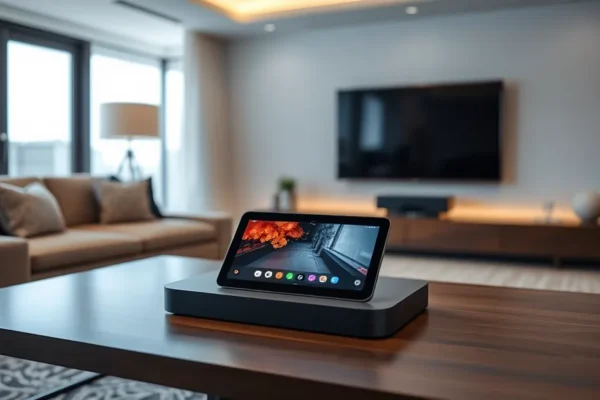
Apple’s Potential HomeView Smart Home Breakthrough
For years, tech enthusiasts have watched Apple’s journey into the smart home market with a mix of anticipation and, at times, frustration. While Apple has a strong ecosystem with its iPhones and other consumer electronics, its smart home presence has felt more like a supporting act than a headliner. However, recent rumors and a consistent build-up of HomeKit capabilities suggest that a significant new Apple launch might be on the horizon, potentially codenamed Apple HomeView. This new Apple product could finally be the breakthrough needed to propel Apple into a leadership position in the competitive smart home landscape.
What is Apple HomeView and Why Now?
The concept of Apple HomeView, as discussed in various tech publications like MacRumors and 9to5Mac, points towards a more integrated and proactive smart home experience. It’s not just about a new device; it’s about a refined approach to how our homes can be managed and automated. Think of it as Apple wanting to take the reins of your home’s intelligence, making it as seamless and intuitive as using your iPhone. This is significant now because the smart home market is rapidly maturing. Consumers are increasingly comfortable with connected devices, and the demand for sophisticated home automation is growing. Apple’s current HomeKit framework, while robust for developers, hasn’t translated into a universally adopted consumer-facing smart home hub or a standout user experience that truly differentiates itself from rivals like Amazon’s Alexa or Google Assistant. This rumored new Apple product aims to change that by consolidating control and adding intelligent features.
How the Apple HomeView Might Work
While the exact technical specifications of Apple HomeView are still speculative, based on Apple’s history and the evolution of HomeKit, we can infer its core functionalities. At its heart, Apple HomeView would likely act as a central brain for all your compatible smart devices. This means it would communicate with smart lights, thermostats, security cameras, locks, and speakers. Instead of juggling multiple apps for different brands, HomeView would provide a unified interface, likely accessible through a dedicated device, an enhanced Apple TV, or even integrated into existing Apple devices.
The real innovation, however, would lie in its intelligence. Imagine a system that doesn’t just respond to commands but anticipates your needs. For example, if your calendar shows you’re leaving for work, HomeView could automatically adjust the thermostat, arm your security system, and turn off unnecessary lights. This proactive automation is powered by advanced software and potentially on-device processing, allowing for faster responses and greater privacy. Think of it like a highly organized personal assistant for your home, but one that learns your routines and preferences over time. Apple’s focus on privacy and security would also be a key differentiator, ensuring your home data remains protected.
Current State of Apple’s Smart Home Efforts
Currently, Apple’s smart home strategy revolves around HomeKit. HomeKit is a framework that allows smart devices to communicate with each other and be controlled by Apple devices. Users can manage their HomeKit-enabled accessories through the Home app on their iPhone, iPad, or Mac, and control them using Siri voice commands. Devices like the HomePod and HomePod mini serve as HomeKit hubs, enabling remote access and automation routines. While HomeKit supports a wide range of smart devices from various manufacturers, its adoption has been slower compared to competing platforms. Many consumers find setting up HomeKit devices a bit more complex, and the range of truly innovative, Apple-designed smart home hardware has been limited to the HomePod line. The market maturity level for Apple’s smart home is currently in an early adoption phase for its most integrated features, with mainstream users often opting for more widely accessible and vocal assistant-driven platforms.
The Competitive Smart Home Landscape
The smart home arena is a crowded one, dominated by tech giants. Amazon, with its Alexa voice assistant and Echo devices, has a significant market share, offering a vast ecosystem of compatible products and a highly responsive voice interface. Google, through its Google Assistant and Nest products, is another major player, leveraging its search and AI capabilities to offer a similarly integrated smart home experience. Samsung’s SmartThings platform provides broad compatibility across many brands, and companies like Philips Hue have established strong positions in specific categories like smart lighting.
Compared to these competitors, Apple’s approach has often been perceived as more closed and premium. HomeKit emphasizes security and privacy, which is appealing to many, but it has sometimes meant fewer compatible devices or a higher price point. The rumored Apple HomeView could aim to bridge this gap by offering a more comprehensive and user-friendly experience that rivals Alexa and Google Assistant in terms of intuitive control and intelligent automation, while retaining Apple’s signature focus on privacy and a seamless ecosystem for existing Apple users. The advantage Apple might gain with HomeView is its established user base and the strong integration possibilities with its other consumer electronics.
Implications and Impact of Apple HomeView
If Apple HomeView lives up to its potential, the implications for the smart home market and consumer behavior could be substantial. For consumers, it could mean a more unified, intelligent, and secure way to manage their homes, reducing the complexity and fragmentation that currently plagues the market. This new Apple product could encourage greater adoption of smart home technology among those who have been hesitant due to complexity or privacy concerns.
Industries that rely on connected devices, such as home security, energy management, and even home entertainment, would likely see increased integration and innovation. Businesses could develop new services and hardware specifically designed to work within the Apple HomeView ecosystem, potentially creating new job opportunities in software development, hardware design, and installation services. Economically, a successful HomeView could boost Apple’s recurring revenue streams through services tied to home automation and security. Socially, it could lead to more accessible and helpful smart homes, benefiting the elderly or those with disabilities through enhanced automation and remote monitoring. The long-term impact could be a truly interconnected home that seamlessly adapts to its occupants’ lives, making technology a more invisible yet integral part of daily living.
Limitations and Challenges for Apple HomeView
Despite the promising outlook, several limitations and challenges stand in the way of Apple HomeView’s unqualified success. Firstly, backward compatibility will be crucial. Ensuring that existing HomeKit accessories work seamlessly with HomeView is paramount for current Apple smart home users. Secondly, the cost of entry could be a barrier. Apple products often come with a premium price tag, and a new dedicated HomeView device might be expensive, limiting its appeal to a broader audience.
Technical challenges also remain. Creating a truly intelligent system that can reliably learn and anticipate user needs without missteps is incredibly complex. False positives or ignored commands could quickly erode user trust. Furthermore, the vast array of smart home devices from different manufacturers means that achieving universal compatibility and consistent performance is a significant engineering feat. Regulatory hurdles, particularly concerning data privacy and security in different regions, could also pose challenges. Finally, the adoption curve for a new smart home paradigm will likely be gradual, with many consumers accustomed to their current setups and voice assistants.
The Future Trajectory of Apple’s Smart Home Ambitions
Looking ahead, the trajectory for Apple’s smart home aspirations, with a potential HomeView at its center, points towards deeper integration and enhanced intelligence. We can expect continued refinement of the HomeKit framework, making it easier for developers to create compatible devices and for users to set them up. The focus will likely remain on privacy and security, a key differentiator for Apple.
Future developments might include more sophisticated AI capabilities for predictive automation, perhaps leveraging on-device processing to minimize reliance on cloud servers. Integration with other Apple services, such as Apple Fitness or Apple Health, could unlock new possibilities for health and wellness monitoring within the home. Expert consensus suggests that Apple is slowly but surely building out its smart home infrastructure, and a dedicated HomeView device or a significant enhancement to existing hardware like the Apple TV or HomePod could be the next logical step. The timeline for these next milestones is difficult to pinpoint precisely, but Apple’s consistent investment in this area suggests a long-term commitment.
Key Questions and Answers About Apple HomeView
What exactly is Apple HomeView?
Apple HomeView is the rumored name for a potential new Apple product or a significant software update aimed at creating a more integrated, intelligent, and proactive smart home experience, building upon the existing HomeKit framework.
Will this be Apple’s first real smart home breakthrough?
It has the potential to be. While Apple has HomeKit and HomePod devices, a dedicated HomeView could offer a more compelling and unified user experience that finally positions Apple as a leader in the smart home market against competitors like Amazon and Google.
How will HomeView differ from Amazon Alexa or Google Assistant?
HomeView is expected to emphasize Apple’s strong focus on privacy and security, potentially offering more on-device processing for greater data protection. It will also aim for a more seamless integration within the Apple ecosystem, appealing strongly to existing Apple users.
When can we expect the Apple HomeView to launch?
Apple has not officially announced any such product. However, based on industry rumors and product development cycles, a new Apple launch related to smart home could potentially occur in the next year or two, though this remains speculative.
What are the biggest challenges Apple faces with this new Apple product?
Key challenges include ensuring broad compatibility with existing smart devices, managing the premium pricing often associated with Apple consumer electronics, and developing truly intuitive and reliable intelligent automation that doesn’t frustrate users.
Who will benefit most from Apple HomeView?
Existing Apple users who are invested in the Apple ecosystem stand to benefit significantly from a more seamlessly integrated smart home experience. However, improved privacy and ease of use could also attract new users to the smart home market.
This article is based on current industry rumors and analysis from technology publications. Specific features, launch dates, and the final product name are subject to change by Apple.