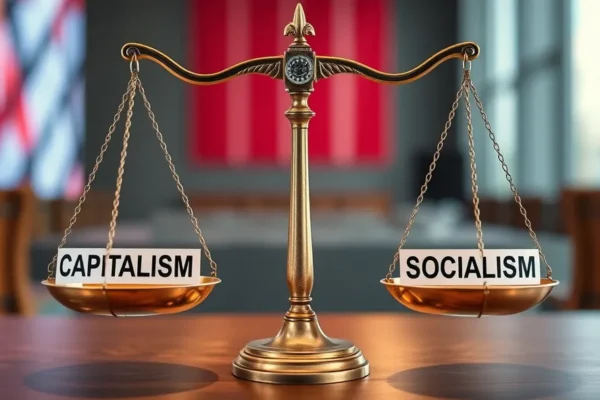
Capitalism Needs a New Moral Pitch Against Rising Democratic Socialism
The ongoing debate between capitalism and democratic socialism is heating up, with free market advocates increasingly feeling the need to articulate a stronger moral case for their preferred economic system. This isn’t just an academic discussion; it’s a battle for hearts and minds, particularly evident in U.S. politics and influencing global economic discourse. A prominent argument, notably championed by thinkers like Sam Gregg, suggests that capitalism’s traditional justifications focusing solely on efficiency and wealth creation are no longer sufficient. To effectively counter the growing appeal of democratic socialism, capitalism must embrace a richer moral language that resonates with concerns about fairness, dignity, and the common good.
The Case for a Moral Rebranding of Capitalism
The core development here is the recognition by many proponents of capitalism that the dominant narrative needs a significant update. For decades, the economic pitch for capitalism often centered on its unparalleled ability to generate wealth and foster innovation. This was frequently articulated through concepts like “trickle-down economics” and the idea that individual pursuit of profit ultimately benefits society. However, rising income inequality, environmental concerns, and a perception of corporate overreach have eroded public trust in this singular message.
Economists and commentators like Sam Gregg, as highlighted in various economic publications and his own writings, argue that capitalism needs to articulate a more robust moral framework. This isn’t about abandoning market principles but about embedding them within a broader ethical context. The trigger for this reassessment is the increasing visibility and perceived success of democratic socialist ideas, which often tap into public anxieties about social welfare, economic security, and environmental sustainability. The argument is that simply pointing to economic growth is no longer a persuasive moral defense against critiques that highlight social costs and injustices.
Strategic Rationale: Winning the Narrative War
The strategic rationale behind this call for a new moral pitch for capitalism is clear: to reclaim the narrative and regain public favor. The prevailing sentiment suggests that if capitalism cannot articulate a compelling vision of the good life that extends beyond mere material prosperity, it risks ceding significant ground to alternative economic systems like democratic socialism.
From a strategic business perspective, this is akin to a company needing to refresh its brand image or update its mission statement to align with evolving consumer values. The problem this addresses is a perceived deficit in the ethical appeal of capitalism, leading to a loss of legitimacy. The opportunity is to forge a more resilient and broadly appealing form of market economics. Competitive or market pressures include the growing political influence of movements advocating for greater social welfare programs, increased regulation, and wealth redistribution. Free market advocates understand that if the “moral high ground” is occupied by their opponents, their policy proposals will face an uphill battle, regardless of their economic merits. The stated reason by proponents is a genuine concern for societal well-being, but the underlying strategic imperative is to ensure the continued viability and acceptance of market-based economic systems.
Competitive Context: Capitalism vs. Democratic Socialism in the Arena of Ideas
The competitive landscape in which capitalism and democratic socialism are vying for dominance is primarily the “arena of ideas” and, by extension, political influence. Democratic socialism, with its emphasis on social justice, equality, and a robust social safety net, has found fertile ground in many Western democracies, including the U.S. This approach directly challenges the traditional free market model by proposing significant government intervention to address market failures and promote social welfare.
Those who benefit from a strong moral pitch for capitalism are primarily businesses that thrive in competitive market economies, investors who favor market-driven capital allocation, and individuals who believe in the power of free enterprise. Conversely, elements of democratic socialism, such as increased corporate taxes, stricter regulations, and expanded social programs, could be seen as threatening by established businesses and their shareholders, who might face higher costs or reduced profit margins. The broader competitive positioning involves shaping public perception and policy debates. If capitalism can successfully present itself as a system that is not only efficient but also just and compassionate, it can neutralize many of the arguments put forth by democratic socialists.
Industry Implications: A Shift Towards Stakeholder Capitalism and ESG
This push for a new moral pitch for capitalism has significant implications for various industries. It signals a broader trend towards what is often termed “stakeholder capitalism,” where businesses are increasingly expected to consider the interests of all stakeholders – employees, customers, communities, and the environment – not just shareholders. This is intrinsically linked to the rise of Environmental, Social, and Governance (ESG) investing and reporting.
Industries that are highly visible and have a direct impact on society, such as technology, finance, and energy, are particularly susceptible to these shifts. Companies in these sectors are facing mounting pressure to demonstrate their commitment to social good and sustainability, often through public pronouncements and revised business practices. For instance, tech giants are grappling with issues of data privacy and market dominance, while energy companies face scrutiny over their environmental impact. Industry peers are likely to respond by intensifying their own efforts to communicate their positive societal contributions. This could lead to a wave of corporate social responsibility initiatives, sustainability reporting, and public advocacy campaigns aimed at bolstering the moral credentials of market-based enterprises. The competitive landscape will likely reward companies that can authentically and effectively demonstrate their positive impact beyond profit.
Financial and Operational Impact: Investing in Social Capital
The financial and operational impacts of embracing a stronger moral pitch for capitalism are multifaceted. In the short term, companies might incur additional costs associated with implementing more ethical practices, improving working conditions, or investing in sustainable technologies. For example, a company might choose to pay higher wages to its employees or invest in renewable energy sources, both of which can impact profitability.
However, in the long term, these investments could yield significant financial benefits. A strong ethical reputation can enhance brand loyalty, attract and retain top talent, and reduce regulatory and reputational risks. According to various studies on ESG investing, companies with strong ESG performance have often demonstrated superior financial returns over the long run. For instance, a report by McKinsey & Company in 2020 found that companies with high ESG scores tended to outperform their peers in terms of stock performance and profitability. Operationally, this could lead to a greater focus on supply chain ethics, employee well-being programs, and community engagement initiatives. The shift requires a recalibration of corporate objectives, moving beyond purely financial metrics to incorporate social and environmental performance as key indicators of success.
Execution Risks and Challenges: The Authenticity Gap
Despite the strategic imperative, the execution of a new moral pitch for capitalism is fraught with risks and challenges. The primary risk is the potential for “greenwashing” or “ethics-washing”—making superficial claims about social responsibility without genuine commitment. If the new moral language is perceived as disingenuous, it can backfire spectacularly, leading to a loss of trust and increased public cynicism.
Historical precedents show that companies attempting such shifts often face internal resistance from those focused solely on short-term profits. Organizational challenges include the difficulty of embedding ethical considerations into core business strategies and decision-making processes across large, complex organizations. Market risks include the possibility that consumers and the public may not be receptive to these new narratives, especially if economic hardship makes the pursuit of profit seem more urgent. Regulatory risks also exist; while some governments encourage ethical business practices, others might view such initiatives as a distraction from core economic growth. The challenge lies in authentically demonstrating that capitalism can be both profitable and profoundly beneficial to society.
Stakeholder Implications: Redefining the Corporate Compact
The implications for various stakeholders are significant. For employees, a stronger moral pitch could translate into better working conditions, fairer compensation, and a greater sense of purpose in their work. Customers might find themselves more loyal to brands that align with their values, driving demand for ethically produced goods and services. Partners and suppliers may need to adhere to new ethical standards, potentially leading to stronger, more equitable relationships throughout the value chain.
For investors, this shift could mean a greater emphasis on ESG metrics alongside traditional financial returns. Companies that successfully navigate this transition might see improved investor sentiment and access to capital from ethically-minded funds. However, there’s also the risk of alienating a segment of investors who prioritize short-term financial gains above all else. Culturally, it suggests a move towards a more socially conscious form of capitalism, where corporate citizenship is as important as shareholder value. This requires a subtle but profound shift in how businesses define their role and responsibilities in society.
Outlook and Next Steps: Measuring True Impact
If capitalism successfully embraces and executes a compelling new moral pitch, the outlook is one of renewed legitimacy and sustained economic vitality. Key milestones to watch will include the widespread adoption of ESG reporting standards, legislative changes that incentivize socially responsible business practices, and shifts in public opinion polls regarding capitalism versus democratic socialism.
Indicators to monitor for success will include increased consumer trust in businesses, a reduction in income inequality, and demonstrable progress on environmental sustainability goals. Measurable outcomes might be seen in company valuations that increasingly incorporate ESG scores, a decrease in the appeal of populist socialist platforms, and a more robust debate about how to best achieve both economic prosperity and social well-being. The timeline for seeing these outcomes is likely long-term, potentially spanning a decade or more, as fundamental shifts in economic philosophy and practice take root.
Key Questions and Answers
Will this new moral pitch for capitalism be effective against democratic socialism?
The effectiveness hinges on authenticity and demonstrable results. If free market advocates can genuinely articulate and implement a vision of capitalism that addresses social welfare and dignity, it can be a powerful counter to democratic socialism. However, superficial appeals will likely fail to win over skeptics.
Why can’t capitalism just stick to its economic arguments?
Economic arguments alone are no longer sufficient because public concern has shifted. Rising inequality and environmental issues mean that purely economic justifications for capitalism are perceived as incomplete, failing to address broader societal needs and moral concerns.
What are the biggest risks in adopting this new economic pitch?
The primary risk is the “authenticity gap”—the perception that the new moral language is mere rhetoric, not genuine commitment. This can lead to increased cynicism and damage the credibility of capitalism even further.
How does this relate to Sam Gregg’s argument for capitalism?
Sam Gregg, among others, argues that capitalism needs a robust moral defense rooted in human dignity and the common good, moving beyond simply efficiency. This proposal aligns with his view that the enduring strength of capitalism lies not just in its wealth creation but in its potential to foster human flourishing.
What is the difference between capitalism and democratic socialism in terms of their moral language?
Capitalism’s traditional pitch often emphasizes individual liberty and meritocracy, while democratic socialism emphasizes collective well-being, social justice, and equality. The new pitch aims to bridge this by highlighting capitalism’s capacity for compassionate social outcomes.
How long until we see measurable results from this strategic shift?
Tangible results will likely take years, possibly a decade or more. Significant shifts in public opinion, policy, and corporate behavior require sustained effort and are not immediate outcomes of a change in rhetoric.
This business analysis acknowledges that business outcomes are subject to execution risk and market dynamics.