Introducing Bridge Neurotech A New Player in Brain-Computer Interfaces
The world of neurotechnology is buzzing with the recent launch of Bridge Neurotech, a new startup poised to enter a rapidly evolving field. Bridge Neurotech aims to develop a novel wearable brain-computer interface (BCI), challenging established players like Sam Altman’s Merge Labs. Their key differentiator lies in their chosen technology: ultrasound. This announcement marks a significant moment in the ongoing quest for non-invasive ways to connect our minds with machines, potentially offering a new path for those seeking advanced assistive technologies or enhanced human capabilities. This development is particularly noteworthy given the increasing interest and investment in AI neurotech and the potential for BCI to move beyond niche medical applications.
The Science Behind the Sounds How Ultrasound Connects to the Brain
At its core, Bridge Neurotech’s innovation revolves around using ultrasound to read brain activity. Unlike some other brain-computer interface technologies that require surgery (like brain implants), or those that rely on detecting electrical signals from the scalp (which can be noisy and limited), ultrasound offers a unique approach. Think of it like echolocation, similar to how bats or dolphins navigate. Ultrasound technology uses high-frequency sound waves that are inaudible to humans. These waves are sent into the body, and when they encounter different tissues, they bounce back as echoes.
Bridge Neurotech’s approach, as described in their initial press materials, involves directing these focused ultrasound beams at specific areas of the brain. By analyzing the tiny changes in the returning sound waves, the technology can infer information about blood flow and tissue properties in the brain. These changes are correlated with neural activity – essentially, when brain cells are active, they require more oxygen and blood. By measuring these shifts, the system can create a picture of what the brain is doing, without needing to physically penetrate the skull or rely solely on surface electrical signals. This is a significant departure from methods that directly measure electrical impulses. The advantage is the potential for higher resolution and deeper penetration into brain tissue compared to traditional EEG (electroencephalography) methods, while remaining non-invasive.
Early Steps and Potential Uses for Wearable BCIs
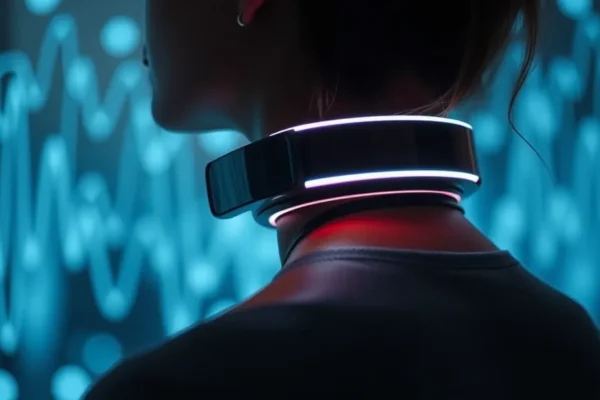
While Bridge Neurotech is a new venture, the concept of using ultrasound for brain monitoring is not entirely novel, with ongoing research in academic institutions. However, Bridge Neurotech’s specific focus is on creating a wearable BCI. This implies a device that could be used outside of a clinical setting, perhaps integrated into a headset or headband.
The real-world applications for such a wearable BCI are vast and span several domains. For individuals with severe motor impairments, like those affected by ALS or spinal cord injuries, a functional wearable BCI could be life-changing. It could allow them to control prosthetic limbs, communicate through text or speech synthesis, or operate computers and smart home devices using only their thoughts. Beyond assistive technology, the implications extend to cognitive enhancement, allowing users to potentially improve focus, learn new skills more effectively, or even interact with virtual and augmented reality environments in more intuitive ways. It’s important to note that these applications are largely aspirational at this early stage, and current capabilities are likely focused on research and development or very specific, controlled use cases. The accessibility for the general public is still a distant prospect.
Navigating a Crowded Field Merge Labs and Beyond
Bridge Neurotech enters a competitive landscape that includes well-funded and prominent players. The most notable rival is Merge Labs, founded by Sam Altman, which is also developing advanced BCI technology. Merge Labs has primarily focused on implantable devices, aiming for very high bandwidth communication with the brain. This offers immense potential for intricate control but comes with the inherent risks and invasiveness of surgery.
Bridge Neurotech’s ultrasound approach offers a stark contrast. By being non-invasive, it aims to circumvent the surgical requirements and associated risks, making it potentially more accessible and appealing to a broader user base. However, the bandwidth and precision of ultrasound BCIs are still being rigorously tested against the established high-fidelity signals that implants can provide. Other companies and research groups are also exploring various non-invasive BCI methods, including advanced EEG, fNIRS (functional near-infrared spectroscopy), and magneticencephalography (MEG). Bridge Neurotech’s success will depend on how effectively their ultrasound technology can achieve sufficient signal clarity and resolution to compete with these diverse approaches, particularly in translating brain signals into meaningful actions.
Reshaping Our Connection to Technology and Ourselves
The emergence of companies like Bridge Neurotech signals a potential paradigm shift in how humans interact with technology. If successful, wearable BCIs could democratize access to advanced assistive technologies, breaking down communication and mobility barriers for millions. This could lead to greater independence and improved quality of life for individuals with disabilities.
Economically, this field has the potential to spawn entirely new industries and redefine existing ones. The market for assistive devices, neurofeedback training, and even brain-enhanced gaming and productivity tools could explode. This could create new job opportunities in neuroscience, bioengineering, software development, and ethical AI oversight. Socially, the implications are profound. The ability to directly interface with technology using thought could blur the lines between human and machine, raising important questions about identity, privacy, and equity. While the immediate impact will likely be felt in the medical and research sectors, the long-term vision is a more seamless integration of biological and digital intelligence.
The Hurdles on the Path to Widespread Adoption
Despite the exciting potential, significant limitations and challenges remain for Bridge Neurotech and the field of ultrasound BCIs. Firstly, the technology itself is still in its nascent stages. While promising, the precise resolution, depth, and speed at which ultrasound can decode complex neural patterns need extensive validation. Current research in ultrasound neuromodulation and imaging, while showing progress, is often conducted in controlled laboratory settings. Translating this into a robust, reliable, and user-friendly wearable device that can function in diverse real-world environments is a monumental engineering and scientific undertaking.
Another major challenge is signal interpretation. The brain is incredibly complex, and correlating ultrasound signals with specific intentions or thoughts is far from a solved problem. Unlike direct electrical signals from implants, ultrasound data is indirect, relying on physiological proxies like blood flow. This indirectness can introduce noise and reduce the fidelity of commands. Furthermore, adoption barriers are substantial. The cost of such advanced technology is likely to be high initially, limiting accessibility. Regulatory approvals for medical devices are rigorous and time-consuming. Public perception and trust regarding brain interfaces, especially as the technology becomes more sophisticated, will also play a crucial role.
The Road Ahead What’s Next for Ultrasound BCIs
The future trajectory for Bridge Neurotech and ultrasound BCIs hinges on overcoming the current limitations. Key developments to watch will include advancements in ultrasound transducer miniaturization and beamforming capabilities, allowing for more precise targeting and signal acquisition. Improved machine learning algorithms will be crucial for decoding the complex ultrasound data into actionable commands. We can expect to see more rigorous clinical trials and validation studies in the coming years.
Bridge Neurotech’s progress will likely involve iterative development, starting with applications where precision requirements are less stringent and gradually advancing towards more complex control scenarios. Collaboration with academic institutions and medical centers will be vital for testing and refining the technology. While a timeline for widespread consumer availability is difficult to predict, initial deployments are more likely to be in specialized medical or research contexts. Expert consensus suggests that significant breakthroughs in signal processing and device miniaturization will be needed before these devices become as common as smartphones or smartwatches.
Frequently Asked Questions About Bridge Neurotech and Wearable BCIs
What exactly is a brain-computer interface (BCI)?
A brain-computer interface is a system that allows direct communication between the brain and an external device, bypassing the body’s usual pathways for movement and speech. It translates brain signals into commands that a computer or machine can understand and execute.
How does Bridge Neurotech’s ultrasound approach differ from other BCIs?
Bridge Neurotech uses focused ultrasound waves to detect brain activity by analyzing how sound waves interact with brain tissue and blood flow. This is a non-invasive method, distinguishing it from implantable BCIs that require surgery and from other non-invasive methods like EEG that focus on electrical signals from the scalp.
Is this technology ready for widespread use now?
No, this technology is in its early stages of development. While Bridge Neurotech has launched, the ultrasound BCI is still undergoing research and development. Significant testing and refinement are needed before it can be widely available to consumers or for general medical use.
Who are the main competitors in the BCI space?
Prominent competitors include Merge Labs, founded by Sam Altman, which is known for its focus on implantable BCI technology. Many other startups and research institutions are also actively developing various types of BCIs using different approaches, including advanced EEG and other neuroimaging techniques.
What are the potential benefits of wearable BCIs like the one Bridge Neurotech aims to develop?
The primary benefits lie in restoring function for individuals with severe motor impairments, enabling communication and control of assistive devices. In the future, they could also offer cognitive enhancement and new ways to interact with digital environments.
What are the biggest challenges facing this neurotech startup?
The key challenges include achieving high signal accuracy and resolution with ultrasound, effectively interpreting complex brain signals, reducing the cost of the technology, navigating regulatory approvals, and gaining public acceptance for a technology that directly interfaces with the brain.
This article provides an overview of Bridge Neurotech and the emerging field of ultrasound-based wearable BCIs. The information presented is based on current announcements and general understanding of the technology. Specific details regarding Bridge Neurotech’s proprietary technology, timelines, and capabilities are subject to change and further disclosure by the company.