The Economic Logic of Urban Spaces
At its heart, the Oxford Street transformation is about asset allocation. In finance, asset allocation is the strategy of balancing risk and reward by dividing your money among different types of investments, like stocks, bonds, or real estate. Cities function in much the same way. A city has limited space—a fixed asset—and it must decide how to “invest” that space to generate the highest return, whether that return is measured in tax revenue, foot traffic, or quality of life.
Think of a city like a house. If you have a small living room, you don’t fill it with giant, unused furniture that makes it impossible to walk around. You choose furniture that serves a purpose. For decades, Oxford Street functioned like a room filled with heavy, inefficient furniture—mostly cars and buses that created noise, pollution, and congestion. Pedestrianisation is the process of removing those barriers to make the space more valuable for the people who use it. When we talk about urban planning, we are really talking about maximizing the utility, or the usefulness, of a high-value economic zone.
How Pedestrianisation Changes the Financial Landscape
The mechanism behind pedestrianisation is simple: by increasing the ease and comfort of access, you increase the “velocity” of visitors. In economics, velocity refers to how quickly money changes hands. When an area is pleasant to walk in, people linger longer. The longer they linger, the more likely they are to enter shops, buy coffee, or visit cultural sites. This leads to higher consumer spending.
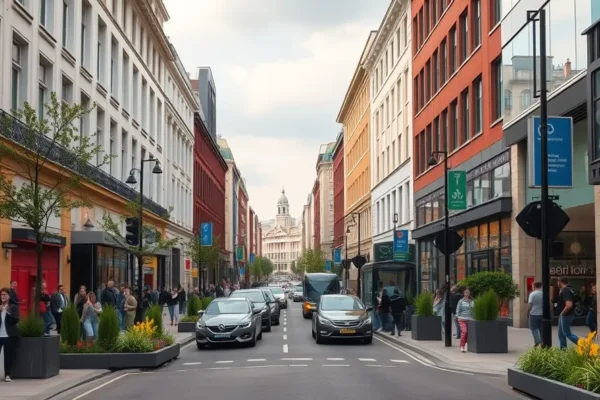
Imagine two versions of the same street. In the first version, you are trapped on a narrow sidewalk next to idling buses, breathing in exhaust. You likely walk from the train station directly into one store and then leave. In the second version, the street is wide, clean, and filled with seating and trees. You walk past three more shops, see an outdoor cafe, and stop for lunch. The second version creates a higher economic return per square foot because the “friction”—or the obstacles preventing the transaction—has been removed.
This transformation process usually involves three steps:
- Capital Investment: The local government or private investors fund the redesign of the public space, such as widening sidewalks or removing traffic lanes.
- Business Adaptation: Local shops and businesses adjust their storefronts and service models to cater to walkers rather than commuters driving through.
- Increased Economic Activity: Higher foot traffic leads to increased retail sales and demand for commercial real estate in the area.
A successful real-world case study is New York’s Times Square. When the city pedestrianised sections of the area in 2009, local businesses saw an increase in revenue, and the area became a more stable long-term asset for the city, rather than just a traffic bottleneck.
Why the Oxford Street Project Matters for Your Money
You might wonder how a street in London affects your personal finances. While it may seem distant, the project serves as a masterclass in understanding how geography influences the value of businesses and, by extension, the strength of the economy. When a shopping district thrives, it contributes to tax revenues that fund public services. When it declines, that represents a loss of economic potential.
For everyday investors, this highlights the concept of commercial property viability. If you hold shares in retail-focused companies or real estate investment trusts (REITs), the success of major hubs like London retail districts directly impacts the dividends you might receive. A shift toward sustainable urbanism suggests that modern retail is moving away from “destination driving” and toward “experience-based” shopping.
The winners in this scenario are typically local businesses that can adapt to high-foot-traffic environments, as well as property owners whose assets appreciate as the area becomes more desirable. The losers may include businesses that rely heavily on car-based delivery or transit routes that are disrupted during the years-long construction phases of city redevelopment projects.
The Evolution of a Famous Shopping District
Oxford Street has been the heartbeat of London retail for over a century. Historically, it was designed to accommodate the horse-and-carriage, then the automobile. However, as the 21st century progressed, the rise of e-commerce fundamentally altered the retail environment. According to the British Retail Consortium, the rise of online shopping has put significant pressure on physical high streets across the UK.
The current interest in the Oxford Street transformation is a reaction to the “high street decline.” Between 2020 and 2024, many major retail hubs struggled with vacancies as consumers shifted their habits. Statistics from the Office for National Statistics (ONS) indicate that retail footfall in city centers has been volatile, prompting policymakers to realize that they cannot rely on past models. The strategy has shifted from “making it easy to drive through” to “making it worth the time to visit.” This shift toward prioritizing people over vehicles is a global trend seen in cities from Paris to Singapore.
Practical Implications for Financial Awareness
When you see news about major urban redevelopment, look past the headlines about construction delays or political disagreements. Instead, analyze the “value proposition” of the project. Ask yourself: Is this making the area more accessible to consumers? Does it encourage people to spend more time there?
A common misconception is that pedestrianisation kills business by preventing deliveries or customer parking. However, data from transport studies consistently shows that while car traffic decreases, retail sales often increase because the street becomes a destination rather than a thoroughfare. As an observer of financial news, keep an eye on how these projects are funded. Are they funded by tax increases, or by private-public partnerships? Understanding the source of funding helps you identify who bears the risk if the project fails to deliver the promised economic boost.
Actionable insight: If you are looking at long-term investments in retail or real estate, look for cities that are investing in “active” public spaces. Areas that focus on walkability and sustainable design tend to hold their value better than those that rely solely on car-based infrastructure in an increasingly digital world.
Connecting the Dots
The transformation of Oxford Street is closely linked to several other economic concepts. It relates directly to the “multiplier effect,” where initial investment in infrastructure creates a ripple effect of jobs and business growth. It also touches upon “gentrification,” the process where improving a neighborhood increases property values, sometimes pricing out smaller businesses. Understanding how urban planning interacts with the cost of living and business viability is essential for anyone interested in the macro-economy.
Frequently Asked Questions
How does the Oxford Street pedestrianisation affect local inflation?
While it does not directly trigger national inflation, it can lead to localized “rent inflation” if property values rise sharply, which may force smaller businesses to move elsewhere. However, it can also lower the cost of doing business by creating a more efficient, high-traffic environment for retailers.
Can individuals control the outcome of city redevelopment projects?
Individuals can participate in the local democratic process, such as attending council meetings or public consultations regarding city redevelopment plans. By providing input on how they use public spaces, citizens help ensure that projects align with actual community needs.
What are the main risks associated with this type of project?
The primary risks are “cost overruns” where construction takes longer and costs more than expected, and “displacement,” where established local businesses are unable to adapt to the new environment. Financial experts often look for strong risk-management plans in these proposals.
Is this relevant for someone living outside of London?
Yes, because the strategies being tested in London retail districts are being exported to cities globally. Understanding the successes and failures of these projects helps you evaluate the development plans in your own city.
How does sustainable urbanism improve financial outcomes?
Sustainable urbanism reduces long-term maintenance costs for cities, such as road repairs, and improves public health, which can reduce the burden on public healthcare systems. By creating more walkable areas, cities also become more resilient to changes in transport habits and fuel price volatility.
This article is for educational purposes only and does not constitute financial, investment, or legal advice. Financial situations vary by individual, and market conditions can change rapidly. The information provided here is intended to help you better understand the concepts behind urban economic development. For decisions regarding personal investments, real estate, or business planning, please consult with a qualified financial advisor or a professional specializing in your local jurisdiction.