Unlocking the Brain’s Secrets with Light A Nobel-Winning Neuroscience Breakthrough
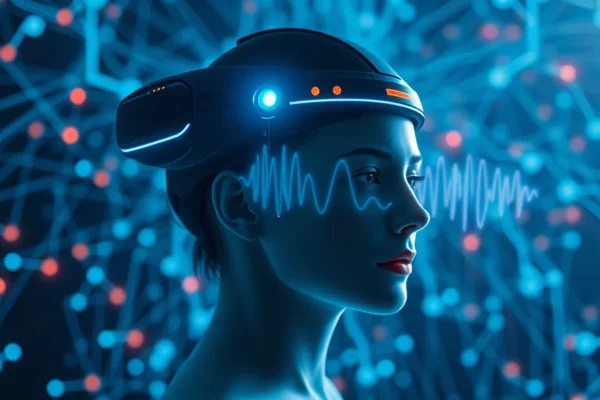
In a remarkable advancement that earned a 2010 Nobel Prize in Physiology or Medicine, scientists have developed a powerful new way to understand and control the brain. This technology, known as optogenetics, allows researchers to precisely switch individual brain cells on or off using light. It’s a pivotal development in neuroscience, offering unprecedented control for studying complex neural circuits and paving the way for future treatments for neurological disorders. This breakthrough, pioneered by Karl Deisseroth, Ed Boyden, and Gero Miesenböck, has revolutionized brain research tools, enabling a deeper understanding of how our brains function at a cellular level.
How Optogenetics Lets Light Control Neurons
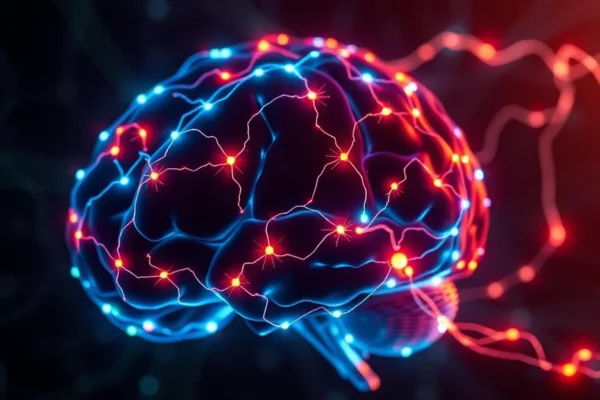
At its core, optogenetics works by combining genetic engineering with optical stimulation. The process begins with a gene from a light-sensitive organism, such as algae or bacteria. These genes produce proteins called light-gated ion channels. Think of these channels as tiny biological gates embedded in the membrane of a neuron (a nerve cell). When light of a specific color shines on these gates, they open or close, allowing charged particles to flow in or out of the neuron. This flow of charged particles changes the electrical activity of the neuron, either activating it (turning it “on”) or inhibiting it (turning it “off”).
To make this happen, scientists use viruses, which are harmless in this context, to deliver the DNA containing the gene for these light-sensitive proteins into specific neurons in the brain. Once inside the neuron, the cell reads this DNA and starts producing the light-gated ion channels. Then, by shining a laser or LED light of the correct wavelength through a tiny fiber optic cable, researchers can precisely target and control the activity of those genetically modified neurons. This ability to selectively activate or deactivate specific cells in a living brain, with millisecond precision, was previously unimaginable and has become a cornerstone in neurobiology and brain research.
The Current Landscape: From Lab Bench to Early Trials
Optogenetics is currently a sophisticated tool predominantly used in research laboratories around the world. It has become indispensable for mapping brain circuits, understanding how different populations of neurons communicate, and investigating the neural basis of behaviors like fear, learning, and memory. Major research institutions and universities, including Stanford University, MIT, and the Max Planck Institute, are at the forefront of optogenetics research.
While not yet a mainstream clinical treatment, optogenetics has shown immense promise in preclinical animal studies. Researchers have used it to restore vision in blind rodents and to alleviate symptoms of Parkinson’s disease and epilepsy in animal models. Companies like GenSight Biologics are exploring optogenetic approaches for vision restoration in humans, with early-stage clinical trials underway. The technology’s ability to precisely target neural activity makes it a compelling candidate for developing next-generation neural interfaces.
The Competitive Arena of Neural Control
The field of brain research tools is dynamic, with several approaches vying to decode and interact with the brain. Traditional methods, such as electrical stimulation using implanted electrodes, have been used for decades, notably in deep brain stimulation (DBS) for conditions like Parkinson’s. However, electrical stimulation is less precise; it tends to activate broad populations of neurons rather than specific cell types.
Optogenetics offers a significant advantage in specificity. Its reliance on genetic engineering allows for targeting of particular neuron types based on their genetic markers, and light offers a more finely tuned way to activate or inhibit them compared to the diffuse spread of electrical current. Other emerging technologies include chemogenetics, which uses designer drugs to control genetically modified cells, and advanced magnetic stimulation techniques. While each has its strengths, optogenetics is currently the gold standard for high-resolution manipulation of neural circuits in research settings.
Reshaping Our Understanding and Future Treatments
The implications of optogenetics are profound and far-reaching. In the short term, it continues to accelerate our fundamental understanding of brain function, contributing to advancements in neurobiology. This deeper insight is crucial for developing more effective treatments for a wide range of neurological and psychiatric disorders, including Alzheimer’s, depression, anxiety, and chronic pain.
In the longer term, optogenetics could lead to highly targeted therapies. Imagine treatments that precisely correct the faulty neural signaling underlying epilepsy or depression, minimizing side effects associated with current medications. It could also revolutionize brain-computer interfaces, allowing for more nuanced and sophisticated control of prosthetic limbs or communication devices for individuals with severe paralysis. The economic impact will be significant as it fuels the growth of the biotech and neurotechnology sectors, creating new markets and driving innovation in healthcare.
Navigating the Hurdles: Current Limitations and Challenges
Despite its revolutionary potential, optogenetics faces significant limitations. The most prominent challenge is the need for genetic modification of neurons. Introducing genes into human cells safely and effectively, especially in the brain, is complex and raises safety concerns regarding potential immune responses or unintended genetic alterations. Currently, the delivery of genetic material often involves viral vectors, which carry their own set of risks and can be difficult to control precisely in the human brain.
Furthermore, delivering light to deep brain structures in humans is technically challenging. While small fiber optic cables can be implanted, this is an invasive procedure. Making optogenetics less invasive and more broadly applicable for therapeutic use is a major hurdle. The long-term effects of sustained genetic modification and light exposure in the human brain are also not fully understood, necessitating rigorous safety testing. The ethical considerations surrounding germline gene editing, if that were ever to be explored, are also a significant concern for the future.
The Road Ahead: Refining and Expanding Optogenetic Capabilities
The future trajectory of optogenetics involves overcoming its current limitations and expanding its applications. Researchers are actively developing less invasive methods for gene delivery, exploring non-viral approaches and improving the precision of viral vectors. Efforts are also underway to develop new light-sensitive proteins that respond to different wavelengths of light, including near-infrared light, which can penetrate deeper into tissue with less scattering, and to develop wireless, injectable LED systems for light delivery.
The ultimate goal is to translate optogenetics from a research tool into safe and effective clinical therapies. This will require continued advances in genetic engineering, neurosurgery, and optical engineering. We can expect to see further refinement of neural interfaces and the development of more targeted therapies for a wider array of neurological conditions in the coming decade. The continued breakthroughs in brain research tools will undoubtedly accelerate this progress.
Key Questions About Optogenetics
What is optogenetics and why is it called a Nobel technology?
Optogenetics is a revolutionary scientific technique that uses light to control the activity of specific neurons. It earned a Nobel Prize in Physiology or Medicine in 2010 for its groundbreaking impact on neuroscience and the ability it provides for precise neuron control light.
How does optogenetics allow light to control brain cells?
It involves introducing genes into neurons that make them produce light-sensitive proteins. When specific wavelengths of light are shone on these neurons, these proteins act like gates, opening or closing to alter the neuron’s electrical activity, effectively turning it on or off.
Is optogenetics available for human treatment now?
Currently, optogenetics is primarily a powerful research tool used in laboratories. While early-stage clinical trials are exploring its potential for treating certain conditions, such as vision impairment, it is not yet widely available as a human therapy.
What are the potential applications of optogenetics?
Optogenetics has vast potential applications, including advancing brain mapping, developing novel treatments for neurological and psychiatric disorders like Parkinson’s disease and depression, and creating more sophisticated neural interfaces for prosthetics and communication devices.
What are the main challenges facing optogenetics?
The primary challenges include the invasiveness of gene delivery, the difficulty of precisely delivering light to deep brain structures in humans, and ensuring the long-term safety of genetic modification and light exposure in the brain.
How does optogenetics compare to other brain stimulation techniques?
Optogenetics offers a higher degree of specificity than traditional electrical stimulation methods. It allows researchers to target and control specific types of neurons, rather than broad areas, providing a more nuanced understanding of neural circuits.
This article discusses emerging technologies and scientific research. While optogenetics has shown remarkable promise, its clinical applications are still in development, and potential risks and benefits continue to be evaluated.